
With Pope Leo’s recent declaration of just war being “outdated,” Eli McCarthy pens a letter from just war theory, asking to be let go.
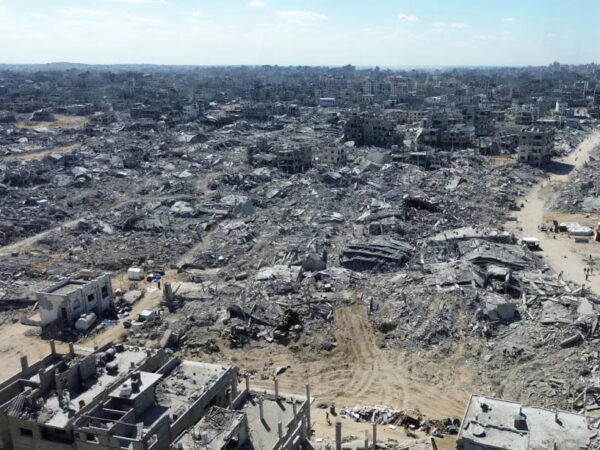
For those witnessing today’s televised violence and mass destruction, the collapse of meaning renders nihilism seductive. Can the collapse of meaning be resisted?
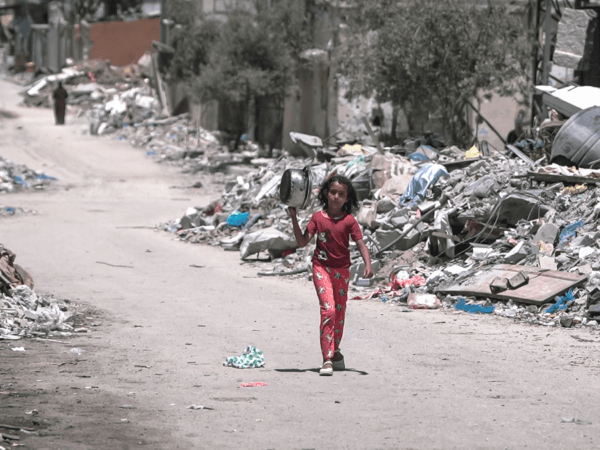
Against the backdrop of Gaza and Europe’s muted response, this essay reflects on Elad Lapidot’s challenge to recognize the violence hidden in the language of peace.

Liberal denialism is key in deflecting any responsibility or accountability, and it is this position of “not taking a position” that enables the impunity of perpetrators, enabling even more violence.

Jesus reminds us that his ministry is a disruptive one, one that is intended to allow for an awakening to justice and hospitality towards all.

When Israel fights Hamas, very little is left for Mizrahim and women, but these two domestic Others of Israeli society are there as a form of resistance to the globalized lexicon of “War on Terror.” Both enable conceptualizing Gaza also in domestic terms, as another Israeli periphery.

“Mami, when will the war on Gaza end?”… I know I should lie to my eight-year-old son like I used to.
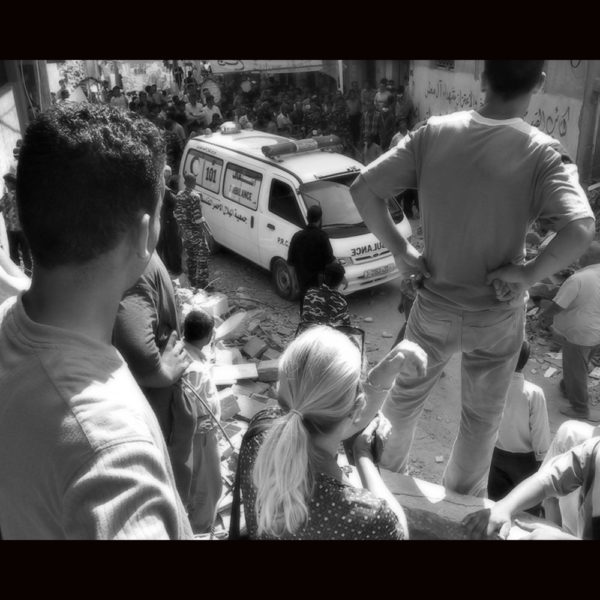
When Israel launched Operation Protective Edge in response to cross-border terrorist rocket-fire, European (see here and here) and US leaders endorsed their claim to have just cause. But were they right to do so? Do the on-going attacks conform to just war criteria? These are separate questions; both are important. We seek to address these issues from the perspectives of international law and Catholic theological ethics.
Hope is not drawn from the world-that-is. Hope is grounded in perceptions of the world-that-ought-to-be. It arises from the power of the world-that-ought-to-be. For Christians, the world-that-ought-to-be is the eschatological Kingdom of God. It is expected in the future, in God’s time. But, it is also in the present, which is God’s time. The Kingdom is a perpetual possibility, even as its realization must be perpetually deferred in its fullness.