
Join the Political Theology Network for the first in a series of webinars on African Political Theology, constructed as dialogues between scholars and practitioners around a theme.
Statecraft: Thursday, January 22, 2026
Noon (Eastern US / 5pm UK / 6pm Nigeria)
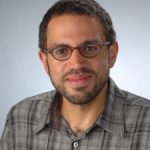
A dialogue between Dr. Isaac Kekemeke (Vice-Chair, All Progressives Congress) and Dr. Chammah J. Kaunda (Academic Dean, Oxford Centre for Mission Studies).
To Register: bit.ly/PTNjan22
Dr. Kekemeke is a leader of Nigeria’s governing party, board chair of the Nigerian Postal Service, and an attorney. Dr. Kaunda, a Zambian scholar, is the author and editor of several scholarly books on Christianity in Africa. This event will be moderated by Father Fidelis Olokunboro, Visiting Assistant Professor of Theology at Villanova University.
Organized by the Political Theology Network in partnership with Villanova’s Center for Political Theology.
Read more about African political theologies…
…on our blog:
New Directions in African Political Theologies
Ross Kane and Simeon Ilesanmi
“Contemporary African political theologies are a study in contrasts. A prophetic strand challenging unjust politics is alive and well, but so are political theologies that align with unscrupulous politicians and seek wealth at the expense of ordinary people. This dizzying situation raises questions of both substance and method about what African political theology is and how to do it.”
Reclaiming Negritude in African Political Theology
David Ngong
In his book Senghor’s Eucharist, introduced here, David Tonghou Ngong focuses on Senghor’s poetry collection called Black Hosts as a starting point for understanding his political theology. He argues that Black Hosts is a Eucharistic theology that calls for the reclamation of the Eucharist for the remaking of the world.
The Colonial Christian Kernel of African Anti-LGBT+ Politics
An interview with the Ghanaian anthropologist Kwame Otu, conducted by religion professor Adriaan van Klinken. “We should think of queer humanitarianism as a theological project. It suffers from a messianic complex.”
Transforming Masculinities in African Christianity
Adriaan van Klinken
“I propose and exemplify an analysis that focuses on male agency and how this is produced through patriarchal religious discourse, and I suggest that the case study churches, with their constructive employment of patriarchal themes, may in fact contribute to what the African theologians call ‘redemptive masculinities’ and help to realise gender justice in the context of HIV/AIDS.”
…in our journal (may be paywalled):
A Foray into (Study of?) Christian African Political Theology
Siphiwe Ignatius Dube
This article is a theoretical exploration of the concept of African Political Theology (APT). Consequently, part of what I do in this article is to illuminate the particular ways in which APT negotiates the tension between the secular political theology received from the western traditions and the materialist political spirituality that animates much of the African religio-political context. Specifically, I argue that APT decenters the state in African politics and, in its stead, re-centers the everyday particularity of African historical reality with specific reference to justice. To that end, I posit that African Political Theology positions itself as a specific notion of African histories and religions rather than simply an extension or expansion of the western notion of Political Theology.
Political Ressourcement: Decolonizing through Retrieval in African Political Theologies
Ross Kane
Political ressourcement is a strategy for decolonizing political imaginations by drawing on means of human organization that predate European colonialism. One such resource in this regard is the millennia-old tradition of compositional politics in sub-Saharan Africa. The compositional tradition’s insights for contemporary political theology are twofold. First, basing a community’s identity upon amalgamation rather than exclusion offers a powerful means of building lasting political association. Second, such amalgamation has become a proven way of challenging colonial politics’ exclusivist understandings of tribal, ethnic, and racial identities. In commending this tradition as a means of political ressourcement, the essay draws from Paul Landau’s historical research of the South African highveld. It engages a wider conversation in African studies on the compositional tradition, then shows how this tradition has proven a vibrant strategy for decolonial action for twentieth and twenty-first century Christian churches.
Stephen Martin
This article reflects on a seminal moment within South Africa’s Truth and Reconciliation Commission (TRC): the appearance of the African Initiated Churches (AICs) before the Commission in 1997. It demonstrates how this moment brought into relief divergent contestations of the public within South African Christianity in three ways: first, by situating the TRC within the liturgical performance of a reimagined South African nationality, making it a “civic sacrament” of reconciliation; second, by highlighting the formative role churches themselves played within this liturgy, deploying theological language to create a healed, secular body politic; third, by displaying the different social imaginary of the AICs—a social imaginary which interrupted the TRC’s liturgical recreation of time and space, as well as challenging the historical relations between church and state in South Africa. The paper concludes with the question posed in this “interruption,” a question that challenges the broader church with regard to fulfillment of the liturgy not in the secular nation-state, but in that City which is to come.
David Ngong
This article is a Christian theological interrogation of the war in the Anglophone region of Cameroon between Cameroon’s army and Anglophone separatists who seek separation from Francophone Cameroon. It problematizes a facile understanding of Anglophone identity that places Anglophones on the one side and Francophones on the other, arguing that these identities are complex. It critiques theologies that appear to defend Anglophone separation arguing that these theologies are rooted in an inadequate understanding of liberation theology and a limited doctrine of providence. It proposes an African political theology that calls into question the theological legitimacy of the nation-state and seeks to transcend the binaries that often otherize and separate. This political theology, it is suggested, should have a pan-African and cosmopolitan vision.

Share This
Share this post with your friends!