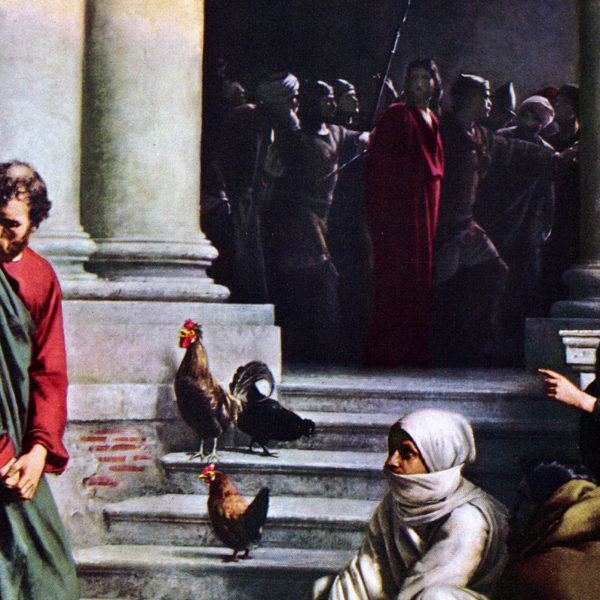
Jesus knows full well, after all (cf. Jn. 13:36-38) that Peter is denying him. And yet he does not deny Peter. Even while his disciples are scattering and hiding, Jesus confidently declares that they will bear witness to him, as indeed they would after his resurrection.
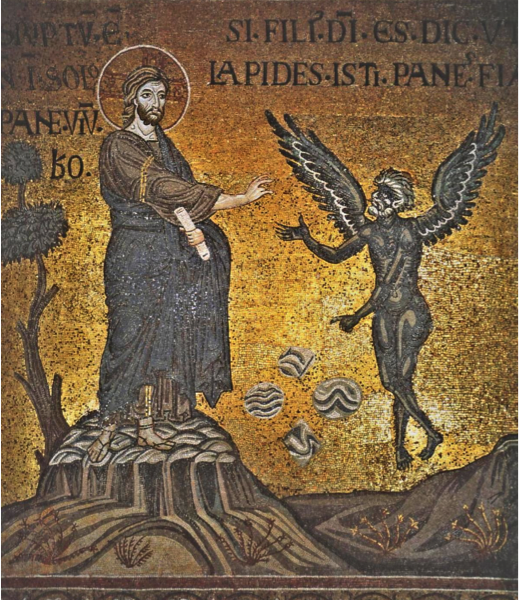
If Dostoyevsky foresaw the rise of the 20th century totalitarian states as the father figures who would feed the masses in the first temptation, what did Dostoyevsky foresee here with regards to his feared future Catholic theocracy? What Dostoyevsky saw was how the captivating of the conscience through miraculous ecstasy could manifest itself, in games and permissiveness.
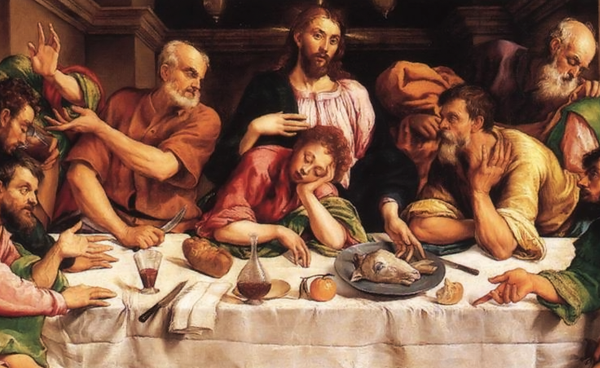
In his richly devotional book Writing in the Sand, the psychotherapist and former monk, Thomas Moore makes an intriguing hermeneutical suggestion. When we explore the ministry of Jesus and its contemporary implications, one fruitful exercise is to view his actions through the lens of the ancient philosophy of Epicureanism. At first glance, such a suggestion seems antithetical to any faithful rendering of the New Testament.

As on so many issues that divide left-wing and right-wing Christians, the Bible seems frustratingly pliable when it comes to the issue of property rights. Conservative Christians like to assert that the Bible takes private property for granted, that the Eighth Commandment demonstrates it to be a “divine institution” or a “sacred right,” and that the many examples of wealthy patriarchs prove not only private property, but large accumulations of it, have divine sanction. Those more inclined toward some kind of Christian socialism like to point out Jesus’s very harsh strictures on the accumulation of wealth and the assertion of private property rights, and the early Jerusalem community’s practice of “having all things in common.” As so often happens, we seem to be faced with something of an Old Testament/New Testament divide, in which the Old Testament bolsters a conservative agenda, and the New Testament a liberal one. Is the Bible thus divided against itself?
Four years ago, I was an idealistic college student who believed in change. Frustrated with the years of Bush-style imperialism and capitalism, I was ready for some big government and the return of civil liberties, singing the doxology Praise God From Whom all Blessings Flow as balloons reigned down and Obama waxed eloquent on a stage overlooking thousands of people. Needless to say, I have learned my lesson over the last four years. Although a less harmful sovereign, Obama turned out to be—surprise, surprise—a neo-liberal. The problem, however, was not with Obama, it was with me….
Are we not the Gentiles who have leaders ruling over us? Are we not the ones who obey the rules that are placed upon us? Isn’t it true that we have tyrants that are more concerned the upper class and middle class than with those struggling to get by, living paycheck to paycheck? Jesus demands a non-leadership leadership from his disciples. Something more topsy-turvy than the world’s standards that resemble social Darwinism….
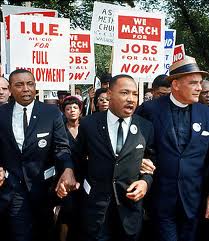
The number of people in the U.S. living below the poverty line in 2011 was 46.2 million, the highest in the more than 50 years that records have been kept.[i] (1961 is a few years before Lyndon Johnson’s “War on Poverty,” and about seven years before the Southern Christian Leadership Conference organized the “Poor People’s Campaign” that would take Martin Luther King, Jr. to Memphis.) Why then is so little attention being paid to poverty and poverty-related issues in the current presidential campaign?…