
Kristeva’s psychoanalytic approach and practice shed light on the unconscious, affective, and bodily formation(s) of religious and political discourses and systems.

Almost a quarter of a century after that night in Pensacola, Trump supporters brought their shofars to a “Jericho March” at Washington D. C. in a manner resembling that decades-old revival meeting. Like the Brownsville attendees who cheered for Gideon’s victory, the Jericho March called to mind a biblical story of Joshua at Jericho, another conquest with the sound of a shofar.

The politician David’s apology may communicate genuine remorse, an intention to make amends, or his acceptance of the consequences of his actions. Or, it may be a word-smithed damage control statement, calculated to admit as little as possible and move the news cycle beyond the scandal.
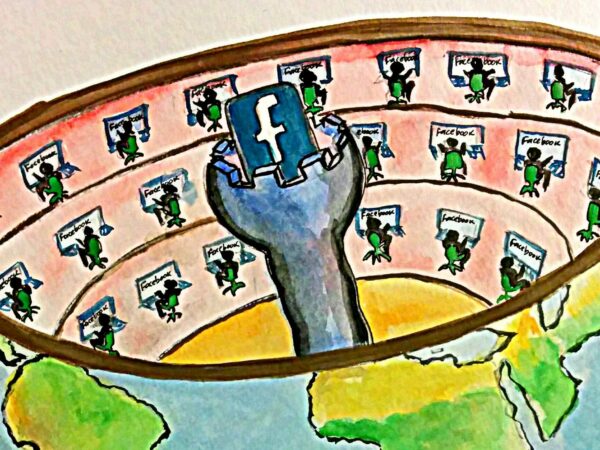
Psychopolitics is Han’s main contribution to political theory. It reflects Han’s rethinking of Bentham’s panopticon and Foucault’s biopower as disciplinary society transitioned into a digital achievement society that defines our contemporary neoliberal globalized world.
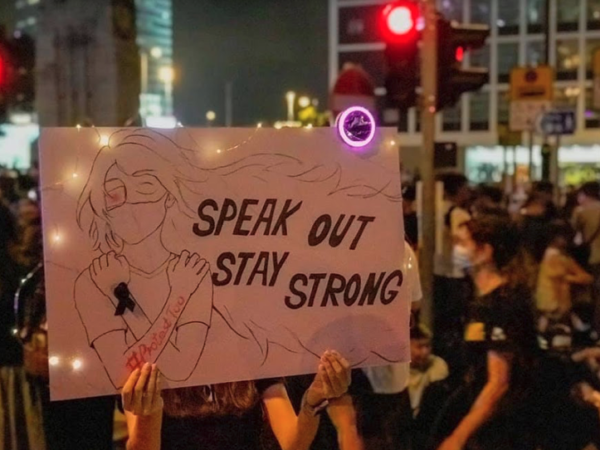
There is the rising emergence of a new breed of women protesters in Hong Kong—women who are fearless in the face of escalating brutality from the police and authorities. They remind us of the women in Galilee in the Gospel who were so brave and caring and overcame community pressure and even the fear of execution.

Meillassoux’s thinking of post-Copernican cosmic immanence and cosmic delegitimation constitutes a challenge to political theology as still predominantly Ptolemaic in its assumptions and focus


On Tuesday, we perhaps must break the commandment to feed the hungry, heal the sick, welcome the stranger, free the prisoner – to love “the least of these” as if they were God incarnate.

The current conjuncture of crises – climate change, pandemics, the rise of fascism and state violence, the backlash of white supremacy and heteropatriarchy against anti-racism, feminism, and queer/trans liberation, the deepening extractivism of capitalism, the further dispossession and disposability of mass incarceration and deportation, etc. – can be dismantled, swiftly, like a flood, a hurricane, a wildfire – if we can organize ourselves.
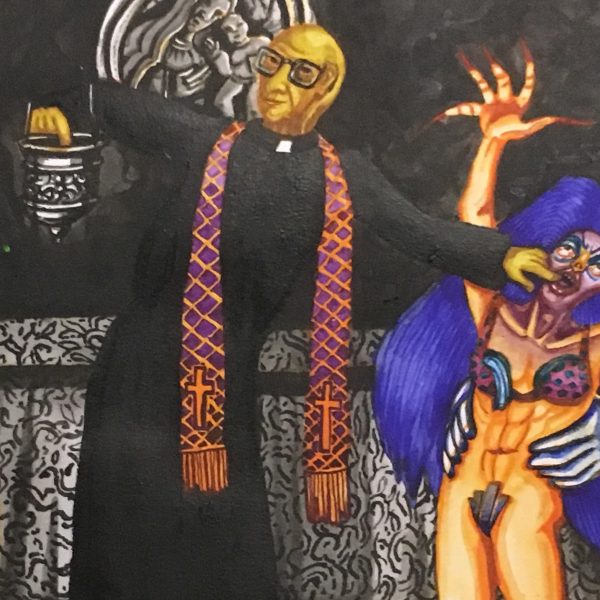
By the first decade of the nineteenth century, a new idea had entered the Western world. Psychiatrists, naturalists, politicians, and theologians throughout Europe and North America came to believe that there existed a form of insanity that caused its victims to express false religious opinions, to hold clearly unreasonable religious beliefs, or to dwell too deeply on religious issues.

According to Burroughs and Gysin, the power of language was the thing. There was something queer, indeed, about the capacity of any language to channel all manner of patterns and directives that had nothing, essentially, to do with the words that comprised that language.

However our times will be remembered—as the triumph of fascism or its nadir, as the end of capitalism or its beginning, as the death of the planet or its rebirth—this young century has been an era of contagion.