
And so it is to Jerusalem that Jesus must go. Why Jerusalem? How would the scene have played out differently if the Pharisees, in their plotting, had simply arranged to have Jesus murdered on the road – on his way to the city? What if Jesus had never come to Jerusalem? To the temple? What if he died and even was resurrected while preaching the good news of God’s Kingdom in Galilee? What’s so special about Jerusalem?

For three weeks now, I have been listening to Mary’s Magnificat sung as a part of the mid-week evening prayer service in my congregation. Last week, I leaned over to my five-year-old and told her, “This is the story of Jesus’ Mommy when she was pregnant with him.” Rereading a paper that I wrote on this text in college, I critiqued an over spiritualization of these words that are “a vivid proclamation of God’s eternal justice and intention to uplift the weak and lowly in a ministry of love…a call to social action on behalf of humanity.” Now, as I sit with the text, I can only say that it is all of this and more…

Increasingly in liturgical circles it is becoming politically incorrect to talk about the “kingship” of Christ. Such a term now brings with it all the baggage of patriarchal interpretations of the biblical text. It calls to mind the exploitation brought about by colonial powers, abuses of power at the hands of politicians, and perhaps every abuse of power—abuses which represent heinous tragedy and sin. However, while we lament such abuse it is important to remember that power, in political terms, is itself neutral. It is a gift given by God in creation, which when wielded in the hands of human beings can be used for either selfish or selfless purposes (usually with correspondingly negative or positive results). Unfortunately, too often we as human beings struggle to monopolize power for our own sakes and consequently abuses occur…
In contemporary Western society we like to pride ourselves on having done away with what we would term ‘archaic’ systems, such as slavery. And so, when we hear such a system mentioned or even alluded to in a text like John 8:31-36, it is easy to write Jesus’ words off as anachronistic to our more ‘civilized’ approach. If we’re among the majority of such Westerners who know of no slavery in our ancestral background (or, if we do, whose ancestors were the slaveholders), then we may be tempted to object with Jesus’ disciples:
“‘We are descendants of Abraham and have never been slaves to anyone. What do you mean by saying, “You will be made free”?’” (8:33)
The first disciples resisted Jesus’ slave imagery, but not without irony. After all, the children of Abraham with whom they identify are the same children of Jacob who traveled to Egypt and were made slaves. Moses and Aaron led their ancestors through the wilderness so that they—the disciples, all the Jews, and by extension believers today—are children of the exodus; children for whom the reality of slavery is very real and near. And yet they resist this, practicing a form of selective amnesia rather than think of themselves as slaves.
Although often lost in a generic celebration of the giving of the Spirit, this text is one that is filled with questions of ethnicity, language, and diversity. It speaks to the American debate of whether this nation can or should be a melting pot that blends and ignores culture and ethnicity or a mosaic and celebration of the diversity that exists in our midst. But first, some background:
In an age when nothing is sacred nothing is more difficult to understand than violations of sacred space. Yet that’s precisely what Mark demands of us in his account of Jesus’ first public action, an exorcism in the synagogue.
From the moment Jesus sets foot in the religious and political center of Capernaum, he is engaged in a contest with the scribes over authority concerning that space itself and all that it represents. It’s clear from the beginning that his audacious move catches the attention of everyone. The people notice: “They were astounded at his teaching, for he taught them as one having authority, and not as the scribes” (1:22).
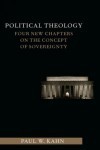
In the October 13 issue of the New York Review of Books, Mark Danner published a critique of the Bush administration’s policy on torture, under the title “Our State of Exception”. He didn’t give Carl Schmitt (or Paul Kahn) credit, but he could have. When the intellectual history of the past generation is written, one of the stranger items will be the unexpected resurrection of a sinister figure who might have seemed buried and forgotten, except for his admirers on the far right wing of respectable discourse.

Against the backdrop of Gaza and Europe’s muted response, this essay reflects on Elad Lapidot’s challenge to recognize the violence hidden in the language of peace.

Negativity cuts against a politics of nostalgia (which seeks to conserve the imagined glories of the past) and apocalypse (which rejects the world as irredeemably compromised)