To watch the fight is also to fight
–Bemba people of Zamba
Let any one of you who is without sin be the first to throw a stone at her
–John 8:7
The African scholar John Mbiti teaches that the human is constituted relationally: “Whatever happens to the individual happens to the whole group, and whatever happens to the whole group happens to the individual. The individual can only say: ‘I am, because we are; and since we are, therefore I am’.” This cardinal principle is an affirmation of the human as relational and relationally constituted. It is an ontological claim. Mbiti is saying that an individual does not exist prior to and apart from relations with others; rather, an individual is constituted through those relations.
If we agree with this, then what happens to an individual in the public gaze cannot be understood as happening only to that individual. The ways in which we see, think, name, celebrate, condemn, and remember any individual participate in constituting the relational world in which that person exists. To make an individual a public spectacle is therefore not merely to represent that person. It is, rather, to alter the relations through which that individual is encountered.
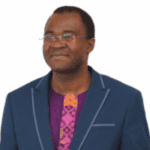
This is the problem I want to explore through the story of a Black professor, Jason Atta Kwei Arday, who resigned from Cambridge University’s chair in the sociology of education following allegations of plagiarism and questions concerning some of his extraordinary achievements. His resignation came after an avalanche of media coverage of his life and career. Arday felt he was “living under a constant spotlight, where every aspect of my life is subject to public examination and judgement.” His professorship and extraordinary biography had become objects of intense public attention. He himself had become a public spectacle.
I do not intend to adjudicate the allegations or reconstruct the details of the controversy. My interest here is in what happened to Arday once he became a public spectacle. I am arguing that Arday went through a process of spectacularisation, from being celebrated to being condemned. In the space between celebration and condemnation, I ask: What happens to a person when the gaze of the public becomes so intense that the person can no longer be separated from what the public has made them represent?
Arday’s life took a sharp turn once he was appointed at Cambridge. Beyond being celebrated, his story was amplified and made to carry meanings far beyond his individual accomplishment. His appointment was accompanied by considerable media attention and was hailed at the time as evidence of Cambridge’s progress and evidence that equality was possible. He seems to have been a sigh of relief for an institution and a country in which, according to the University and College Union, “higher education continues to have a serious underrepresentation of Black professors.” Arday’s chair was described as “a platform he intends to use to inspire more people from under-represented backgrounds into higher education.”
Arday quickly became a figure through whom Cambridge, and the public, could see progress, equality, and possibility. Within a remarkably short period, universities and organisations sought association with him. Between 2023 and 2026, Arday received four honorary doctorates, the “Most Inspirational Person of the Year Award” at the Multicultural Business and Community Champion Awards, recognition in the Shaw Trust’s list of the 100 most influential disabled people in the UK, and an honorary fellowship from the British Science Association. He served on the Royal Society’s Diversity and Inclusion Committee, he was a Patron of the Adult Literacy Trust, and he was a trustee of the British Sociological Association and Autism Action.
Arday was described as “a unique and extraordinary man”, “a celebrity academic,” “a star Cambridge professor,” “the academic superstar,” and a “diversity poster boy”. The Atlantic even suggested that he had become “the world’s most famous living sociologist.” His high-profile career unfolded from the beginning under the gaze of the media, drawn to a life story that seemed almost too extraordinary to be true: Arday grew up in a council house in South London, learned to speak at eleven and to read at eighteen, and was diagnosed with autism. He also claimed that his life was marked by testicular cancer, epilepsy, brain surgery, and extraordinary athletic aptitude.
Arday’s biography was almost perfectly configured for spectacularisation. It made him unusually legible as a public symbol of overcoming inequality but also readily consumable as a media story. The plagiarism controversy did not simply place a public figure under scrutiny. It revealed the precariousness of public spectacle itself.
Arday was not only sensationalised because he had a tragic Black story, but his race made him particularly available to a public already searching for a consumable image of inequality overcome. The same gaze that had elevated him now condemned him. Arday’s story of remarkable achievement transformed into a story of Black scandal, and his humanity was eclipsed.
The gaze had become absolute, and the conditions of visibility changed. The institutions and individuals who once stood in ovation at Arday’s appointment rapidly turned towards self-preservation. Arday was left alone, and there was nowhere to retreat when the gaze turned against him. He could not “see a way out of things.” This phrase is haunting when considered through the logic of spectacle. It suggests not simply that Arday could not see a solution to the plagiarism controversy, but that he could no longer see how to disentangle himself from what the public gaze had transformed him into. He had become locked within the public spectacle. He had become a condemned public figure, and the intensity of the coverage appears to have made that identity inescapable. Arday was no longer encountered simply as an academic, a colleague, a teacher, a citizen, or a human being with a complex life but as a global suspect whose public identity was increasingly organised around Afrophobia.
This is the violence of spectacularisation in which Arday the man and the public spectacle were indistinguishable, and his capacity to escape from being a mere spectacle became impossible. He tried to explain, clarify, defend, and finally resign, but each response only provided further material for the gaze. Even death has not shielded him from being a spectacle; it has only intensified the public appetite to consume him. In many ways, death should have finally returned Arday to the dignity of irreducible absence. Instead, it has become another occasion for media consumption at a global level. There is nowhere to retreat, nowhere to hid when the world has been made to watch. The idea that he “couldn’t see the way out” invites a deeper question about the ontology of media attention: What happens to a person when they can no longer appear to others, and ultimately to themselves, outside the identity that the spectacle has produced?
As spectacle, Arday remained a Cambridge professor so long as he performed the function of giving a good image to the University. Once the spectacle threatened the institution’s image, the University quickly entered self-preservation mode. At that moment, the spectacular gaze transforms the spectacle into scandal, failure, fraud, or warning. Arday, who once embodied Cambridge’s progress, suddenly became the figure who has “damaged the institution,” caused “massive reputational damage,” and represents a “damaging episode” – and through whom the University could demonstrate its commitment to reviewing its “process for hiring senior academics” and “all relevant university processes,” and to reaffirming its commitments to integrity, standards, and accountability.
Arday is Cambridge’s turning point: a figure through whom the University now confronts its failures, reassesses its processes, and present itself as awakened to the need for reform. The very person who had once been made emblem of progress is now constructed to signify the necessity of institutional self-correction.
As a public spectacle, Arday may reveal what Calvin Warren describes as the “ontological terror” embedded within the Western racial imaginary. The Black subject can be spectacularly celebrated as evidence of institutional progress and, when the narrative collapses, spectacularly condemned as evidence of its failure. Thus, alleged individual failure becomes evidence against the possibility that the individual’s presence had symbolised in the first place.
Let me conclude with where I began: in African relational ontology, a human being does not exist as an entirely self-contained or self-grounding entity whose relations are merely external additions. If “I am because we are,” then what you do to the relational existence of another person is also something you do to the “we” through which both of us exist. The human is constituted relationally. Therefore, encountering another person is already entering into a relation with them. This means that to see another person, ignore them, celebrate them, condemn them, or turn them into an object of spectacle is already to enter into either a relation of life or death with them.
“To watch the fight is also to fight.” We have all failed Arday. In a relational ontology, there is no such thing as a spectator. Doing nothing is itself a mode of relating. While a spectator of violence is not the same as an agent of violence, neither is the spectator neutral. The act of making public spectacles and the act of witnessing are both forms of participation in the relational conditions through which another human being is diminished, objectified, abandoned, or destroyed. That does not mean that every spectator bears the same responsibility as the perpetrator: there are distinctions of agency, power, intention, and causation.
Arday was first constructed into an absolute object of admiration and later reduced to an object of condemnation – both objectifications. The ground of Arday’s appointment was not relational but institutional, even though the institution itself ought to exist in the service of relational flourishing. Cambridge is an institution created to serve the flourishing of persons and communities rather than instrumentalising them for institutional advancement. But Arday became a means through which the institution narrates itself (its progress, diversity, excellence, and reform), and he was, from the beginning, reduced to the function he performed within Cambridge’s narrative. If human beings are constituted relationally, then institutions must ultimately be understood as structures ordered towards the flourishing of relations. The institution should never be conceived as an end in itself. Its legitimacy is derived from its capacity to sustain the relational conditions in which persons and communities can flourish. Institutions therefore must be grounded in something more ultimate than themselves: relationality.
The attention Arday received denied him the freedom to exist outside of the story the public needed him to embody. The relational conditions through which Arday as a person should have been recognised and affirmed as a human being were progressively stripped away. Drawing on relational ontology, Desmond Tutu argues that no one remains fully human after the death of another whom we have dehumanised, or watched being dehumanised while doing nothing. Violence enters as poison within our relational web and, in doing so, diminishes the humanity of perpetrators and spectators.
This reminds me of Jesus’ words in the Gospel of John (8:1–11) to the spectators gathered around the woman accused of adultery: “Let him who is without sin among you be the first to throw a stone at her.” After speaking these words, “Those who heard began to go away one at a time, the older ones first, until only Jesus was left, with the woman still standing there.” The scene exposes something fundamental about the human proclivity to condemn. It is easy to make a fault the ground upon which another person bears the burden of a community’s moral anger and anxiety.
The exposed person becomes a public spectacle; the perpetrators and spectators become judges, jury, and executioners. Yet Jesus interrupts this relation of death. He does not deny the reality of wrongdoing, but he repudiates the crowd’s moral innocence, subverting public judgement. He called the crowd to turn their gaze back upon themselves. Unfortunately, Arday had no “Jesus” standing between him and perpetrators and spectators to interrupt the logic of judgment. The stones of judgement were cast, and he became a convenient bearer of what perpetrators and spectators could not, or would not, or simply failed to recognise in themselves as what they condemned in Arday. For some, perhaps, he represented precisely the faults they are struggling with themselves. Whatever, the case, Arday became the public scapegoat for private faults (Isaiah 53).
It is easy to condemn those whose wrongs are public because their exposure creates the illusion that our own faults are safe, private, small, or less consequential. Spectacle concentrates attention upon the visible transgression of one person and, in doing so, seeks to conceal the moral participation of those who gather around, gaping at the so-called public sinner. We realize our humanity not simply by recognising the wrongs in another, but by acknowledging “the speck in one’s own eye” (Matthew 7:3). Refusing to make another person a scapegoat is not moral indifference. Rather, it recognises that no human being stands outside the relational web from which judgement emerges – and that web is imperfect, broken.

A lovely and reflective article that captures many nuances. Thanks for this. To add to your reflection, the scandal and death of Prof. Arday is truly a mirror that reflects Western social values and a caricatured attempt to undo centuries of racist and exclusionary policies that define western institutions, including academia. The presence of Prof. Arday in the hallowed walls of Cambridge stands as an icon of shame for the institution itself that has taken centuries to act against the culture of exclusion. Quick fixes cannot be enough. Prof. Arday was their quick fix and it backfired.
Also, not being able to hold in place the messy reality defining the human person and upholding a puritanistic image of what success looks like speaks to a moral bankruptcy that defines our collective social value system playing out in the western world. All that said, it ought to be noted that though Prof. Arday may have had multiple flaws, the fact remains, there is clear evidence that he was loved and admired by his students with whom he produced knowledge and advanced a vision that broadened the landscape of inclusion for many who are in the minority groups. We must resist the Puritanist error that wants to reduce this man to a symbol of nothingness. One can be flawed and yet achieve greatness. Our admired Mahatman Ghandi had a record of racism while living in South Africa and yet his noble stance against British colonial monstrosities in India cannot be ignored. This must be how we ought to remember Prof. Arday, if we hope to escape the logic of the gaze that you have so beautifully explained.
The testament of the publishing house on how professional and ethical Prof. Arday was; the testament of Cambridge on backing him at the initial stages of the scandal before it reverted to self preservation tactics; the testimonies from his colleagues on how wonderful a scholar he was; the findings of his alleged plagiarism and his bloated sense of self-achievements; the attempt to present a narrative that exudes the social values of the West – pulling oneself from rags to riches that Prof. Arday embraced in order to fit into a system that is designed to be exclusionary can all be true at the same time. This fact is what defines our human condition and why we must resist the temptation to want to be part of the shaming ritual and entertainment as Prof. Arday fell from the pedestal. We are all flawed beings who must constantly look at the mirror and intentionally resist the Puritanistic narrative and vision of what success looks like. Success and failure are intimate bedfellows that are inseparable.
The greatest success that prof. Arday may have had is that his death has restarted an uncomfortable dialogue that we must all have as members of institutions designed to be exclusionary and which pride themselves by postulating a false vision and moral ethos of what ought to be the human condition in a messy world. If we live in a messy world, then we ought to be comfortable with being messy ourselves. I hope Prof. Arday rests in God’s memory of forgiveness and kindness as we all remember him for all that he was – a good husband; loving father; a cherished child; a wonderful sibling; a cherished friend to many; and a kind educator that advanced the cause of minoritized groups in academia.
Thanks again for such a lovely reflection.