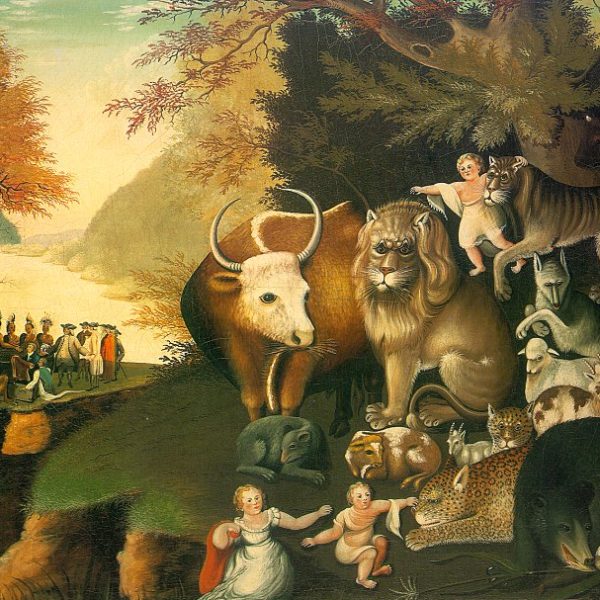
In Isaiah’s prophecy a young child serves as a sign puncturing the gloom of a dark political situation. The use of infants and young children to draw attention to God’s future within the book of Isaiah has significance for our own political visions. In regarding the sign of our children we can accomplish an existential turn from a politics driven by the selfish interests of our own generation to one of responsibility and hope for the well-being of those to come.
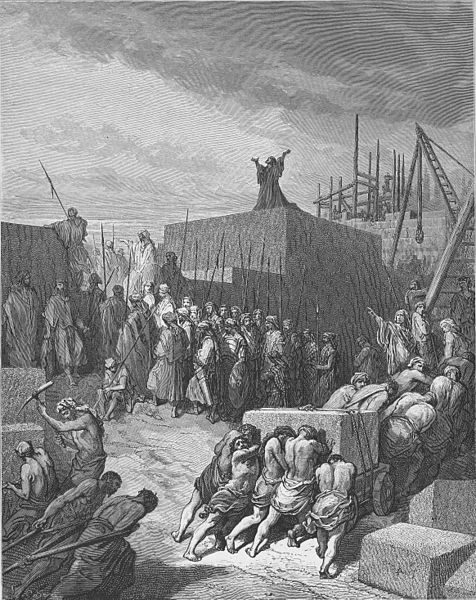
As it was with Haggai, the real test of leadership is not necessarily the capacity to motivate people to action, but rather to keep them fixed on that same goal when it becomes clear that the rhetoric that moved them in the first place bears little resemblance to the actual situation in which they have to act.
Led by the NC chapter of the NAACP and its charismatic president, the Rev. Dr. William Barber, protestors have every Monday for the past ten weeks come out to the state legislature building in Raleigh, NC to voice their opposition to a spate of conservative legislative measures. Since gaining control of both the legislature and the governor’s office for the first time in 100 years, the GOP has rapidly pushed through a string of regressive, ideologically-driven laws, often using tactics not fully on the up and up.
We are the heirs of Elijah’s legacy. His influence is evident within later writings of the Bible, the Bible’s earliest commentators, and within the Bible-shaped parts of our own culture. But how might we assess our inheritance? Elijah is a hero of the covenant. Moses redivivus. A witness to God’s justice and mercy for those without power. And yet. . . Elijah’s legacy is also that of a “troubler” (1Kings 18:17-18). Although the prophet denied the title, the Jewish rabbinic tradition has not been afraid to name troubling features of his ministry. He seems more pre-occupied with his own difficulties than those of the people. He does not advocate for the Israelites. He uses violence.
What does it mean to be born again? In the vernacular of this age, the language has come to suggest some sort of metaphysical transformation, a shift that promises eternal reward. Believe in Jesus and you are born again, the logic goes, and then you get to go to heaven. For many being born again is the culmination of the Christian task, but for Jesus and his followers this second birth marked a beginning of a dangerous and fraught journey. It entailed leaving behind the safety nets woven and stored up in life and starting fresh, aligned with something new, something politically subversive, socially fraught, and existentially threatening […]
By Hugh Goddard
It will be very interesting, in 100 years time, to see whether 2001 has entered the list of significant anniversaries in the long history of conflict between Christians and Muslims.
The wisdom of the world pretends completeness, offers an answer for every query, a reason for every action. Paradox is anathema: dark and demented. And so the interests of the wealthy and the powerful are secured, the false comfort of worldly wisdom prerequisite for accumulation and domination. That which threatens the supremacy of this wisdom – and so threatens the interests of the wealthy and the powerful – can only be “vile, cruel, and destructive.”
Biko Mandela Gray talks about race, radicalism, and religion, and Assata Shakur, with Atiya Husain

How can history be understood in terms of its possible end? Anna Pollman reads Obsolescence of the Human as a “historically supraliminal” book.