
Here’s a brain-teaser for you. How does a recent PBS documentary about America’s “Dust Bowl” of the 1930s combine with a just-published book by one of the nation’s best-known venture capitalists to shed light in an unprecedented and powerful way on the government shutdown and the struggle over the debt-limit?

Today, Catholics celebrate the feast of one of the church’s most beloved saints, Francis of Assisi. Francis had both a special concern for the poor and a deep appreciation for God’s presence in all creation, and in recognition of this unique charism Blessed Pope John Paul II declared Francis patron saint of “those who promote ecology” in 1979. That declaration has caused Francis to be associated in the minds of many Catholics with the church’s commitment to environmental stewardship.

NATO’s humanitarian war in Kosovo in 1999 provides the context for the central idea of this book. In that conflict, the puzzling linkage between the desire to advance human rights and military means raises far-reaching questions about the role of rights in shaping international wars. Is it possible to understand or explain wars as an outcome of perceptions of rights? How did rights, be they divine rights in the Middle Ages, territorial rights in the eighteenth century, or human rights today, become something that people are willing to fight and die for?

Medieval religious houses were more than enclosed communities of men or women who spent their lives in prayer and worship, striving for their own salvation and interceding for the salvation of humankind. Clearly this was part of the story – it was not for nothing that the medieval historian Orderic Vitalis called monasteries ‘citadels of the Lord’, or that monks were commonly regarded as spiritual soldiers fighting against the power of the Devil and his cohorts.

I don’t know precisely when I first met Jean Elshtain. I think it was in the summer of 1995, in Swift Hall, home of the University of Chicago Divinity School. I must have been told of her arrival by one of the faculty. I know I talked to her in the corridor, that most important of places to ambush your teachers, and decided after that chat, that I would sit in on her class that Fall term—entitled, as I remember it, “Beginnings.”

The prophet Isaiah was a city dweller, but his mind was on the countryside. Trees, vineyards, and fields populate his thinking and that of his successors in this long book, where vegetation serves both as metaphor (as in Isaiah 5:1-7), and as the life-sustaining growth on which humans literally depend (as in vv. 8-10). Agricultural imagery appears from one end of the book to the other (1:8; 66:17), spelling out both judgment and hope.
Last week I sat supping tea, on a glorious summer’s day, in a garden with one of my favourite people in the world. My friend raised one of those questions about women as bishops which is not usually part of the narrative (certainly among those of us who treat this matter as urgent): Why on earth do women want to be bishops anyway? Her question was not prompted by any anxiety about women’s ministry or place within the church. Rather her question was prompted by concern about how bishops are ‘seen’ in the C of E, that is, about how clergy and laity behave around bishops.
Led by the NC chapter of the NAACP and its charismatic president, the Rev. Dr. William Barber, protestors have every Monday for the past ten weeks come out to the state legislature building in Raleigh, NC to voice their opposition to a spate of conservative legislative measures. Since gaining control of both the legislature and the governor’s office for the first time in 100 years, the GOP has rapidly pushed through a string of regressive, ideologically-driven laws, often using tactics not fully on the up and up.
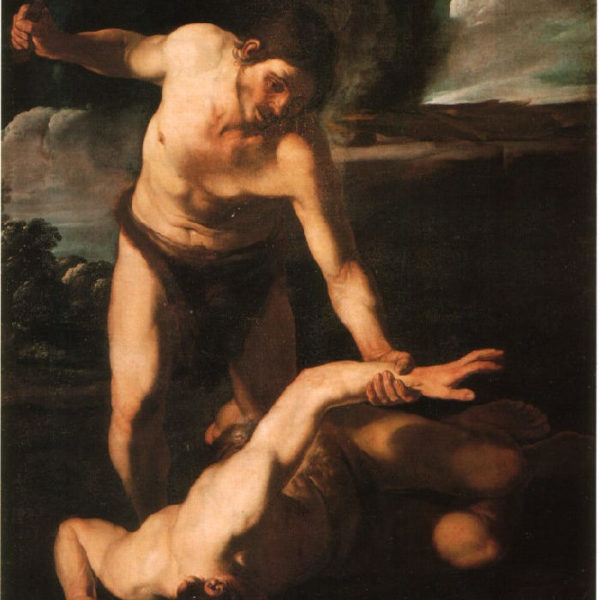
I am grateful to Bill Cavanaugh for taking the time to respond to my blog post of two weeks ago, “Modernity Criticism and the Question of Violence,” and giving me the opportunity to clarify better the nature of my criticisms. Clearly such clarification is in order, as Cavanaugh’s response seems to have struck off in something of the wrong direction, defending theses that were not really under challenge. If I may adapt the opening from his post, Cavanaugh’s response would raise significant difficulties for the thesis of my critique if (1) the argument of that critique were directed against The Myth of Religious Violence and (2) my purpose was to endorse Steven Pinker’s triumphalist progressivism. The first of these premises is false, and the second is highly questionable.