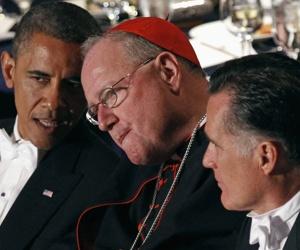
The Catholic Church in the United States is in decline because its public theology, on both the left and the right, is primarily focused on gaining influence over the state. As theologian Michael Baxter has argued, the church’s first priority should be on living as a community of faith and serving as a public witness.

In the cover story of the August 6 edition of Time magazine, Joe Klein offers a rather grim account of the U.S. national conversation about guns in the wake of recent mass shootings. He writes about the ways in which the political climate, increasingly and rather bizarrely governed by the gun lobby, has made it impossible to have any serious political dialogue about the regulation of guns and ammunition. The article is provocatively entitled, “How Guns Won.” It is clear to me from reading the piece, however, that Mr. Klein wants to stay far from actually attributing victory to guns themselves. Rather, he wants to maintain the more commonsense view that it is those political actors that value gun-owning, certainly backed by the gun industry but also fiercely devoted to libertarian ideals, that have won decisive victories. However, I think we could take Mr. Klein’s title quite literally and say that guns themselves have essentially won what Bruno Latour might call a “trial of strength” in which they had been engaged with their critics….
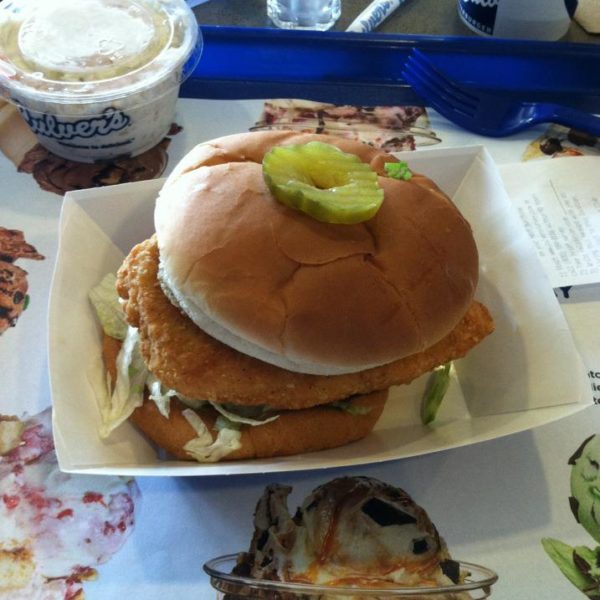
It’s moments such as these that are only possible on the web… After hearing some amount of Facebook-based moral outrage from friends both progressive and conservative, centered somehow around the fast food chain, Chick-fil-A, I decided I better pull my head out of the sand and see what the kerfuffle was all about. The first story I read was an LA Times editorial on Chick-fil-A and free speech. I’ll return to the content of that story in a moment, but as I reached the bottom of the page, my eyes uncharacteristically caught sight of the advertisement. It’s offer? Free Chick-fil-A!
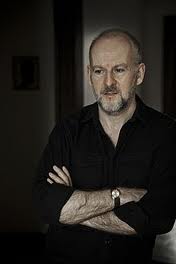
In this interview Simon Critchley discusses his new book, “The Faith of the Faithless: Experiments in Political Theology,” with Dave True of Political Theology. Along the way Critchley touches on an array of topics: his respect for religion, the experimental nature of free thought, what love has to do with a politics of resistance, the genius of the Occupy Movement, nonviolence and its limits, the wisdom of Antonio Gramsci, and the illusions of Marxism. Earlier responses to the book can be accessed….
Every week on the lecture trail I meet progressives who are demoralized and/or infuriated by Barack Obama’s performance as president. They insist that they will not work for him again or even vote for him. Many have signed petitions saying as much. They are finished with Obama.
Often they assume that I agree, since I have criticized many of Obama’s policies throughout his presidency, and I have been deeply involved in the Occupy movement. But my progressive friends and allies are overlooking that many of them made this very mistake in 2000, that their charge of betrayal is exaggerated, and that Barack Obama, for all his temporizing and capitulation, is in important ways America’s most progressive president since FDR. Moreover, electing a more compelling human being to the White House is probably impossible in this country. It is too soon to give up on our first African American president. So I wrote The Obama Question: A Progressive Perspective [….]
Six months or so after Lehman Brothers disappeared, and two weeks after the Dow Jones hit a twelve-year low, the creators of South Park ran an episode called Margaritaville, the primary storyline of which recounted the failed attempt by one of the boys to return the eponymous blender that his idiot, moralizing father had bought. In a gleefully sloppy primer on the financial crisis, Stan follows the increasingly inscrutable chain of capital from the profligate consumers, to shady third-party financiers, to the securities bundlers of Wall Street, and ultimately, to the public sector ex post facto debt assumers. At the heart of financial darkness, Stan’s odyssey takes him to the Treasury Department where a tribunal of economists determines the value of his margarita maker to be ninety trillion dollars, a calculation determined, it is subsequently revealed, through a divining process involving men in powdered wigs, a kazoo, and a decapitated yet still ambulatory chicken tossed onto a wheel-of-fortune style game board labeled with a range of monetary, fiscal, political maneuvers: Socialize/ Let Fail/ Coup d’etat/ Bailout!