
Despite the unending political chatter over global spying, the recent government shutdown, and now the misadventure of the Obama care rollout, I have also been pondering the meaning of something worth more obsessing about. . . . It amounts to the latest variation not of Murphy’s Law (“if something can go wrong, it will”), but what I have called Raschke’s Rule (“if you didn’t think people could be more foolish than they already are, just wait a day or so”).
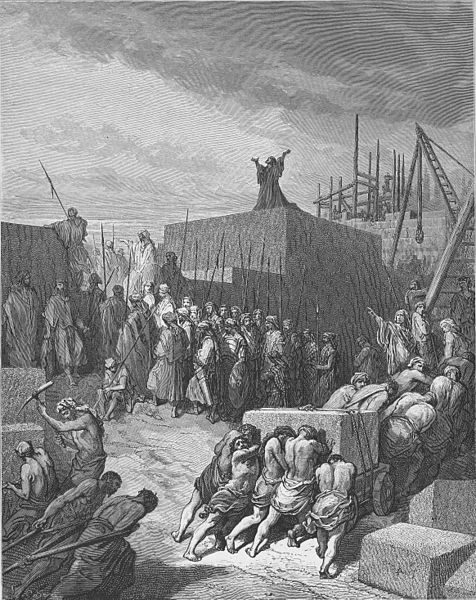
As it was with Haggai, the real test of leadership is not necessarily the capacity to motivate people to action, but rather to keep them fixed on that same goal when it becomes clear that the rhetoric that moved them in the first place bears little resemblance to the actual situation in which they have to act.
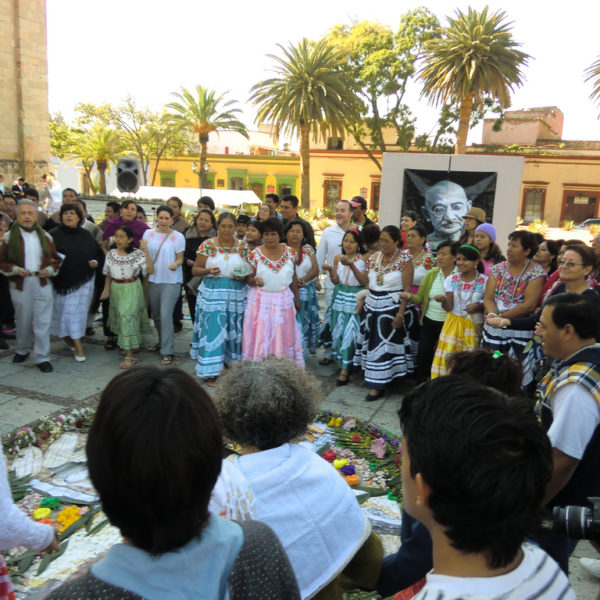
At the very least we might say that both nonviolence and pacifism should attempt to understand and redirect violence. And maybe we should shelve the tired terms for a spell and speak of life-giving or death-dealing acts, which might reframe exhausting debates about property destruction. Pacifism should not be at odds with physical force, with the force of physicality such as sit-ins, strikes, human chains, roadblocks, or even strategic property destruction.
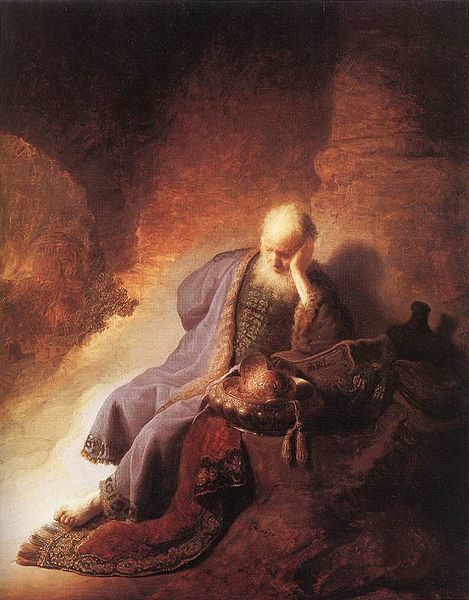
Jeremiah 31:27-34 confirms for us that God is present through the thick and thin of pain and suffering and in the disturbing questions that these experiences raise. But a day will come when God out of God’s grace and mercy will provide the community with all that is needed to overcome this pain and build life anew.

Nonviolence and pacifism are often pitted against one another, even though pacifism was once considered the activist term to distinguish it from nonresistance. Now, pacifism is thrown under the bus, even by vigorous advocates of nonviolence. For instance, Gene Sharp clarifies that nonviolent action is, appropriately, action that is nonviolent, as opposed to pacifism.

The policy of accommodation, cooperative political activities and praying to God for the well-being of a foreign city as suggested by Jeremiah was both innovative and a great challenge to the exilic community. It also has lessons for us as we seek a public, politically and socially relevant theology.


In the wilderness, the Israelites received manna, an abundant resource that couldn’t be exploited or stored in quantities beyond people’s need. Unfortunately for our planet, fossil fuel does not behave like manna.
For the family of the late Trayvon Martin, Saturday’s ruling – that George Zimmerman was found not guilty of any wrongdoing in his shooting of Trayvon – is a terrible tragedy, and a miscarrying of justice, compounding an already vast sea of grief.
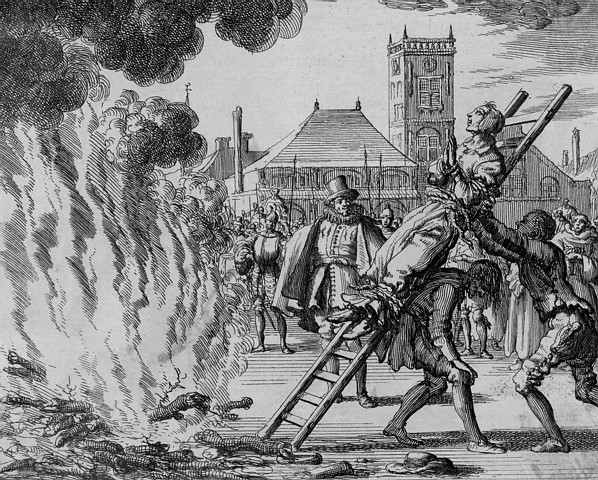
Brad Littlejohn’s blog entry here last week would raise significant difficulties for the thesis of my book The Myth of Religious Violence if 1) the argument of that book is that modernity is more violent than previous epochs and 2) Steven Pinker has proven that modernity is in fact less violent than previous epochs. However, the first of these premises is false, and the second is highly questionable.