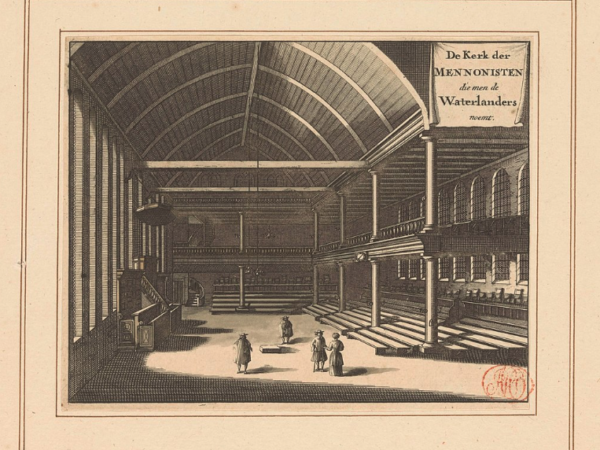
This special issue on Mennonite political theology showcases interdisciplinary contributions from Mennonite feminist theology, Christian approaches to cultural conflict, queer literary studies, and historical critics of violence.

Churches are locally oriented and present to the concerns of everyday life in the community. As an institution it has been an organized center of everyday life for its membership.
 [1]">
[1]">Like authoritarian regimes throughout history and around the world, threats to cultural and political power are leading many on the Christian Right to fear declining national birth rates and promote traditional gender roles and having more babies for “the nation.”
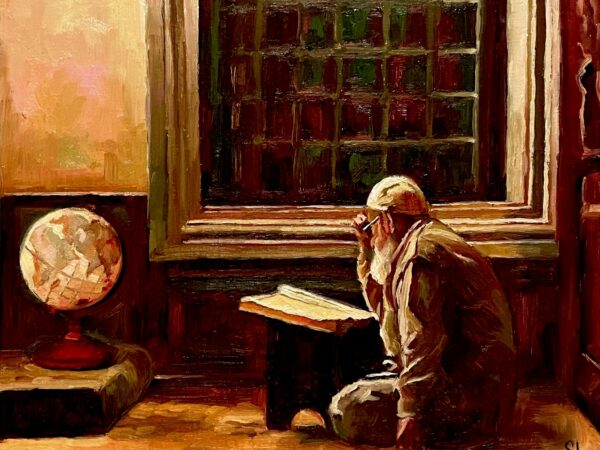
The idea of the modern secular presupposes the existence of a holistic premodern world in which the amorphous phenomenon of religion penetrated all realms of life. But the existence of an Islamic distinction between the religious and non-religious domains suggests otherwise: not a latent secularity, but rather a difference of an altogether different kind. But if it is not equivalent to the “secular,” then what is it?
The journal Political Theology publishes Volume 21, Issue 7

If religious norms are considered to be rational, how are they different from secular ones? This essay revisits this question through the prism of the Jewish discourse of the reasons for the commandments.

Ranajit Guha had helped establish the Subaltern Studies school, and thus moulded the birth of postcolonial studies and non-Eurocentric global history. Guha was both a critical chronicler of the longue durée theological foundations of state and capital, as well as a bard of the ancient heritage of revolt against these structures of oppression.
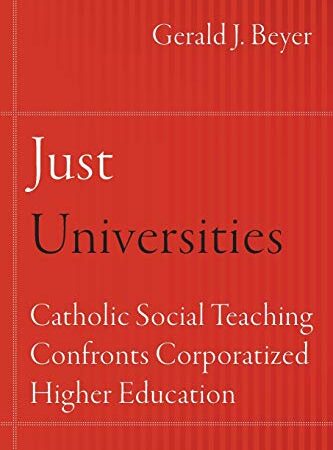
Each essay in this symposium inspired by Beyer’s volume constitutes an important contribution to the ongoing discourse about the ways corporatized higher education impacts academia in the U. S. today, especially the missions of religious institutions of higher learning.

“So, this is the crossroad. It seems that evangelicals increasingly are at the same time in a quest for power and a lack of thought”

Scripture has acquired a lethal familiarity in our political culture of scattering. Can we listen to its words differently together, so that the generous light of God’s creative Word might shine through them and gather us?
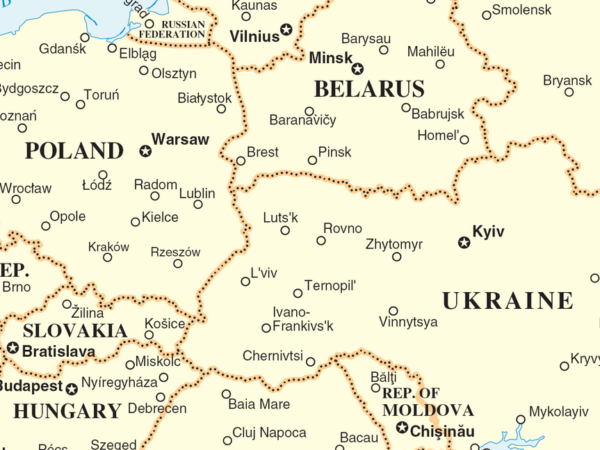
I am a Christian theologian who abhors war and believes that all other reasonable means should be exhausted before the use of lethal force is undertaken. At the same time, I am convinced that there are times – albeit rare – when the evil is so great that no measure other than force will prevent grave atrocities on a massive scale.
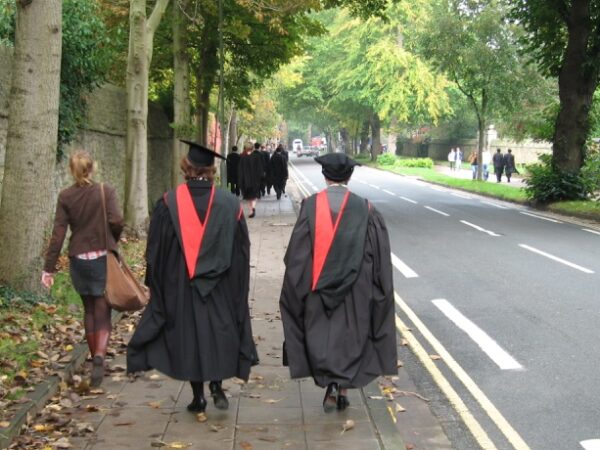
I have been interviewing thirty persons, mostly forcibly-terminated professors from Protestant and Catholic institutions, and several professionals who work with them. Their stories demonstrate a stunning depth of disillusionment. The majority of these often-ordained religionists feel so betrayed by the church that they – and often their families – refuse to be part of it anymore.