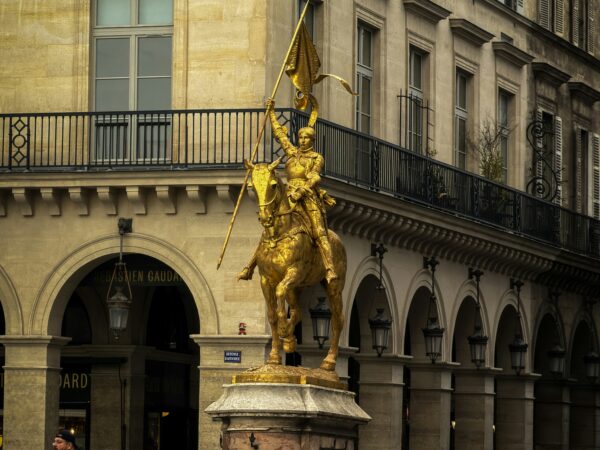
By revisiting the myth of Joan of Arc, Daniel Bensaïd endows his political militancy with a potential theological scope: that of a de-phallicized thinking of the divine.
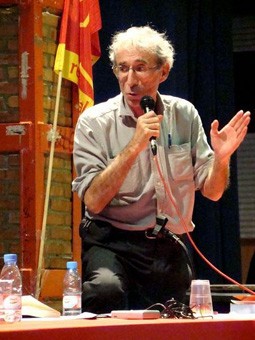
Inspiration comes from previously off-limits traditions, just as emotions once dismissed as despairing gain untold potentials: this is the turn from leftist melancholy to melancholy politics.

Daniel Bensaïd reinterprets Marxism as a Jewish messianism of “patient impatience,” in which political defeat, exile, and even anti-Semitism become the paradoxical sites from which a non-statist, heretical, and universalist revolutionary agency can re-emerge.

Bensaïd critiques political theology while defending Derridean sovereignty—itself theological—and the distance between the two theologies is short.

“Neither of us would be allowed to do our jobs had we adhered to our practice of wearing a veil.”

As an indicator of national frustrations, the headscarf crystallizes the collective hysteria of a declining power that clings to its dreams and its extinct splendor.

I will explore the covenantal relationship between statehood and religion and its implications for freedom of religion for religious institutions unaffiliated with white Christian Nationalism.

Islam in China is going through a period of architectural amputation called Sinicization. The result is a haunting landscape where dome-less and minaret-less mosques visualize deficiency as a definition of what it means to be Muslim in China today.

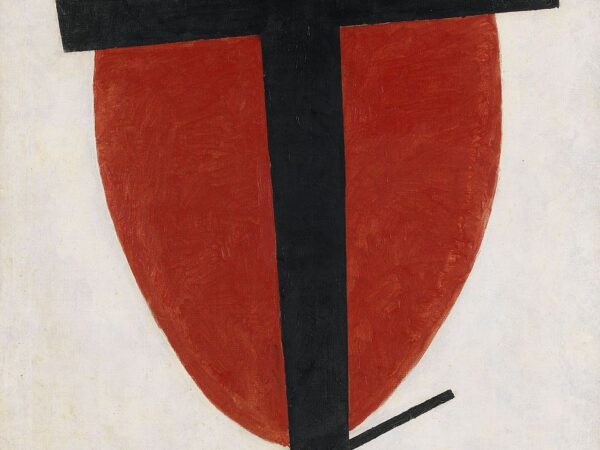
Benjamin devises a pure sacrificial ethos, devoid of the profanities of teleology. Benjamin’s account of sacrifice is saturated with emancipatory sacred dispositions.

Luke Roberts introduces the essays in the symposium on Religion and Public Life.
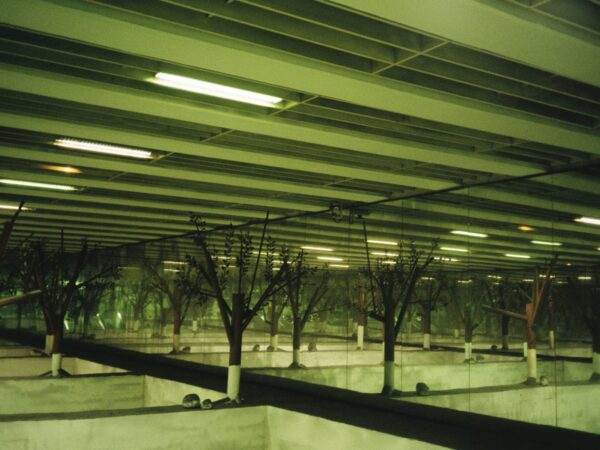
Everywhere, adults laugh at children for their giddy games, whereas they are blind to the ways in which their pretend play shapes every aspect of their lives and leads to exploitation and injustice. Human experience, particularly the experience of the youngster – where the ground of the soul and the ground of God come together in an overflow of light, constitutes the basis for the radical immanence of God within the world.