
We look for revelations on the mountain tops—among the most powerful and famous. God’s politics of reversal, on display throughout Luke, call us to re-center this search in the valleys and level places, in the face of the child and the plea of a father.

The Center for Political Theology at Villanova University invites proposals for symposia of 2-6 contributors to be featured on its new blog, Literature and Political Theology.
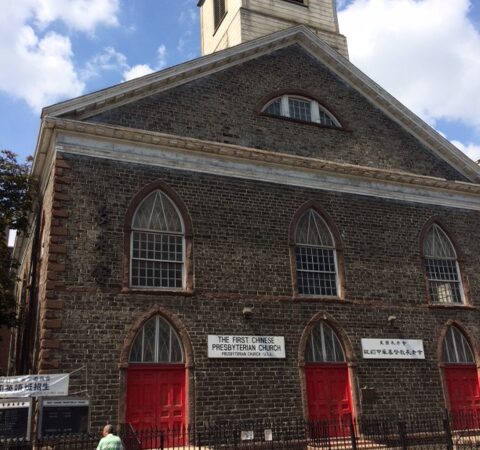
How I understand Tran’s story is that the script for Asian American Christian resistances to racial capitalism needs to be formed by the dangerous memory of Jesus Christ’s witness. Otherwise, Asian American theologies end up resisting identarian essentializations of Asian America that do not always speak to concrete challenges and dynamics that Asian Americans experience.

For the 100th anniversary of the publication of Franz Rosenzweig’s The Star of Redemption, we thought it appropriate to reflect on the relevance of this difficult theo-political (and some would say, apolitical) text for our contemporary political moment. In the spirit of opening living, critical, and generative conversations, four authors wrestle with the Star while also wrestling with a wide range of pressing present issues from politics and policing to racial injustice, religious identity, and radical hope.

This conversation between Adam Y. Stern and Adriana Alfaro Altamirano joins current debates about authoritarianism and biopolitics, “charismatic authority” and “survival,” through the theological-political lens of ‘imitatio Christi.’

The Hindu nationalist project is out-and-out an Orientalist one. It is not indigenous. It is inspired almost entirely within a colonial, Orientalist framework of knowledge.
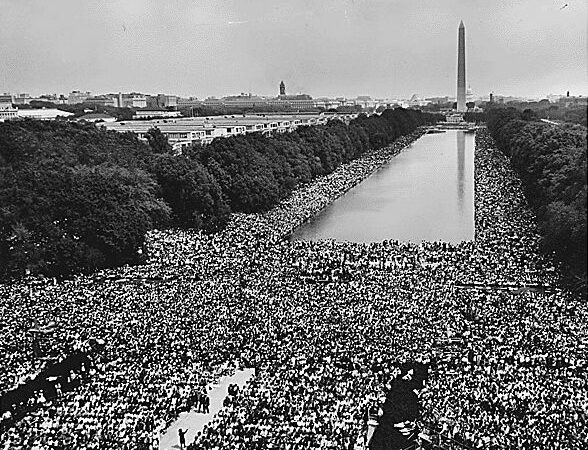
I am sympathetic to what I perceive as Wink’s larger goal in this interpretation. He wants to remove the option of reading Jesus’s words as endorsing toleration of abuse. He is rightly aware of and duly burdened by too many examples in the history of Christendom in which the powerful have used a command like “do not resist evildoers” as a rationale for submission to injustice.

In her very presence, the widow performs the political act of bringing to light oppression and injustice. Our task is to learn how to see her.
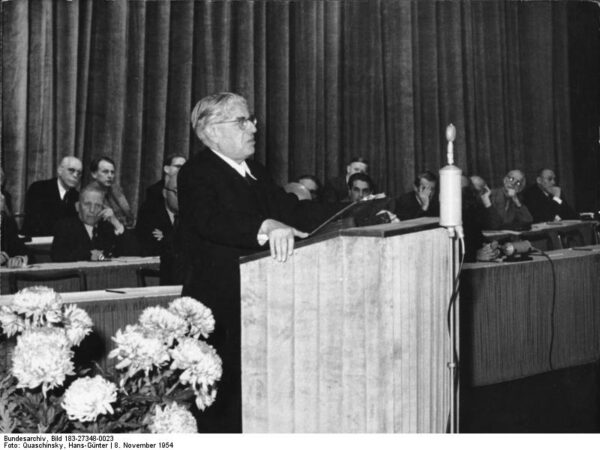
In many ways, Bloch’s work inverts the classic dictum of political theology advanced by Carl Schmitt, that “all significant concepts of the modern theory of the state are secularized theological concepts.” For Bloch, theological concepts are intimations of the freedom of the secular and revolutionary socialist society.

As six emerging scholars met over summer 2021, the overarching theme of the workshop—the state of the field of political theology—presented both an opportunity for and obstacle to meaningful conversation.

The Political Theology Network community remembers Tyler Roberts, who died on June 3, 2021 at the age of 61.

Kristeva’s psychoanalytic approach and practice shed light on the unconscious, affective, and bodily formation(s) of religious and political discourses and systems.