
Perhaps part of the reason why disparities in food distribution continue to exist is that, when those of us who have food enough on our tables try to respond to disasters such as famine, without connection with the people who suffer them, both they and us are likely to come away empty. The ironic use of famine in Naomi’s story is able to suggest to us another way, an approach to famine that sees first the emptiness in relationships when kin from the ‘developing’ and ‘developed’ worlds find ourselves absent from one another.
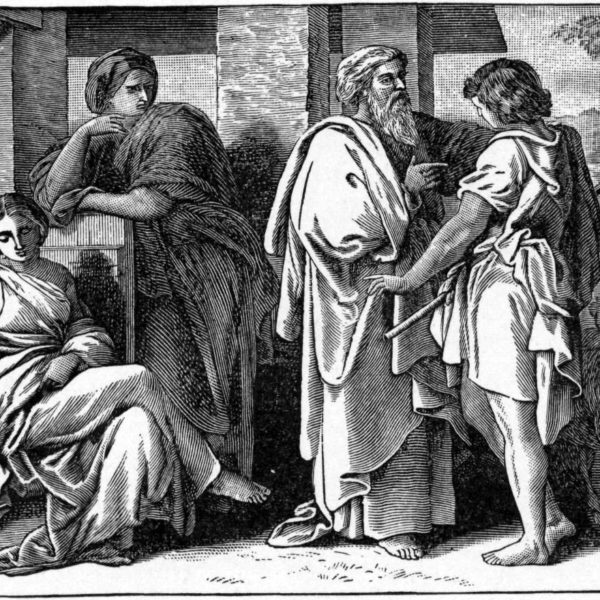
The Old Testament account of Jacob’s sojourn with Laban can expose some contemporary Christian blindspots, not least in assumptions concerning the ‘biblical’ meaning of marriage. However, we must also reckon with the limitations of the text’s own perspective, giving voice to the silent female characters within it.

The “postmodern condition,” as Jean-François Lyotard designated it in 1979, is an “incredulity toward metanarratives.” That definition has been recited interminably by those grasping for a familiar sound-byte to encapsulate the significance of postmodernity. In the last few decades it has acquired overtones of a playful cultural experimentalism that has somehow outgrown the need for authoritative accounts of the meaning and purpose of human history.
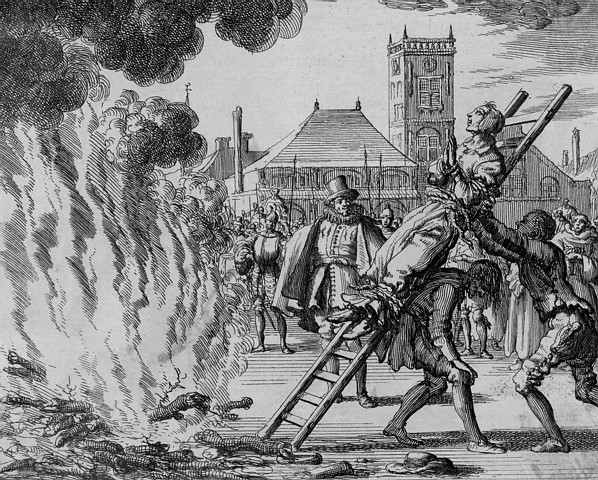
There’s a fable I often heard growing up, about a Mennonite man (or Amish or Brethren, depending on where the story is being told) who was asked whether he was a Christian. His response: “Ask my neighbors.” The story encapsulates a certain historicist impulse in the Anabaptist tradition: the commitments we claim matter less than the commitments we embody. I first learned to care about the history of my community for just that reason. We learn who we are by considering honestly how we have lived.

David Brat’s upset of Eric Cantor in Virginia’s District Seven congressional race last week generated waves of buzz, with no small stir churning in the Christian blogosphere. Although political upstarts, especially those that identify as conservative Christians, always tend to create a storm of media buzz, the close attention to Brat is perhaps more justified than most. As I hope will become clear in this brief profile of Brat’s scholarship and political theology, Brat’s somewhat bewildering and seemingly idiosyncratic synthesis of theology and economics illustrates the tensions endemic to the increasingly-libertarian sectors of the Christian Right.

The myth of Captain America introduces us to a serious quandary. Can liberal democracy be de-coupled from violence or is it doomed to repeat old battles? For Christians the question is doubtless a complex one. The Church can doubtless find much in Rogers’s democratic creed to admire; his sense of self-sacrifice, his public spirit and sense of civic duty. There is something of the righteous pagan in the Captain America myth which should not be lightly dismissed.
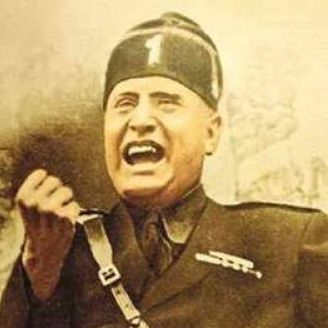
The international crisis in Ukraine, combined with the precipitous and aggressive behavior of Russia toward the West, the docility of Europe and the fecklessness of American foreign policy in shaping events, has prompted after-midnight calls among many international experts for a radical and rapid rethinking of what the word “globalization” really means, or what it might look like even in the next five years.
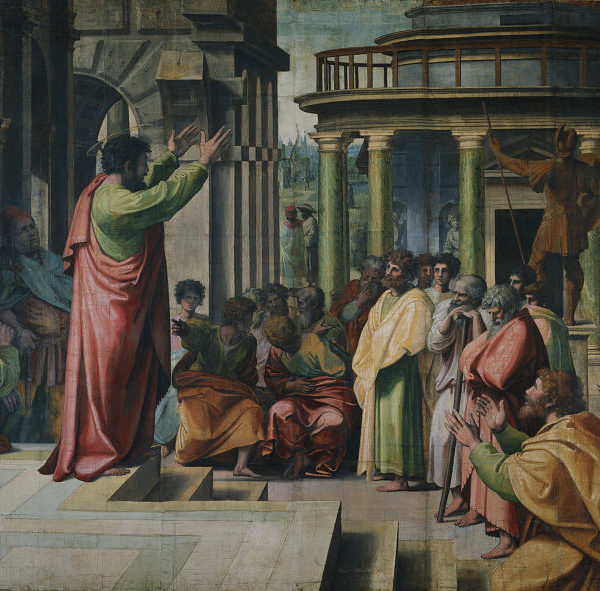
In the face of the thoroughly known god who sponsors our political ideologies and patriotic projects, we must join with the Apostle Paul in proclaiming the unknown God. Cutting across our speculation, superstition, and listless curiosity in the revelation of Jesus Christ, this God punctures our comfortable idolatries and calls us all to give account.

In the account of the slave with the spirit of divination, Paul, Silas, the Philippian jailer, and his family we encounter dynamics of agency and constraint, of freedom and slavery. There are a number of surprising instances of human action within this narrative which nonetheless speaks powerfully of the power and activity of God.
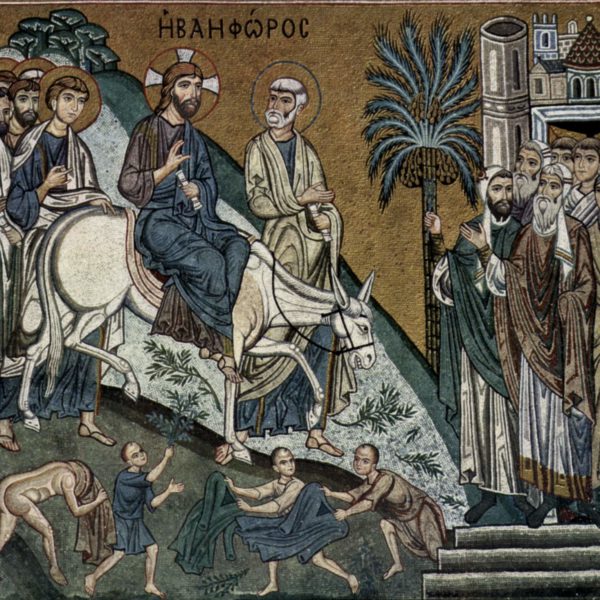
One plots and schemes in order to exert control. One embarks upon a pilgrimage in order to relinquish control. Entering Jerusalem as a lowly king, Jesus foils both the plots of those who would capture him and those who rally around him as a political revolutionary.
. . . As you can tell from the course description, I even started the course by asking, in effect, “Why are people using this term?” I’m still not sure that I know the answer to that question almost five years later. In teaching the course, the question of the academic worth of the material was at the forefront of discussions during the entire semester. “What was wrong with liberalism again?” was a question that, sometime around week six, took on full zombie status: it would just not die.

Following the very useful list posted on Religion in American History, we’ve put together a list of several forthcoming books relevant to political theology to keep an eye out for as they are published in the coming months. If we’ve missed any, please share them in the comments. Come summer, we hope to have another list for you, introducing all the books due in the second half of the year.