
In a recent piece about Les Misérables, which is in general a fine study of the dynamics of law and grace in the film, Michael W. Hannon worries that a view of the state, and the political realm more broadly, as an unnatural institution is insufficient for a vibrant and vigorous engagement of this realm, or as he puts it “our faith in law.” Hannon aptly notes that Valjean, one for whom “it seemed as though he had for a soul the book of the natural law,” is the ideal in Hugo’s work. Valjean’s remarkable conversion, for instance, results in a situation in which he recognizes a greater sense of moral obligation rather than less.
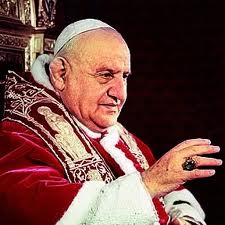
Carl Raschke argues that, given the ongoing debt crisis, political theology must more adequately grapple with economics, and in particular Keynesianism. The tradition of Catholic social teaching, particularly in the period of Popes John XXIII and Paul VI, already provides an example of a political theological response to Keynesianism, and, in both what it gets right and what it gets wrong, can serve as a resource to political theologians today.

A recent article in the New York Times provides a fascinating account of the profound impact that Christian forgiveness played in a Florida murder case. This forgiveness set in motion an amazing chain of events that culminated in the murderer receiving a greatly reduced sentence of 20 years in prison. How did this happen? The answer lies both in the victim’s family’s practice of forgiveness, and also the practice of restorative justice that was employed during the sentencing process.
Many people have an immediate, visceral response to the word ‘ecumenical’. For some, it is a byword for the unity and cooperation which is most needed, necessary, and important for the church today. For others, it is a byword for a tired project which is showing its age along with those who entered into it with fervor in the 1960s and 1970s, and are still clinging to it along with outmoded theologies and expectations of unity. For the first kind of person, teaching political theology in an ecumenical context may be looked upon as a welcomed opportunity and important responsibility, while the second sort of person may shudder at the idea of the sort of bland, common-denominator teaching which can be found in some ecumenical contexts. How can the teaching of political theology in ecumenical contexts avoid this blandness while also not being too optimistic about ecumenical political theology?
Hope is not drawn from the world-that-is. Hope is grounded in perceptions of the world-that-ought-to-be. It arises from the power of the world-that-ought-to-be. For Christians, the world-that-ought-to-be is the eschatological Kingdom of God. It is expected in the future, in God’s time. But, it is also in the present, which is God’s time. The Kingdom is a perpetual possibility, even as its realization must be perpetually deferred in its fullness.
The reader of the first three volumes of Agamben’s Homo Sacer series—the eponymous first volume, State of Exception, and Remnants of Auschwitz—could be forgiven for being skeptical. Though Agamben’s meditations on the question of sovereignty had an immediate purchase during the dark days of the Bush Administration, it could sometimes seem that he was guilty of stretching the concepts of the sovereign exception and bare life to the breaking point, forcing them to take on an explanatory burden they could not really bear. One could concede that when pushed to a certain extreme, the Western theologico-political machine breaks down into the confrontation of sovereign power and bare life, and perhaps even that the Western machine operates within the tension between the two—yet there is so much going on in that “between” that it seems impossible that it can all be accounted for in Agamben’s terms…