
Rather than starting from a diagnostic superficiality of her image, a seemingly inevitable lure as evidenced by the myriad books about Weil that display her photo on their cover, when we really dwell with Weil’s writing in relation to her self-fashioning, what emerges is how profoundly she sought a more engaged connection with the world.

Those experiencing rejection because of their sociopolitical identities can know that God does not condone discrimination, that God’s promises are a proclamation of reversal.

The Kingdom of God – the kingdom pictured in Psalm 72 – seems a long way off, a dream growing more distant everyday as we move inexorably closer to the inauguration.

This is a salutary call to counter the provincialism of narrow focus in individual fields (Classics often falls in this trap) by expanding the scope of study beyond any single culture.
In being used as a weapon, American Jews—even those who resist state power—find ourselves imbued with a power we did not want, playing a role for which we did not audition. Rather than gifted with a second sight, we are caught inside a hall of mirrors.

In the post-secular world [Dick] envisions, religion has fully capitulated to the allure of the marketplace. As these perky commercials are meant to indicate, Dick expects humankind, circa 1992, to seek (and find!) redemption not in its devotion to (and fear of) otherworldly deities, nor in the afterlives these deities gatekeep for their favorites, but in its reverence for nifty consumer wonder products: beer, brassieres, plastic wrap, razors, etc.

Are you tired of your old body politic? Is it missing that special something? Try new Ubik Political Theology! Just spray Ubik Political Theology illiberally onto the affected parts and your political body will be instantly revitalized by the transcendental glow of Christian theology. Use in exceptional circumstances only. No terms and conditions apply. Warning: may contain nuts.

Many foundational myths of community formation and development situate “after the storm” as the moment when positive change began to happen for them as a people… Isaiah 53:4-12 can be understood as an act of collective storytelling to imagine life “after the storm.”
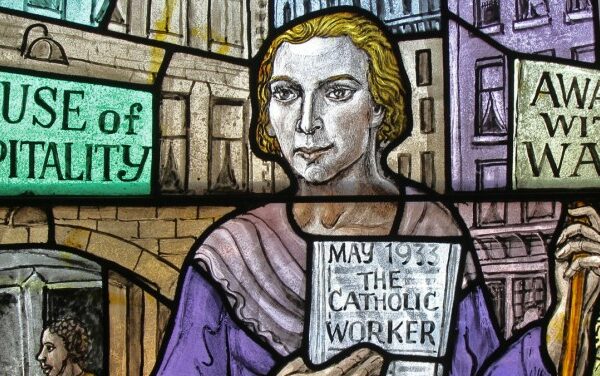
An examination of responses that are counteracting the fascism emboldened by Trumpism; including Dorothy Day and the Catholic Worker movement as well as Christ’s moral imperative for anti-fascist action. A provision of counternarratives of hope to the prevailing motif of the Catholic Right’s resurgence.

This intervention invites readers to consider Largier’s interdisciplinary approach on figuration and theistic immanence, particularly in the light of Foucault’s reflection on Subject and Power and his large influence on Anthropological and Social Sciences studies of power and the willful subject. Napolitano examines mystics and negative theology’s thread of “the ground” in Largier’s work, likening its affective intensity and dynamic of figuration to an otherwise imagination of the political, and its forms of violence.

How does one read, providentially, such a murderous and malleable phenomenon as the nation-state in Africa?