xbn .

Search: the Politics of Scripture

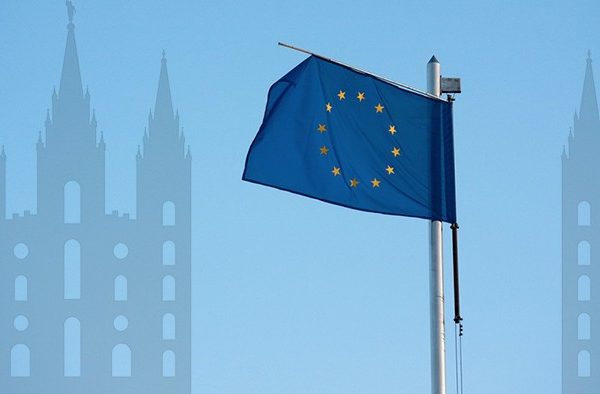
Universalism versus Multiculturalism – The Crisis of Liberal Democracy in the Aftermath of the Paris Massacres

Within a few days following the shock of the terrorist assault on, and wanton slaughter of the staff of, the French satirical magazine Charlie Hebdo, the deeper crisis of Western liberal democracy—the crisis of universalism versus multiculturalism—surged into view.

Call for Papers: Intellectual Virtue, Religion, and Civil Discourse

Call for Papers: Political Theology has expressed interest in publishing a special issue on the theme of intellectual virtue and civil discourse (subject to editors’ and referees’ approval). Due date: June 15, 2015.

Intellectual virtues are commendable traits of thought that facilitate the acquisition of knowledge and understanding. Public discourse would be much better off when citizens exercise such virtues, it seems.

The Politics of the Individual—Mark 1:4-11 (Alastair Roberts)

At moments of crisis, it can be the responsibility of committed individuals to secure and represent the self-understanding of the community or nation to which they belong, to provide the seed from which the entire social body can be renewed. Within easily neglected political dimensions of the baptism of John we may be recalled to our potential and vocation as political individuals in this regard.

Announcing New Members of PT’s Editorial Board

The journal Political Theology is very pleased to welcome seven new members of its Editorial Board.

Roland Boer is Associate Professor in the School of Humanities and Social Science at the University of Newcastle, Australia. He is also Professor of Literary Theory at Renmin University of China, in Beijing. Boer is the author of numerous books, including the five volume series, On Marxism and Theology. He co-edits the journal Critical Research on Religion.

The Politics of Polarization—Luke 2:22-40 (Alastair Roberts)

Jesus introduces a new principle of division into history, forcing all to show hands previously held to close to their chests. As Jesus precipitates division and judgment in history, he shapes the destinies of societies and nations and explodes the myth that he is an apolitical Messiah.

The Politics of Righteous Joseph—Matthew 1:18-25 (Mark Davis)

Righteous Joseph does not publicly shame his fiancée Mary, breaking with common practice in an honor and shame culture. The angel that appears to him calls him to take a further step, to assume the role of father to Mary’s curious child.

The Politics of the Divine Warrior—Habakkuk 1:1-4; 2:2-4; 3:17-19 (Amy Merrill Willis)

Habakkuk’s prophecy raises the unsettling question of how to deal with the image of the Divine Warrior in a sensitive manner. Handled carefully, rather than compounding violence with more violence, Habakkuk’s prophecy can function as a powerful appeal for justice.

The Politics of Hospitality—Matthew 25:31-46 (Alastair Roberts)

The Parable of the Sheep and the Goats presents hospitality to the poor as a test of a society’s welcome of Jesus. How would we do?

The Politics of Small Beginnings—Micah 5:2-4; 6:6-8 (Amy Allen)

Micah’s message reminds us of the importance of small beginnings and the potential of the things that can start from them. Alongside this, he teaches us of the necessity of the actions whereby we live the difference that God desires to create in the world.

The Politics of Exalting the Humble—Matthew 23:1-12 (Richard Beck)

Jesus’ description of the scribes and the Pharisees in Matthew 23 provides us with an illustration of the corrupting effects of hierarchical power structures. Given the pervasive and entrenched character of such structures, escaping their perverse dynamics is easier said than done. Nevertheless, we are not left without means of resistance, perhaps the first of which are actions and words through which we make the unseen visible.