
….Because war’s constituent ingredients are killing and/or physical harm, and because, in Childress’ argument, those two things are “intrinsically prima facie wrong” because of the prima facie obligation of nonmaleficence, war itself is prima facie wrong. Therefore, for Childress – and those who follow him – just war theory has evolved out of the need to justify the overriding of nonmaleficence but begins with the presupposition of war’s prima facie wrongness.
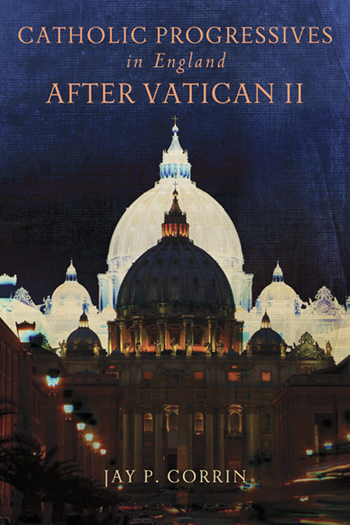
This book examines the development of Catholic social philosophy from the end of World War II up through the turbulent 1960s. Vatican Council II can be seen as the culmination of the Catholic liberal or progressive tradition, the earlier history of which was the subject of my previous book Catholic Intellectuals and the Challenge of Democracy (2002). Thanks to the ground-breaking work of such Catholics as Jacques Maritain, Virgil Michel, Hans Küng, John Courtney Murray and others, there was in place by the calling of Vatican II a theological platform from which the Church could launch a progressive approach to the secular challenges of the modern age.
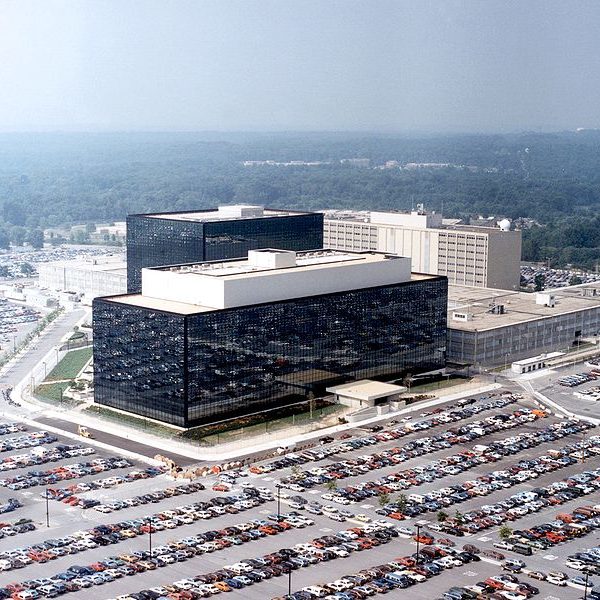
The growing power of government to trace everything that we do and to reveal our most compromising secrets has been an increasing source of public concern over the last year or so. In Jesus’ encounter with the Samaritan woman at the well we see an example of such omniscience employed to liberate, rather than to enslave. While such godlike power in the hands of our governments is a scary prospect, in God’s hands it need not be a cause of fear.
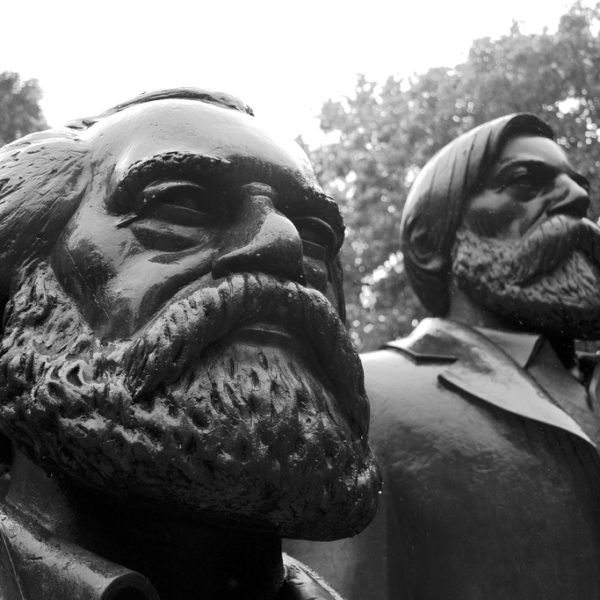
I would like to change direction a little in this reflection on one hundred years of political theology. My interest for some time has been the complex intersections – or translations – that take place between Marxism and religion. I find unpersuasive the assertion that Marxism is a secularised or pseudo-religion, a political movement that relies upon a religious framework in order to develop its positions. This is to fall into the double-trap of a secularisation narrative and making theology an absolute and thereby the source of all modern political thought.
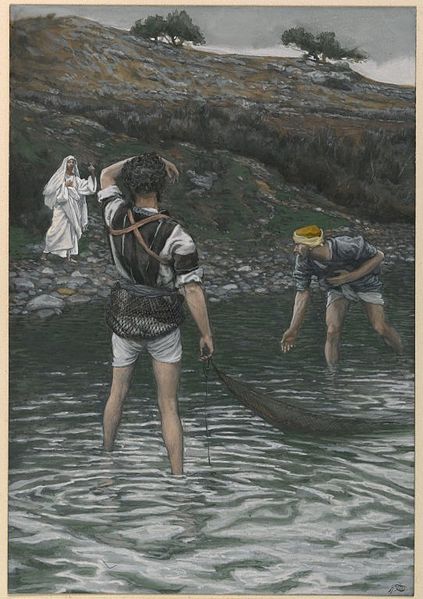
In the context of Roman rule in Galilee in the first century CE, the abandonment of fishing was an act with political connotations. When the first disciples left their nets they were ceasing to fund the empire and serving a new kingdom.
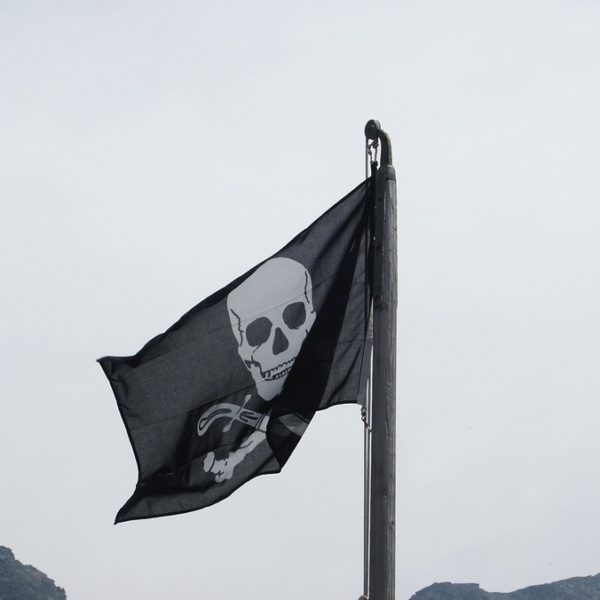
In likening kingdoms lacking justice to criminal syndicates, Augustine invokes the story of a confrontation between Alexander the Great and a pirate. Indeed, Augustine judges “that was an apt and true reply which was given to Alexander the Great by a pirate who had been seized. For when that king had asked the man what he meant by keeping hostile possession of the sea, he answered with bold pride, ‘What thou meanest by seizing the whole earth; but because I do it with a petty ship, I am called a robber, whilst thou who dost it with a great fleet art styled emperor’” (De civ. Dei 4.4.1).
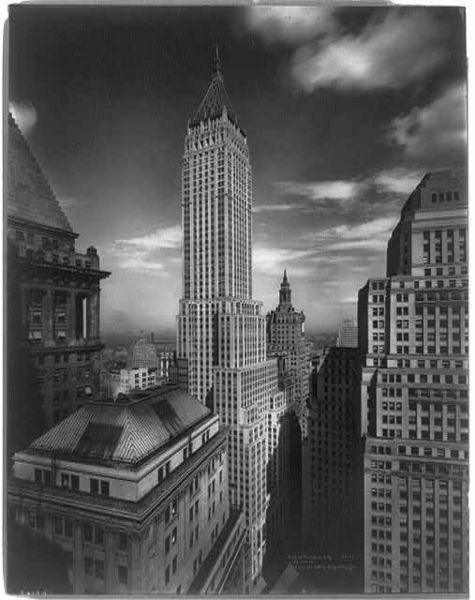
Democracy is in crisis. Or, or more significantly, liberal democracy is in crisis. So writes Philip Coggan recently in The Economist, the Western world’s foremost punditocratic commentary on the shifting social, cultural, and political terrain that goes by the slippery name of “globalization”.
What the world needs is not another group of people scrambling for advantage or clamoring for privilege, but rather a community of people engaged in acts of transcendence that move beyond the interests of the self towards the furtherance of the common good. That will only happen when the church tells the truth about how and why it was so chosen by God and re-orders its practices accordingly.
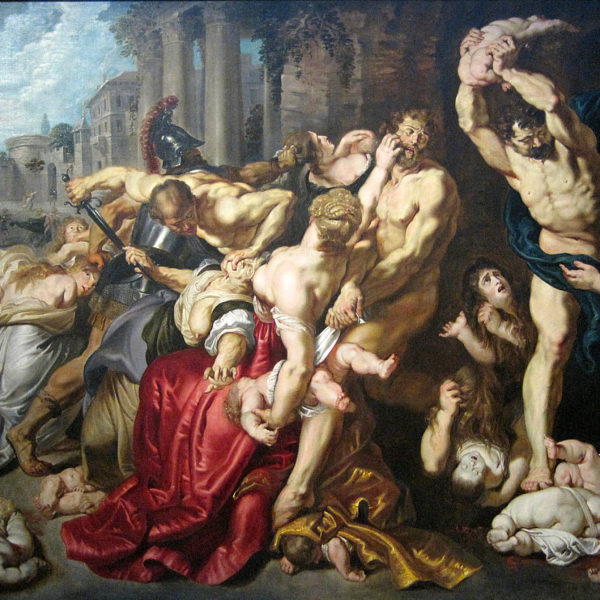
The account of the slaughter of the innocents rests like a deeply unsettling shadow upon the Christmas story, with its themes of God’s peace and presence. Yet, in reflecting upon this account, we may discover a profound new conception of the mode of God’s presence within our world and its tragedies.

Isaiah 35:1-10 is a hopeful final statement to First Isaiah. Bringing together images of nature leading the way into a new world and release from political oppression, it continues to resonate in our contemporary situation.
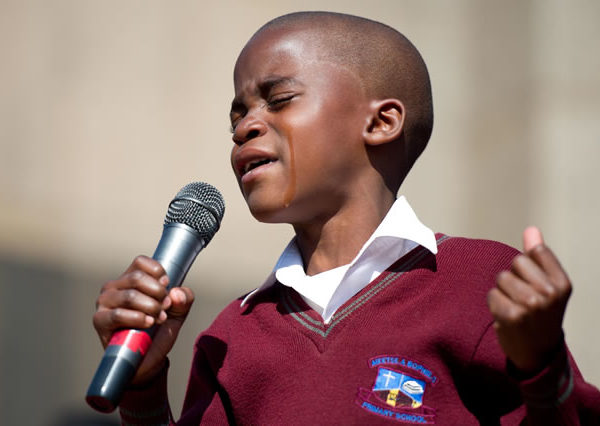
“Have you heard that Mandela died?” The staggering impact of this question took my breath away as I stepped into the office after a full day of classes on Thursday, December 5th. I texted my daughter who had grown up in South Africa, with these simple words, “Wow – this is huge!” Mourning the loss of Mandela has been an enormous undertaking.
Re-thinking the intersection of law and religion today tends to proceed from a concern for the limits of religious freedom and a critique of the foundational historical, social, and cultural presumptions about religion that are seen to undercut or frustrate the possibility of advancing religious freedom.