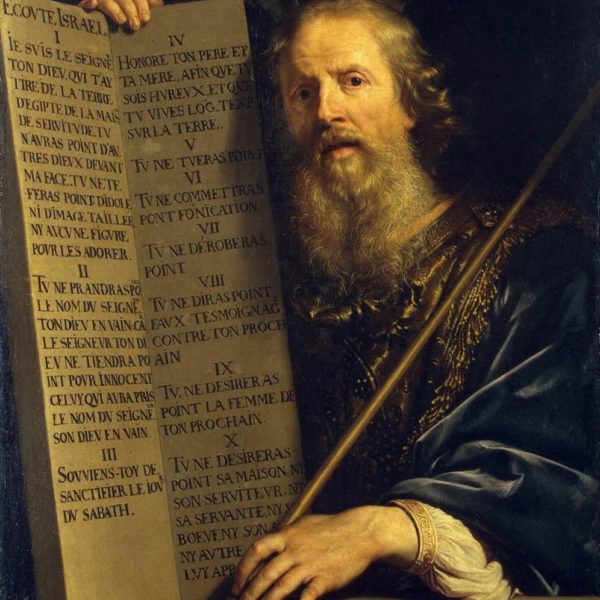
The idea that the political aspects of the Ten Commandments are confined to the latter portion and that the beginning portion is only ‘religious’ in nature is unsustainable. The politics of the commands themselves as well as the politics of the conversations in which those commands are embedded continue to be instructive for faithful communities today.
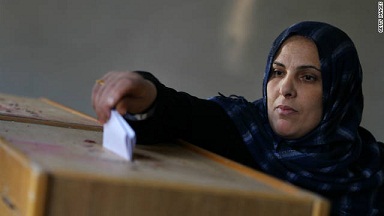
In what follows, my aim is to argue – the stronger version of the thesis of postsecularity, concomitant to any discussion of political theology[ii] – that there is no strict separation between religion/theology/church/mosque and politics/secular/state/nation by way of deliberating on the possibility of an immanent Islamic critique. This thesis of postsecularity does not assert that we have varying amounts of religion mixed in with different amounts of politics,[iii] for that still conceives religion and politics as two separate concepts. Rather, it asserts that the categories of “religion” and “politics,” supposedly marking two distinct and oppositionally defined concepts, are incoherent to begin with, and should be dispensed[iv] with altogether.[v]
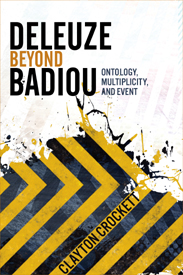
Clayton Crockett’s Deleuze Beyond Badiou is more than a commentary on Badiou’s reading of Deleuze or a defense of Deleuze. It is, rather, a transdisciplinary work that crosses the domains of theology, philosophy, and politics through a reading of the relationship between Deleuze and Badiou. Crockett’s goal, however, is not primarily descriptive but constructive, in that he uses the relationship between the two philosophers as a means for thinking otherwise.
In Plato’s Theaetetus Protagoras insisted that one should not persuade the other of what is true in relation to what is false because no one has ever succeeded in doing so and most of all because truth in itself is not the issue in political discussions, debates, and deliberations. But there is one thing that Protagoras wanted to persuade people about, namely improvement. From the point of view of ancient Greek politics, this is all that can be done: We can strive to achieve a better situation, which inevitably will require further improvement. But if nothing but improvements can be hoped for, then “truth” or the “good” have no place in this progress because they presuppose final achievements, accomplishments, and results. The point of Protagoras is that one should never persuade people of what is good—only of the need for improvement…
It is certainly interesting to see a reflection of myself in the response of another discipline, even if I sometimes have trouble recognizing that image. Most useful will be for me to address the meaning of the gap between the two different political theological enterprises represented in this discussion. I will begin by making clear what the idea of a political theology contributes to my project. Following that, I will defend some of the contested theoretical premises of my work. Finally, I will take up the hardest question that emerges from this discussion: is it really the case that my political theological project is non-normative? If there is an implicit normative claim in my work, then the reviewers are right to ask not just whether I have got my description of American politics right, but whether the ethical direction of my work can be supported.
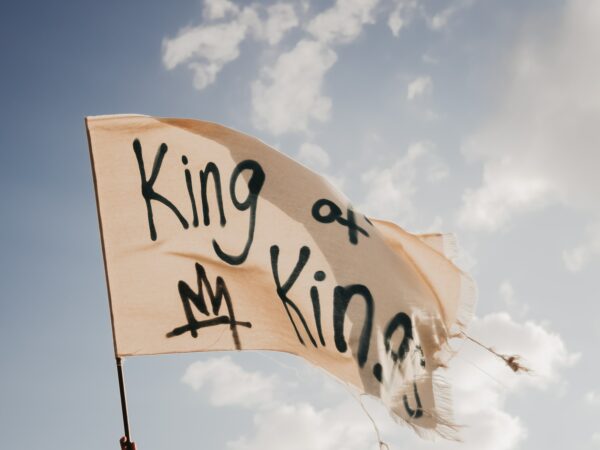
Kingship is an irredeemably hierarchical, patriarchal form of rule, right? Maybe not, says Psalm 146—if the king is God.

Heavenly citizenship for Paul is certainly not about escaping social responsibility within this life. The path that follows Christ is a path that moves one’s focus from earthly things to heavenly.

Listening and responding is a blueprint for us all: it’s amazing and wise to discern God’s leading in the context of community.


Indian citizens stepping up to save as many lives as they could embody what the Kingdom of God is about: collective self-care, mutual aid, without a king, while also holding earthly kings accountable for not attending to the needs of their public whether or not there is a crisis.