
Over the years we have realized two things. One, the anti-vaccination lobby is very strong and they use social media to their benefit. Second, for any vaccination campaign to be successful it would require a positive socio-political and religious background.

Efforts to leverage “God” are often attuned to the dynamics of the symbol yet remain largely untroubled by the gaps such acts generate.




In the wake of an atrocity such as the San Bernardino shooting or the attacks in Paris, the choice between the politics of righteousness and the politics of fear will press upon us with a renewed urgency. However, it is righteousness—justice and ethical probity—that is the only genuine answer at such a time.

Wisdom’s publicly raised voice challenges the simple ones, who love being simple; the scoffers, who delight in their scoffing; and the fools, who hate knowledge. The reproof of Wisdom is especially relevant in the contemporary political world, where so many of our leaders and politicians thrive upon such popular attitudes.
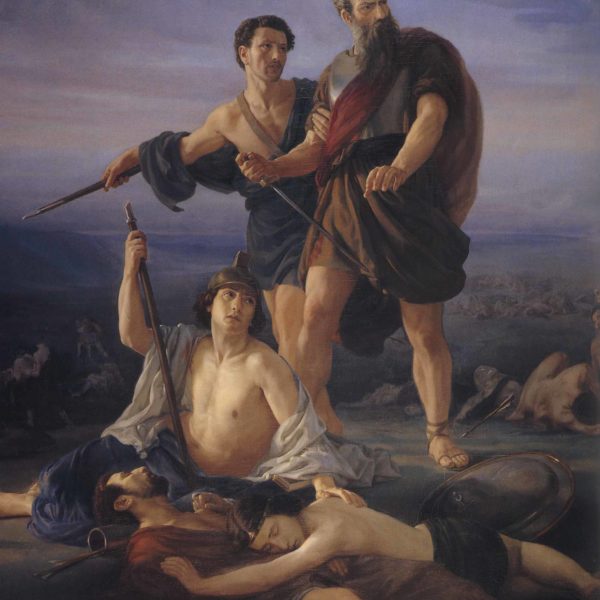
The book of Samuel’s unembarrassed portrayal of a form of political rule suffused by eros—a politics displayed in David’s lament for Saul and Jonathan—may provide an illuminating challenge to our attempts to pursue a rational politics beyond such dynamics.
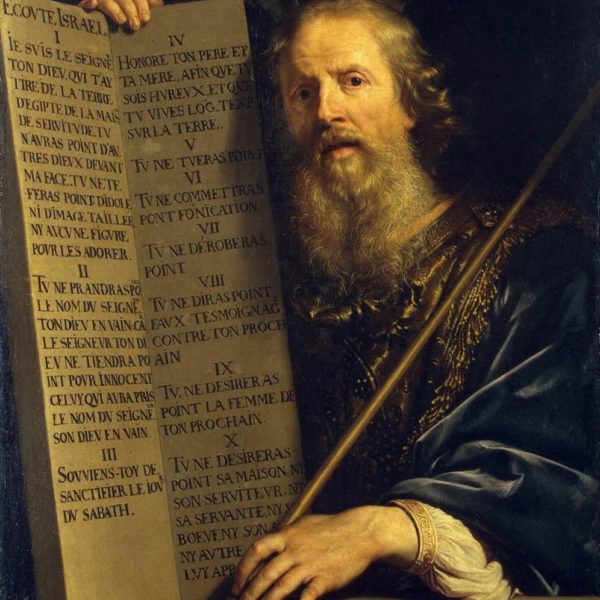
The idea that the political aspects of the Ten Commandments are confined to the latter portion and that the beginning portion is only ‘religious’ in nature is unsustainable. The politics of the commands themselves as well as the politics of the conversations in which those commands are embedded continue to be instructive for faithful communities today.

In what follows, my aim is to argue – the stronger version of the thesis of postsecularity, concomitant to any discussion of political theology[ii] – that there is no strict separation between religion/theology/church/mosque and politics/secular/state/nation by way of deliberating on the possibility of an immanent Islamic critique. This thesis of postsecularity does not assert that we have varying amounts of religion mixed in with different amounts of politics,[iii] for that still conceives religion and politics as two separate concepts. Rather, it asserts that the categories of “religion” and “politics,” supposedly marking two distinct and oppositionally defined concepts, are incoherent to begin with, and should be dispensed[iv] with altogether.[v]