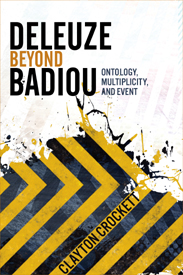
Clayton Crockett’s Deleuze Beyond Badiou is more than a commentary on Badiou’s reading of Deleuze or a defense of Deleuze. It is, rather, a transdisciplinary work that crosses the domains of theology, philosophy, and politics through a reading of the relationship between Deleuze and Badiou. Crockett’s goal, however, is not primarily descriptive but constructive, in that he uses the relationship between the two philosophers as a means for thinking otherwise.
In Plato’s Theaetetus Protagoras insisted that one should not persuade the other of what is true in relation to what is false because no one has ever succeeded in doing so and most of all because truth in itself is not the issue in political discussions, debates, and deliberations. But there is one thing that Protagoras wanted to persuade people about, namely improvement. From the point of view of ancient Greek politics, this is all that can be done: We can strive to achieve a better situation, which inevitably will require further improvement. But if nothing but improvements can be hoped for, then “truth” or the “good” have no place in this progress because they presuppose final achievements, accomplishments, and results. The point of Protagoras is that one should never persuade people of what is good—only of the need for improvement…
It is certainly interesting to see a reflection of myself in the response of another discipline, even if I sometimes have trouble recognizing that image. Most useful will be for me to address the meaning of the gap between the two different political theological enterprises represented in this discussion. I will begin by making clear what the idea of a political theology contributes to my project. Following that, I will defend some of the contested theoretical premises of my work. Finally, I will take up the hardest question that emerges from this discussion: is it really the case that my political theological project is non-normative? If there is an implicit normative claim in my work, then the reviewers are right to ask not just whether I have got my description of American politics right, but whether the ethical direction of my work can be supported.

The basic assumption of Jesus’s parable is not that one must act a certain way for the giver, but rather that it is good and right and beneficial for all to have a daily living wage, with no strings attached.

There is a priority of love such that the essence of being Christian is to love straight (in the sense of undiluted love) rather than get caught up in straight love hegemony.

With Pope Leo’s recent declaration of just war being “outdated,” Eli McCarthy pens a letter from just war theory, asking to be let go.

To be faithful to God’s promised covenant for communal flourishing, faith communities must reject the recycled rhetoric of “blood and soil” that is rapidly turning white supremacy into normalized governmental policy and practice.

While giving tribute to Fuchs’s noteworthy efforts at reimagining our understanding of moral norms by appreciating the emergent process of human evolution through the appropriation of a dynamic/future-oriented theological anthropology, this analysis will seek to press the limits of his robust framework whilst inquiring what an ethic of vulnerability might look like in an age of terrestrial/ecological crisis.
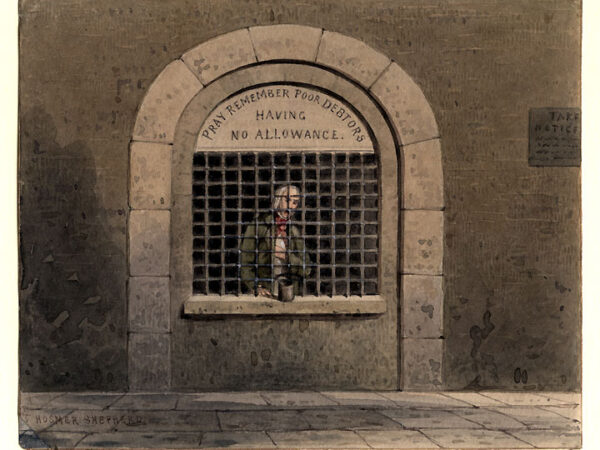
Debt forgiveness was not an act of discretionary charity but a matter of divine justice — a God-ordered liberation of persons and families crushed by debt and indentured to creditors.

Psalm 2 presents the ways in which the powerful paint themselves as simultaneous victor and victim–and, more hopefully, it depicts a God who interrupts these fictions.