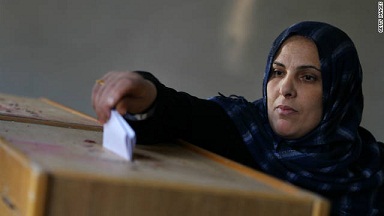
I join this conversation as a political theorist having just published a book, Beyond Church and State: Democracy, Secularism, and Conversion (Cambridge 2013), in which I argue that the modern secular imaginary is premised upon an insufficient image of secularism as the separation of church and state, and that secularism should instead be understood as a process of conversion that reshapes key dimensions of both religious and political life

The text of 1 Kings 8 is a conversation, not a monologue. For those of us who look to Scripture to guide our understanding and action in our own context, this text invites us to wrestle, conversationally, with the embedded ideologies of our own political leaders’ projects. Names matter in politics. But humble leadership, for the good of all, ought to matter more.

God chose to speak through a wild man known as John the Baptizer who dressed in animal skins, ate wild honey, and probably had the most unruly hair. The biblical description of his dress and style resembled the prophet Elijah found early in Second Kings. Why then do we ignore God’s trend of speaking through those who diverge from the status quo?

The Book of Esther understands well the challenges of living in a world where one might have to juggle and negotiate different, even conflicting, identities and loyalties– one political, one ethnic and religious. But it is interesting that while these identities are sometimes open and sometimes undisclosed, they never correspond neatly to the categories of “public” political lives vs. “private” religious lives. Esther’s hidden religious identity makes claims on her public life as well as her private life…
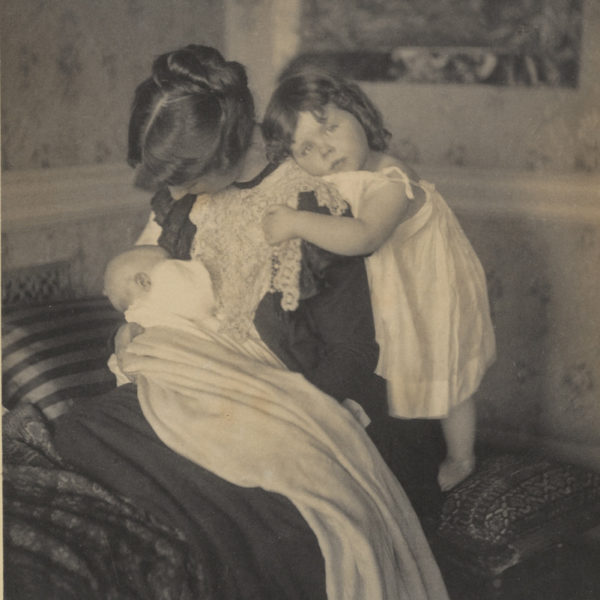
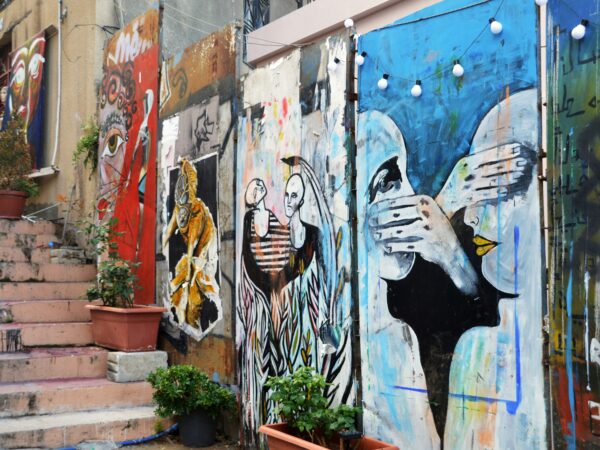
The ability or inability of insiders to hear the silences that arise on the other side of the borders drawn by colonizing societies around themselves, to perceive them as the echo of missing voices, may constitute, for the victims of colonialism, an indication of whether they can place their hopes for a more just world in something other than violence.
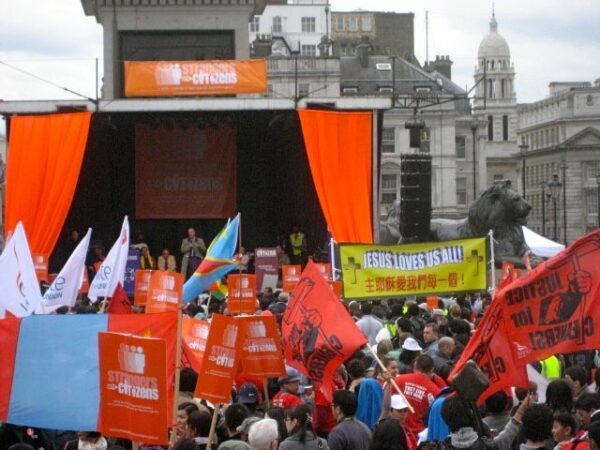
This post focuses on a no less important but less visible cluster of questions about the relationship between ethics and politics, what helps or hinders the formation of persons capable of undertaking liberative projects with and for others, and how the quality and character of relations between persons (for example, virtues such as hope, courage, or hospitality) directly shape the conditions for the possibility of democracy.

Kristeva’s psychoanalytic approach and practice shed light on the unconscious, affective, and bodily formation(s) of religious and political discourses and systems.
Sometimes politics is less about the leaders and more about whether communities choose to live together in wisdom or folly.