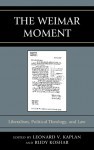
The Weimar Moment: Liberalism, Political Theology, and Law, edited by Leonard V. Kaplan and Rudy Koshar, is a set of papers from a conference held at UW-Madison in the fall of 2008 (Lexington Books, 2012). Many of the papers will be of direct interest to readers, most notably perhaps the set dealing with Karl Barth. Here I want to point out some of the more important observations and analyses that surfaced during the discussions (full disclosure: I attended and have a paper in the proceedings).
Given the important role played by American Catholics in determining the outcome of presidential elections, many commentators have speculated that Newt Gingrich might be the one to capture the prized Catholic vote.
For Gingrich’s campaign, his recent conversion from Southern Baptist to Roman Catholicism almost functions like the makeovers of popular reality TV shows. His past record of “double spousal abandonment” and congressional ethics violations, we are told, are sins of a previous life that are irrelevant for the newly made-over “Catholic Newt.”
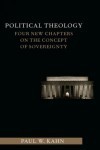
In my prior posting, I was concerned with elaborating the disciplinary position from which I take up the project of political theology. It is a part of the secular study of our political practices and beliefs. Accepting these limits, I placed myself within the same modernist tradition as liberal political theory.
There is a deeper point to be made about the symmetry between theory and practice in the modern age. Liberal political theory is committed to the idea that an adequate account must be one that is fully transparent to reason. Theory is to be built through discrete, rational steps from common premises that purport to be universal. Accordingly, it is hostile to any privileged claims made on the basis of a particular faith, including claims for the existence of God or a natural order. In a parallel fashion, the modern, political order is to be autochthonous. It is to rest on nothing outside of itself. This is not a claim about history, which knows no beginnings; rather, it describes a secular understanding of the origin and ground of the state. This is an important idea, for example, in the decolonization movement: a post-colonial state can create itself through an original founding act. It need not express a pre-existing national or ethnic identity.
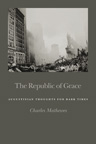
The Republic of Grace means to offer an extended account of why and how we, Christians and non-Christians alike, must learn to understand ourselves as continually, graciously, coming to be re-habituated, and recalibrated, into the grammar and language of love, even–and perhaps ultimately–in the public realm.
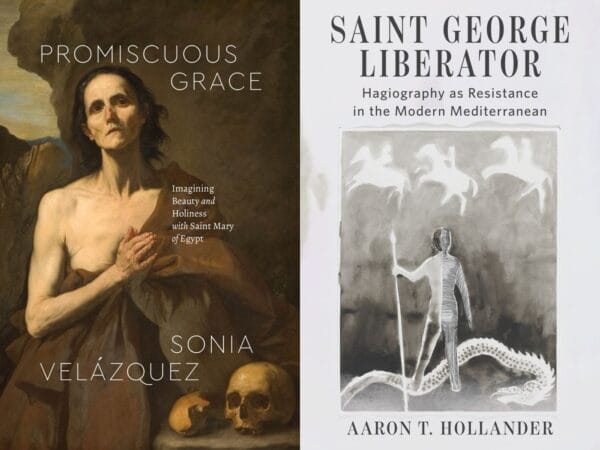
We asked Aaron Hollander and Sonia Velázquez to reflect on each other’s recent books. Here, Velázquez explores the intersection of hagiography, aesthetics, and politics.

Science fiction utopias stretch hundreds or thousands of years into the future and light years away from Earth. But all secular utopias place limits on space and time that fall short of, say, God arriving into time to judge all of history and wipe away every tear.

By what authority an institution, neither elected nor sovereign, may judge the common good.
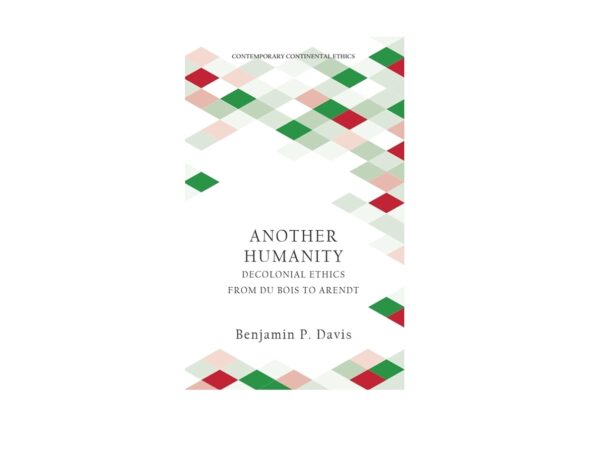
Zahi Zalloua reviews Benjamin Davis’s new book, Another Humanity: Decolonial Ethics from Du Bois to Arendt (2025).

For someone who grew up being told they barely count as human, the idea that God is specifically mindful of them is not a moment of little surprise. It is a life-changing claim.

This essay is part of a book series on Karma and Grace by Neena Mahadev.
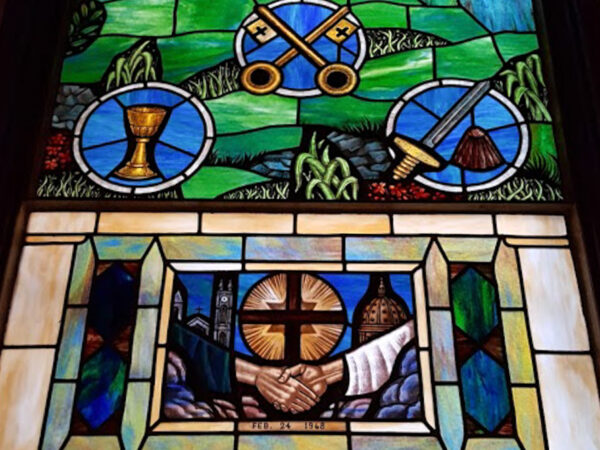
The question is not only whether Catholics and Calvinists can understand one another better doctrinally. It is whether they can think together about concrete political questions and their entanglement with power, authority, and the conditions necessary for a more just and peaceful society.