
The world is impossibly complex now, and will only continue to be so. We must learn to adapt to this complexity, to dance with it and to allow it to be what it is.

“Neither of us would be allowed to do our jobs had we adhered to our practice of wearing a veil.”

Translating Senghor’s political writings shows the continued relevance of Negritude in the conceptualization of political community in the wake of the encounter between Africa and Euro-America. However, framing the translation, like engaging any of Senghor’s work, ought to pay close attention to his African critics.

God’s sanctuary as a tent and God’s residence in a tent suggest that God is a sojourning God who accompanies people, offering an encampment with and among the communities on their journeys of life.
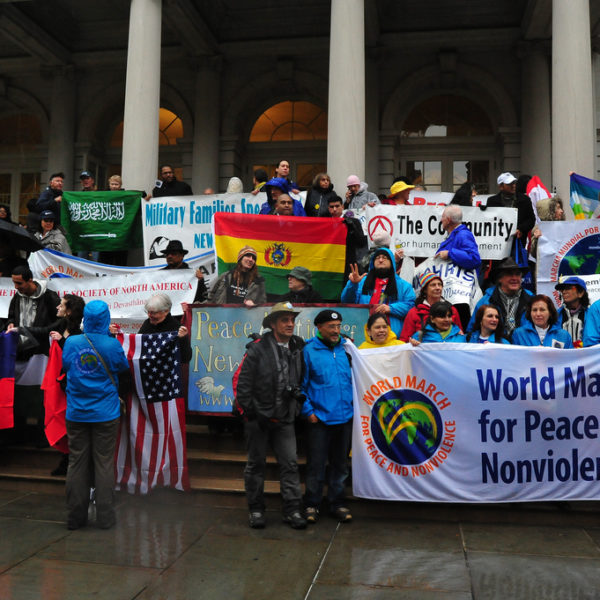
Tuning in to active nonviolence as a center of gravity in Jesus’ way, we can sense nonviolence as integral to the mission of the Catholic Church. This enables us to have a broader imagination of nonviolent praxis, a sturdier identity as interconnected beings, and an engrained commitment to better persist in active nonviolence even during difficult circumstances.

These books demonstrate that animal studies as a new field offers a powerful perspective for understanding the history shared with our companions in the multi-species universe.

Under the multidisciplinary banner ‘Animal Studies’, we may decenter the ‘human’ in this history of capitalist agriculture, and instead attend to the political histories of insect agents. The resulting narrative is intriguingly subversive.

At the base of Christofascism lies the response of uncritical obedience. For this reason, Christians need to become aware of how their own language of obedience functions Christian moral systems and concepts of faith.


Jesus’ message was not only spiritually transformative but also politically charged, as it reimagined who held power and how that power should be used—not to marginalize, but to uplift and include.

Paying attention to Herod’s fears about Jesus can keep us from depoliticizing the gospel.

Debates around revival persist because of what it promises. Indeed, it could be a site of hope for evangelicals in the midst of stories about declining church membership and religious disaffiliation from younger generations. But for some who experience revival on a regular basis, frustration and disappointment might abound.