xbn .

Search: the Politics of Scripture

The Fierce Urgency of Butler’s Future is NOW!    

As literary works of speculative fiction, Octavia Butler’s Parable of the Sower (1993) and Parable of the Talents (1998) thrust us into an all-too-near future, offering a haunting perspective on what our world could entail by the year 2035. In 2024, however, Butler’s Parables are no longer mere imaginative forays into the future.

<em>Political Theology</em> Journal Open House and FAQ

The journal Political Theology will host an open house on February 1 at noon eastern for prospective authors and contributors to the journal.

Decolonization at the Intersection of Political Theology and Settler Colonial Studies

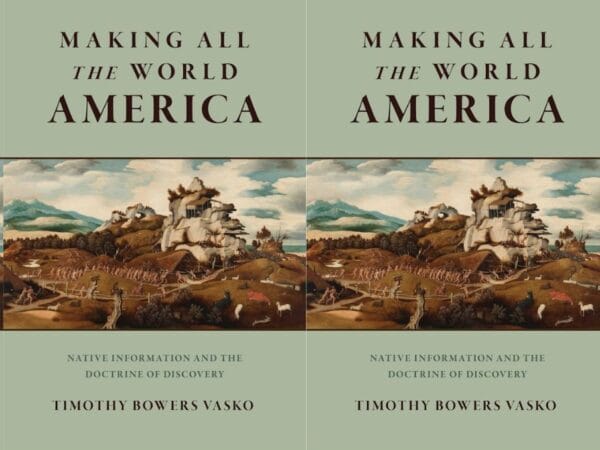
From the perspective of political theology, the presence of Indigenous peoples and settlers shaped by historical and ongoing settler colonial relations raises important political and religious questions about the possibilities and conditions of sovereign Indigenous existence and the (im)possibities and conditions of restorative or reconciled settler futures.

Christian Nationalism’s Superstition Problem

Christian nationalism is a form of superstition. It is superstitious because, instead of appealing to the God of all nations, it appeals to a culturally fabricated God for cultural privilege, power, and benefits.

Decolonizing the Climate Apocalypse with Joachim of Fiore?

Can a medieval monk help us decolonize eco-apocalyptic history?

Theorizing Domination Itself: Philosophy, Organizing Movements, and Vincent Lloyd’s <em>Black Dignity</em>

The need for rigor in our organizing movements is clear. The obverse of this is also true: there is a deep need for struggle in our philosophy.

Malabar Rebellion, Self-Cultivation and Multiple Meanings of Khilafat/Caliphate

Khilafat in the narratives during the rebellion represented freedom, dignity, justice and universal brotherhood instead of the restoration of an empire. The article briefly examines multiple possibilities the term Khilafat or Caliphate offered to the indigenous anti-colonial struggle of Malabar in India in the 20th century.

<strong>Religion, Rebellion, and Sovereignty: Malabar Rebellion and the Problem Space of Political Theology</strong>

The symposium initiates a conversation on the forms and practices of sovereignty in South Asia in the context of a peasant Muslim insurgency against British colonialism in 20th-century Malabar in South India.

Religion and National Integration in Sudan and India

How can political actors use and misuse the ‘facts’ of history to rally constituencies to their side (and against one another), facilitate transfers of power, and legislate policies that unevenly impact different communities under the guise of corrective work?

The Public Lives of Sovereignty

By furnishing us with analyses of protests, citizen-generated media, and everyday conversations through which relations of sovereignty are rerouted, the books extend our understanding of the cultural dimensions of sovereignty.

Farewell to the Flesh

Paul’s “Flesh/Spirit” dichotomy is not an overly-spiritualized, anti-body othering (i.e., a devaluation of the body against supposedly holy disembodiment) but an ethical cleavage with profoundly political repercussions.

Lament As Subversive Prayer

In the voices of the oppressed, one can listen to the voice of the divine. In this decolonial reading, one can excavate a liberative hermeneutic, which is life affirming and life nurturing. The lament of Hagar and her son Ishmael are echoed today in the voices of several people who are excluded in the society by the dominant, and the call for us today is to listen to the divine and work for a just world.