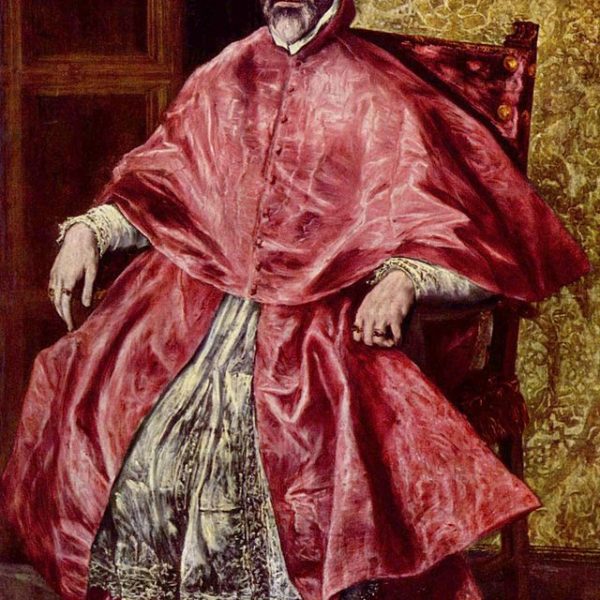
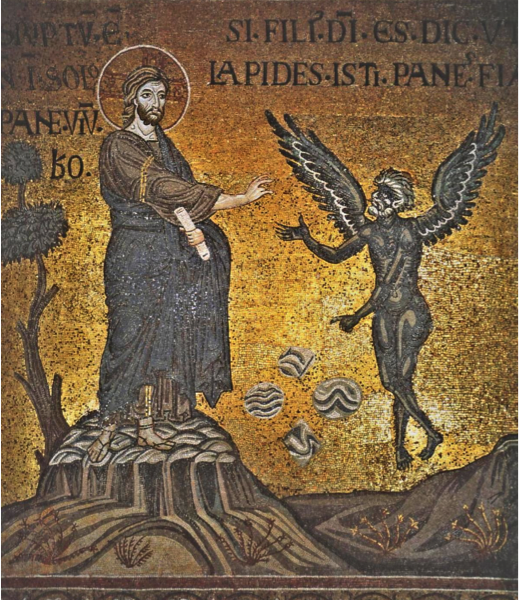
If Dostoyevsky foresaw the rise of the 20th century totalitarian states as the father figures who would feed the masses in the first temptation, what did Dostoyevsky foresee here with regards to his feared future Catholic theocracy? What Dostoyevsky saw was how the captivating of the conscience through miraculous ecstasy could manifest itself, in games and permissiveness.

Fyodor Dostoyevsky in his masterpiece ‘The Grand Inquisitor’, as well as Lev Tolstoy in his The Gospel in Brief, both comment on, recapitulate, and in some manner ‘translate’, the story of Jesus’ temptation in the wilderness (Matt. 4:1-11; Mark 1:12-13; Luke 4:1-13) with varying interesting results. Let us compare Dostoyevsky, Tolstoy, and the Gospel accounts together to see how this story serves not only as Dostoyevsky saw them . . . nor only as Tolstoy saw them . . . but also as a profound critique of our current economic geopolitical situation, and pointing to our way out of the systems that enslave us.
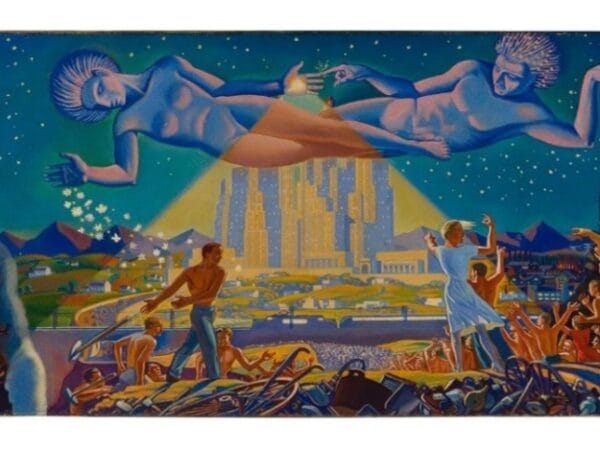
Günther Anders argues that where St. Ignatius of Loyola, the wounded ex-soldier who founded the Jesuits, thought it necessary to devise what he called “spiritual exercises” for his times, we need new spiritual exercises to train our souls to begin to comprehend what we now can do.



“Balthaser’s history is a helpful necessity. Without it the obligation has no shape, no lineage, no proof of its own non-marginality. But memory cannot be the ground of the obligation, only its occasion.”

These systemic injustices have a root: the root of a colonial system designed to supplant Indigenous life. They have a genealogy, a history, a process: their ancestor is money and their descendants are death.

We present some AAR/SBL Annual Meeting 2021 sessions that might be of interest to members of the Political Theology Network.

This piece features a multimedia reflection on José Esteban Muñoz’s The Sense of Brown, which emphasizes the text’s radical approach to imagining solidarities and social relations beyond the normative paradigms of identity politics and its permutations. Through both textual poetics and sound design, Wadud and Lázaro Moreno riff off Muñoz’s own performance-based approach to storytelling and meaning-making, engaging Sense as an invitation to reconsider the aesthetic and philosophical terms of community-making, centering the power of counterintuitive methods.

Using Puar’s line of analysis, we can trace how debilitating trauma can become a tool of the nation-state that creates racialized “mad people”: unruly, distressed, unbecoming, disposable in the eyes of the nation-state, yet necessary in their precarity and correct-ability.

Thoreau’s asceticism was always also related to his hope for just economy – a way of life beyond slavery or exploitative capitalism. I am thus invested in thinking about Thoreau’s religion – his ascetic practice in the woods and the theological commitments that drove it – as deeply tied to his politics.