
Has there been something fundamental to political theology that has made it a more convenient environment for men, and less so for women and non-binary people? What specific concepts, intellectual structures and paradigmatic convictions have made this specific field such a manly business?

In the post-secular world [Dick] envisions, religion has fully capitulated to the allure of the marketplace. As these perky commercials are meant to indicate, Dick expects humankind, circa 1992, to seek (and find!) redemption not in its devotion to (and fear of) otherworldly deities, nor in the afterlives these deities gatekeep for their favorites, but in its reverence for nifty consumer wonder products: beer, brassieres, plastic wrap, razors, etc.

You might be forced to accept your place in a fundamentally unfair world, but you should never take the next step to allow the values of that world to become the values that shape and give meaning and purpose to your life

Imagine a world in which we stop at every news of death. Imagine a world in which we do not trivialize or rationalize death. … Have we over-theologized life after death?

This essay outlines an ontological form of atheism to suggest novel ways to conceptualize political theology and forms of socio-political praxis. An atheism of indifference is offered as a means to resist the theological framing of socio-political issues.

If Jesus is a vine, can we really accept a theology which permits us to sit back and take without contributing anything ourselves?

As a motif of Easter grace, the mountain is a place of new beginnings and renewal for all who seek abundant life.
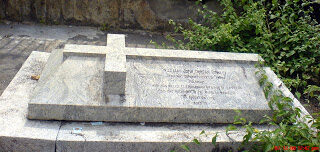
This article demonstrates how the living memories of Malabar rebellion evade the logic of the historical narrative. The native memory of the rebellion appears to have subverted the neatly drawn schemes such as ‘Hindu’ vs ‘Muslim’, ‘cruelty’ vs ‘compassion’, and ‘horror’ vs ‘fascination’ etc. that animate the logic of historical writing.

God’s recurring appearance in Susan Taubes’s novel Divorcing confirms the work’s alarming in-sight about the seductions of patriarchal authority while also dramatizing fiction’s imaginative power.

Jesus’ teaching in the Sermon on the Mount unsettles many biblicist ways of understanding Scripture. It may even be better to move from speaking of ‘the Scriptures’ as a noun, to speaking of ‘Scripturing’ as a verb.
Any power we might feel we gain through the power over dynamic is illusory and fleeting, and will always eventually result in our death/defeat, with our illusions of power lying dead around us.

The God of Israel does not get so caught up in the national agenda that God neglects the prayers of individuals in pain. The best antidote to politics-as-usual is proper worship. Praising YHWH can keep our feet flat on the floor. As we worship the God who sees and the God who acts on behalf of the downtrodden, we seek to become like God. YHWH, rather than the human powers that be, becomes our model. In worship we become attentive to the things that God attends to, such as the grieving woman whose empty cradle signals an uncertain future.