
The fact that people use Genesis 1 as justification for all of this hate is not only horrifying and appalling, but it’s also, simply put, WRONG. The creation thrums with life purely because God’s love makes it so.

In displaying its cosmic vision, Psalm 8 invites its readers to participate, in some limited way, in the divine perspective that exceeds our own, in which anthropocentric fantasies are judged and redefined.

Humans have grown exponentially in our propensity and power to conquer the earth itself. Despite being newcomers relative to neighboring species, humans usually behave as if we owned the place. But Psalm 95 speaks clearly: When we come into God’s presence—and there is no place God is more vividly present to us than in creation’s midst—the psalm says to come with thanksgiving, the polar opposite of greed.

Our political theology is strengthened by trusting that the words of the Son of Man are a fleshly restatement of what is divinely just and good and holy and lovely. Because Christ has come and his presence is with us, God’s words are even more accessible to us.
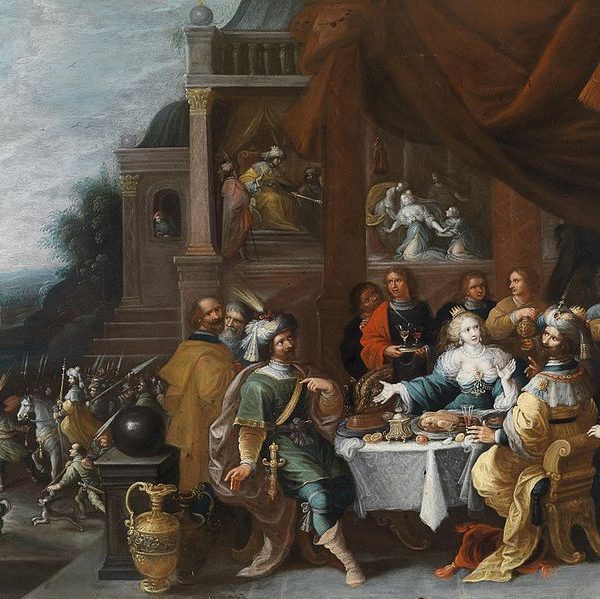
The book of Esther deals with resisting ethnic violence in its ancient context and offers us tools for resisting white ethnic nationalism today.
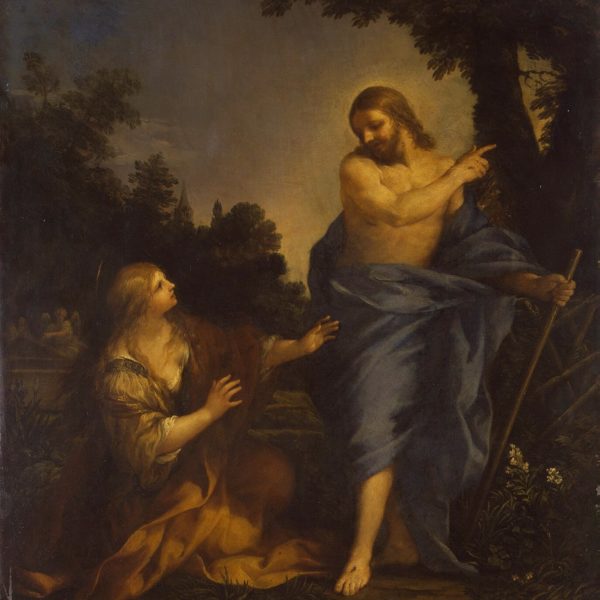
The politics of proclamation emerge from and carry forward God’s liberative force. Mary Magdalene’s witness to the risen Christ manifests and proclaims the disruption and the liberation of God’s new reality.

The Western inability to recognize Palestinians as fully human is often attributed to Islamophobia, framed as a post-9/11 construct that portrays Muslim violence as a threat to the liberal West. However, this perspective remains superficial. To truly understand the roots of Western hatred, we must look deeper—beyond contemporary narratives—into the ideological foundations of Western thought.
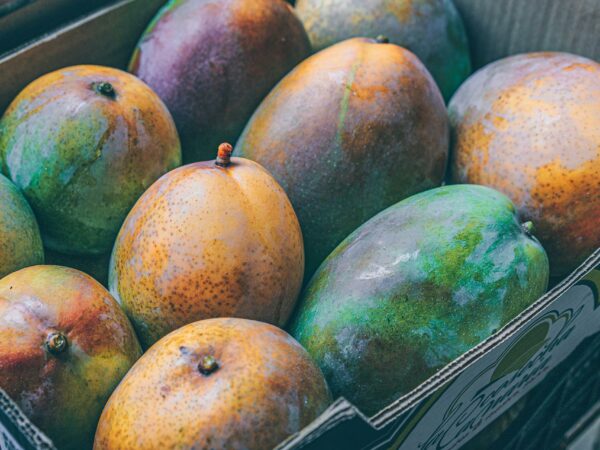
There is more to the ‘fruit’ image than a mere word play, for a basket of summer fruit is itself a potent symbol with political-theological connotations. This text about the vision of ‘a basket of summer fruit’ is a vision of contestation for the cause of justice.

YHWH invites the people of Judah and Jerusalem to revolt against self-centered government, changing their allegiance from the Persian emperor to YHWH, who is the Lord, the messenger, and the message.

These devastating times and the repeated actions informed by the continued propagation of supremacist ideals may seek to drive us into hopelessness and inaction, but we know this is not the end. History reminds us that promoting an “us vs. them” thinking is destructive to all, including the earth.

In the book of Genesis, after the changing of Jacob’s name to Israel, no one calls him by his new name. Instead, the name “Israel” seems to exist as his “true name” and Jacob as his “use name.” “Jacob” is the name that everyone calls him, but he knows that “Israel” is who he really is inside. God has named him “Israel,” and consequently, this will become his legacy.

That the resurrection is a beleaguered doctrine in North America and in Europe is hardly a new revelation. For all its technological wonders, modernity is uncomfortable with old-fashioned miracles. Pre-modern ways of talking about Jesus’ resurrection don’t translate easily for an audience that demands scientific corroboration and empirical evidence. As a result, Christianity has chastened and tamed this story in a number of ways.