The journal Political Theology releases its newest issue which considers interesting topics, such as Eric Peterson on the modern nation state, Edith Stein and Jan Patočka in relation to the war in Ukraine, the “sacred” in leftist spaces, and the development of a “dark fantastic theological imaginary.”

The messianic banquet imagined by the Jewish sages nurtures attitudes of respect, blessing, recognition, and wonder. These comportments converge in humility, an earthbound ethic that we practice together, through speech, action, and the work of dwelling.
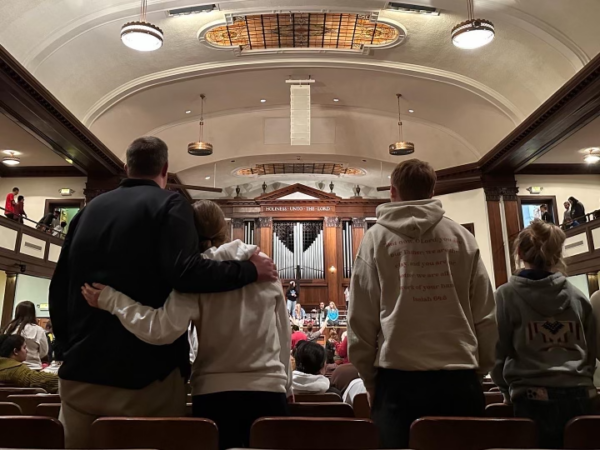
And this brings us to the aspect of Asbury that is either hopeful or depressing. Again and again, what happened in Asbury in February of 2023 is presented as first being centered around the youth and, second, as devoid of the common American strain of nationalist muscular Christianity.
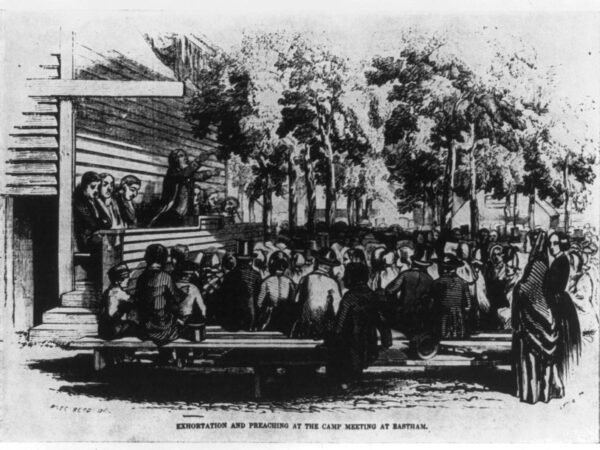
If nothing else, the national public attention and copy-cat movements following the Asbury Revival speak to the need for spiritual revival—as in the Great First Awakening, most people are dissatisfied with established religion and are looking for ways to experience a genuine spiritual awakening.

This essay outlines an ontological form of atheism to suggest novel ways to conceptualize political theology and forms of socio-political praxis. An atheism of indifference is offered as a means to resist the theological framing of socio-political issues.

The journal Political Theology will host an event on “Palestine and Political Theology” April 4 at 2pm eastern.

In an era of systemic collapse, we need radical ecowomanist theory for survival and liberation.
The journal Political Theology announces its first ever article contest for all accepted unsolicited submissions in the year 2024. Submit your article now!

In this passage in John, light is associated with Jesus and with the love of God for the entire world. Light is explicitly linked with a capacious love that was present from the beginning of creation and includes all of creation. It is therefore opposed to racism of any kind.
The deadline for submission to the AAR Annual Meeting’s Political Theology Unit is February 29 (at 5:00pm American EST).

Jesus does not need others to define who he is because he rests in the knowledge that he is called and beloved by God. Jesus does not need the man with the unclean spirit to proclaim that he is the “Holy One of God” (Mark 1:24) in order to own and live this identity for himself.
“I was only imagining it. Being freed.”