
The burgeoning subfield of queer and trans studies in religion is opening up avenues for understanding our bodily attachments within and beyond religion. With Berlant’s sensibility as a guide, scholars of queer and trans studies in religion might seek to explore the paradoxes of desire and love that Berlant theorized with a generosity, curiosity, and clarity we can all hope to emulate.

Berlant’s work points us to other possibilities that avoid, that resist, the fantasy of redeemed gender—calling for us instead to reside in the messiness of our attachments and providing space and ways for us to negotiate them, rather than seeking to transcend them. Whereas the efforts to transcend gender seem to, paradoxically, deepen our attachments to gender norms, it is also the case then that in negotiating the messiness of those attachments, one finds space for other ways of doing gender that perhaps subvert or move us beyond its constraining norms.

Some narratives about secularization and modernization processes which include pre-modern history still tend to postulate a trajectory of an early emergence of secularity in Europe, particularly in the form of a separation of church and state beginning during the European Middle Ages. But more recent findings suggest that medieval Christian Europe remained quite comparable to other cultural constellations: Rather than a secular sphere, political dynamics produced demands for the de-politicization of religion, or at most, situations and social spaces of ‘neutrality.’
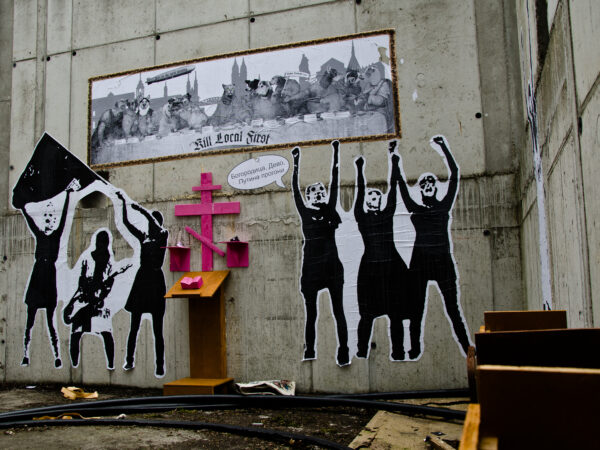
This piece is from the Political Theology Network archives originally posted on August 23, 2012.

This forum reflects on the intellectual legacy of the late affect theorist Lauren Berlant, who passed away in 2021, for queer and trans studies in religion. Berlant once claimed they had nothing to say about religion – but our contributors disagree.

This essay makes a strong case that the social, political, economic and ideological developments that accompanied the transition from the Heian (794–1185) to the Kamakura period (1185–1333) generated epistemic and social structures of a longue durée that remained permanently available as a resource for a Japanese form of secularity.
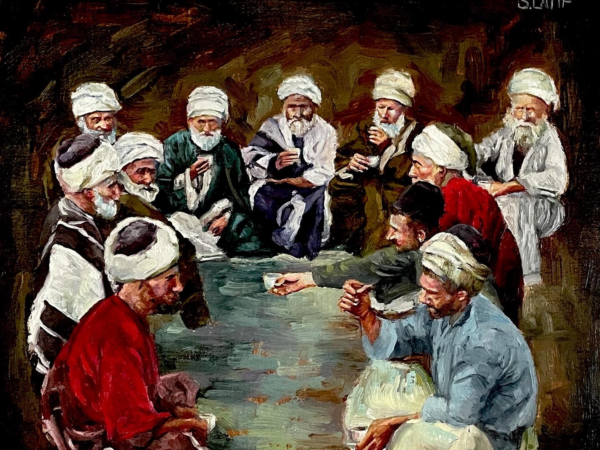
But how subversive can a contemporary inquiry be if it remains a paradigmatically modern- and Euro-centric affair (as the critical literature on the secular has historically been). My suggestion is that if the secular is a temporal and spatial concept emanating from the modern West (as many would agree), its “shadows” will necessarily lie elsewhere.

We are left with the possibility that this time of revelation can not only visibilize the harm that colonial relations have wrought but also enable a resurgence of counter practices and lifeways that actively build a new world out of the ashes of this one.

Both Benjamin and Apess discern that historical narratives are imbricated with notions of futurity, that is, which bodies and polities are allowed to inhabit and thrive within the temporality in which the “not yet” and the “always already” co-constitute each other.


The following is the first of a short series on partition and/as political theology, which will be published in the journal Political Theology in 2024.

Judith Butler’s work in queer theory inspires Catholics to consider the material relations of the body and contributes to a mystical-political, eschatological hope.