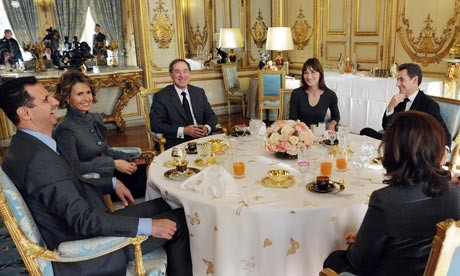
How fickle friendship can be. After all the years of close co-operation, the dinners out together, the help we provided, and the dirty work we did for them, its come to this.
Yesterday I was a reformist; today I’m a war criminal. Mubarak, Gaddafi, Ben Ali, Saleh, I feel your pain.
The recent blogs relating to Radical Orthodoxy and its differences from the work of the William Temple Foundation appear to have ground to a halt. This is a pity as they were just about to get beyond the realms of intellectual points scoring and into some serious debate. An angle that had yet to be pursued was that of the former’s advocacy of localism and how that might be operationalised in the UK context where the current administration is keen to promote this as a policy initiative. As someone who through parochial ministry, has been eager to operate at a local level and been involved in various community work projects, I feel that I have a powerful stake in this debate (examples of this are to be found in my Local Theology: Church and Community in Dialogue, 1994, and again in Blurred Encounters: A Reasoned Practice of Faith, 2005). So when I read that there should be a renewed interest in and support for church-based projects that are indeed locally based and developed, I would have to say that I am broadly in agreement. My problem, however, is that it is difficult to see how this can be operationalised given the current pressure upon local voluntary resources, and that it fails to take into account the reality of many local issues.
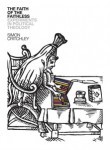
What is really at stake in this book are the differences, and similarities, between a faithlessness that disguises some form of commitment, and a faithfulness that is also more modest in its claims and cautious in working out its implications and practices. If this is the case, then the question, for me, becomes that of the nature and extent of the differences between these two forms of faith. What are the differences between (Critchley’s) faith of the faithless and the less strident forms of the faith of the faithful?
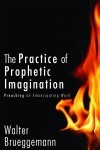
“The Practice of Prophetic Imagination” (Fortress, 2011).
This new book is for me a continuation of my earlier book, The Prophetic Imagination (Fortress, 1978). It is an attempt to think about “prophetic preaching” in the context of the US church where any prophetic dimension to evangelical faith is mostly unwelcome.
I have wanted at the outset to correct two most unfortunate caricatures of the prophetic. On the one hand, there is a conservative tradition that thinks that the prophets are primarily in the business of “predicting Christ.” Of course there is no such thing in this context. On the other hand, liberals regularly associate “the prophetic” with social justice and social action. But it strikes me how rarely the ancient prophets take up any specific issue of social justice.
The editors of Political Theology are pleased to announce that the latest issue is now available on the web. Issue 13.1 (January 2012) features a guest editorial by Gerald J. Beyer of St Joseph’s University, Philadelphia who looks at the connections between today’s Occupy Wall Street movement and Poland’s Solidarity trade union movement of the early 1980s, and points to what this new activist turn on issues of social justice could signal for American political life.
The editorial and the reviews section are – as always – open access. The issue also carries articles by Andrew Brower Latz, Thomas A. James, Joseph Ballan, Kristen Tobey and Patrik Hagman.
Without a vision, the people perish. Let your young men see visions and your old men dream dreams. Those words sound particularly hollow at the moment, and yet they resonate with what is lacking and remind us of what inspired the original followers of Jesus and also the hopes of those who greeted his arrival. Where are the visions now, and what do we have to guide us through what may well be a dark period?….
During the past two decades, political liberalism has been put on trial. Political theorists indebted to Sheldon Wolin (William Connolly, Romand Coles, Bonnie Honig) have, in various ways, exposed liberalism’s tendency to conceal or downplay significant dimensions of political struggle. These authors indict liberalism for its narrow understanding of public reason, an understanding that underestimates qualities, practices and interactions within our lifeworlds that tend to thwart liberalism’s drive toward consensus and agreement (here I am thinking of clashing visions of the good life, memory of injustice, or the emergence of new movements that challenge our very notion of publicity and reason). This trend within political theory resembles developments in religious studies and theology. Recent discussions between Stanley Hauerwas, Jeff Stout, and Cornel West revolve around liberalism’s tendency to depoliticize religious commitments by relegating them to the private sphere. For these authors, this inclination overlooks the deep connections between democratic struggle and religious practice within American history. These authors remind us that democracy and faith are bedfellows (and not necessarily strange ones).
Jonathan Kahn and Vincent Lloyd, in recent blog posts here, attempt to move these discussions further and potentially in new directions…
By Jonathon Kahn, Vassar College
Who are the fools among us who continue to have faith in democracy and in American democracy in particular? After a desultory three-year period of community organizing in the corner of Harlem that I call home, I find myself preoccupied with this question. My community was unable to bridge the gap between what came to be called the “old” and “new” Harlem. To be sure, there were moments that Bonnie Honig might call “democratic ruptures,” when my community tried to rework its own sense of “we-ness.” But these moments were fleeting. “Ordinary life,” as Honig says, “reasserts itself, with a bit of a vengeance.”[i] Democratic energies dissipate. Democratic energies fail.
And yet I find myself wanting to argue that democratic faith is possible and needed. Though I have no theistic beliefs of my own, I can find no way to move forward with democratic life except as a person of faith. What, then, do I mean by faith and why does democracy need it?

This was the defense of a banker – as seen in a BBC interview Monday 7th November. Later that day, the long-awaited St Paul’s Institute report on its survey of London-based bankers was published. In advance of this a decision was made to interview a young woman from within the profession to get her response to the suggestion that there was a lack of morality in the City of London. I was so staggered by some of her responses to this challenge that I felt bound to try to draw out the logical consequences of what she had said. What follows is exactly that.