This procession down to Jerusalem is one of those very public moments in Jesus’ ministry. It could be called his most brilliant act of political theatre. Jesus proceeds toward Jerusalem, with a crowd that undoubtedly boasts some of the same sorts of outsiders Jesus has been connecting with all along: sinners, the possessed, the sick and blind, women, and foreigners. The crowd that shouts Hosanna would have been laughed at by any sensible members of society who happened upon this odd ritual. Much like I imagine today those with a high sense of their own political value would little understand what compelled these odd folk to gather as they had, creating trouble when they had little to gain but jail cells and crosses…
The wilderness was not a place that good Romans went. In the view of Roman imperial cosmology, the wilderness was a place full of savage people to be subdued and conquered. The Augustus of Prima Porta statue, imaged here, shows precisely this view. The heavens come into alignment and the Gods look down in delight as the Parthian king surrenders to Rome. On either side, mourning barbarian women are curled in positions of submission. This is how Rome viewed the wilderness — the worlds of barbarian people and wild animals outside the boundaries of Roman control, and only fit into the Roman imagination once they had been subdued. This was the drama enacted regularly in the arena, where wild animals and foreign persons were slaughtered before adoring crowds.
It’s easy to read this week’s gospel as a warning of doom and gloom. It begins, after all, with this strict admonition, “Be Alert!” (v 23), and ends with the equally forceful command, “Keep awake!” (v 37). It’s as though Jesus has just shouted, “Watch out!” and thrown a ball of flaming fire into the crowd. But, of course, there is no fiery ball and so the question naturally is, “Watch out for what?” Within the pericope itself, the obvious answer becomes the awesome image that Jesus paints in verse 26: “The Son of Man coming in clouds with great power and glory.” And why should we be concerned? (Apart, of course, from the darkened moon and falling stars…) Because Jesus says the Son of Man is like a master returning and from there we write our own scripts of what wrath this master might bring. “Keep awake!” the Bible tells us, and we add, “Because if we sleep, we might be hit by that fiery ball!” And, indeed, for Matthew and Luke, who record this prediction as “a thief coming in the middle of the night,” rather than a master returning to his home, such fears may be warranted. But, for Mark, different dynamics are at play…

The book began with my conviction that the theology and philosophy of the early modern period is especially important for understanding Christian ethics today. It’s needed for us to figure out “how we got to where we are in our thinking,” as Nick Wolterstorff once put it. It is thus a hinge point on which subsequent church history turns. This is especially the case because it was in this period that there first emerged the plurality of moral languages that we now call pluralism, but which was originally a collection of writers (mostly Christian) casting about for a way to best express questions that had become pressing in their time.
Jacob’s biography is not a blueprint for activism, but perhaps a helpful model for what the church looks like in a world of empires, or at the very least a reminder that power can exist outside of prescribed structures. The story of Jacob empowers the marginalized to secure their own justice while reminding of the importance of confronting empire directly.
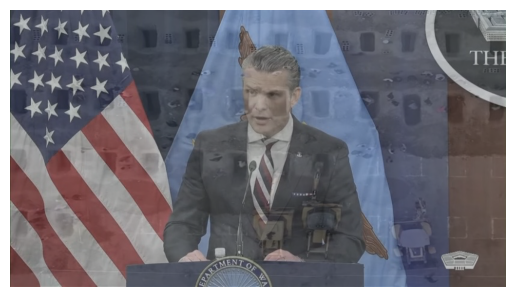
Our dear brother Pete calls himself a “Christian” and is titled the “secretary of war” today. But when it comes to real faith and realist politics, he is woefully adolescent.

By subverting familial connections, Jesus is not undermining ties of affection but dismantling the social and economic security that comes with them, while simultaneously expanding the meaning of relationality.

Mapping normative rhythms and their interruptions, recovering voices and paths of antagonism, conjuring counter-plagues: these are the critical imperatives for the riotous times of the present.