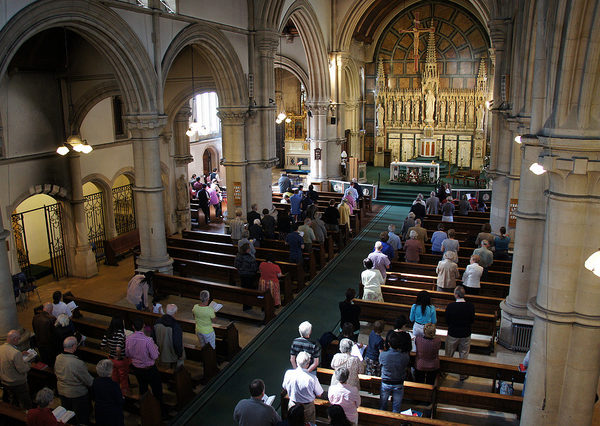

One of the great paradoxes of John Calvin’s political theology can be captured in terms of two of the phrases the reformer used over and over throughout his writings. On the one hand, he emphasized, “the kingdom of Christ is spiritual.” On the other hand, through the kingdom of Christ God is bringing about the “restoration of the world.”
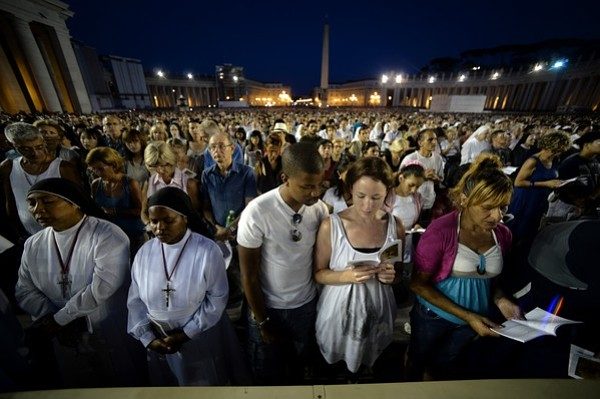
On Saturday, Sept. 7, 2013, Catholics, Christians of other denominations, and women and men of good will observed a day of prayer and fasting in response to the humanitarian crisis in Syria, at the invitation of Pope Francis.

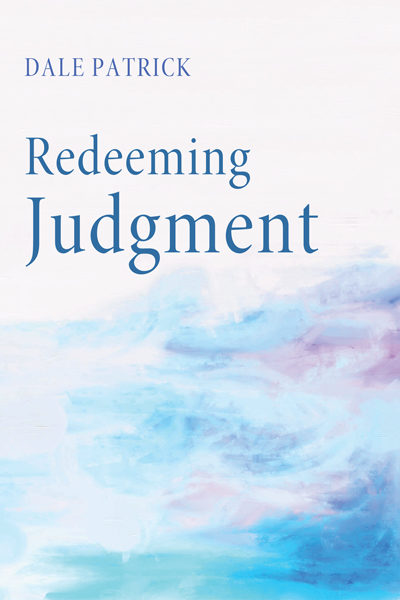
Redeeming Judgment arose from my sense of urgency. The Protestant church in which I grew up and to which I belong has largely grown silent about the judgment of God. It seems that we are bent upon living up to H. Richard Niebuhr’s caricature of liberal Protestantism: “A God without wrath brings men without sin into a kingdom without judgment through the ministrations of a Christ without a cross” (Kingdom of God in America, p. 193).
Redeeming Judgment is meant to remedy this aversion to judgment. Judgment accompanies God’s saving work throughout the Bible. Redeem has been prefixed to judgment to indicate that I am proposing to reclaim this theological teaching. Moreover, judgment is itself a component of the redeeming action of God. Thus, we are out to reclaim a teaching that is essential to the redeeming purposes of God.
Although the book was not written specifically for those engaged in political theology, the concept of divine judgment should be at the foundation of any political theology that aspires to be rooted in the Bible. Judgment is a component of practically every interaction between God and humans in the Bible. The reader’s understanding of how the concept can be faithfully applied to historical and contemporary events will be enriched by studying “paradigm cases.”
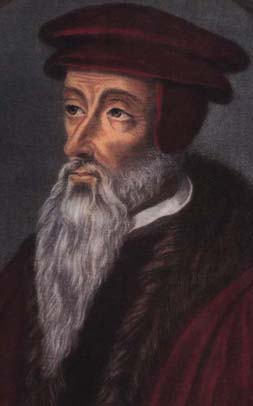
Unlike some other second-generation Reformers, we do not have to read between the lines to find a two-kingdoms doctrine in Calvin. On the contrary, he is far less ambiguous even than Luther in setting it out at the center of his theology, inviting the question of why Calvin studies have until recently largely ignored the theme. The doctrine appears in the all-important chapter III.19 of the Institutes, as Calvin concludes his discussion of justification and prepares to transition to his massive Bk. IV, entitled “The External Means or Aids By Which God Invites Us Into the Society of Christ and Holds Us Therein.” Inasmuch as Calvin scholarship has attended at all to his two-kingdoms idea, it has frequently assumed, as VanDrunen does, that in delineating the “two kingdoms,” Calvin intends to delineate the two distinct institutions within this sphere of external means—church and state. However, from a structural standpoint, it is more compelling to see his distinction of the two in III.19 as a center-post, with the “spiritual government” pointing back to his discussion of the inward reception of the grace of Christ in Book III, and the “temporal government” pointing forward to his discussion of the external means in Bk. IV—on this basis, both the visibly-organized church and the state would constitute external means in the temporal kingdom. Certainly Calvin’s word choice in describing the two seems to bear out such a reading…
Freedom of speech is the concept that one should be able to express themselves, whatever opinion they may hold. It has never existed as an absolute, and generally the various Western philosophers and thinkers who developed the concept never considered it to be unrestricted – rather most have accepted that there have to be limits upon expression, in order to protect society. Every society has red-lines – limits upon what constitutes lawful expression – and these depend upon the values of that society, contradicting the idea of a universal absolute freedom of speech….
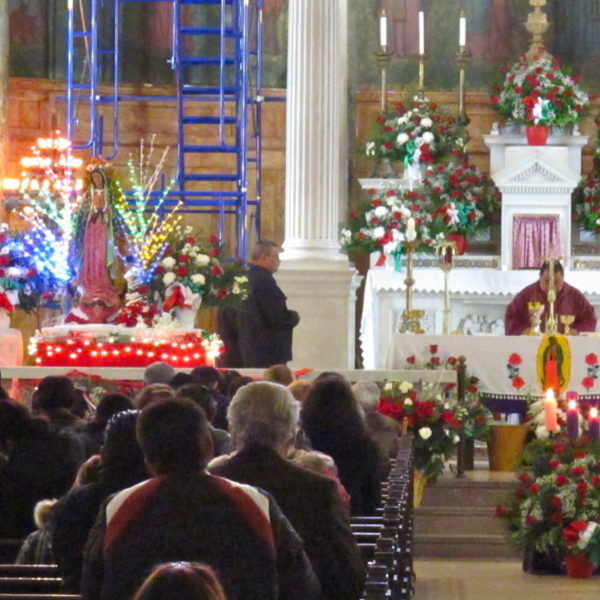
The original unifying function of liturgy becomes lost if we begin to dehistoricize liturgy by shopping among the traditions. Like consumerist postmodern culture, the Emergent Church shops among traditions for forms of spirituality that are useful and pleasurable and incorporates them into general western, melange of religious items….
A critical issue left unaddressed in Bass’s response to Douthat is the state of power relations within mainline Protestant denominations. In her well-intentioned attempt to counteract the corrosive and controlling ‘narrative of decline’ that plagues mainline Protestant communities, she inadvertently diverts attention away from the reality that the majority of their leadership positions and financial resources are firmly in the control of the Baby Boomer generation….