


xbn .

Search: the Politics of Scripture

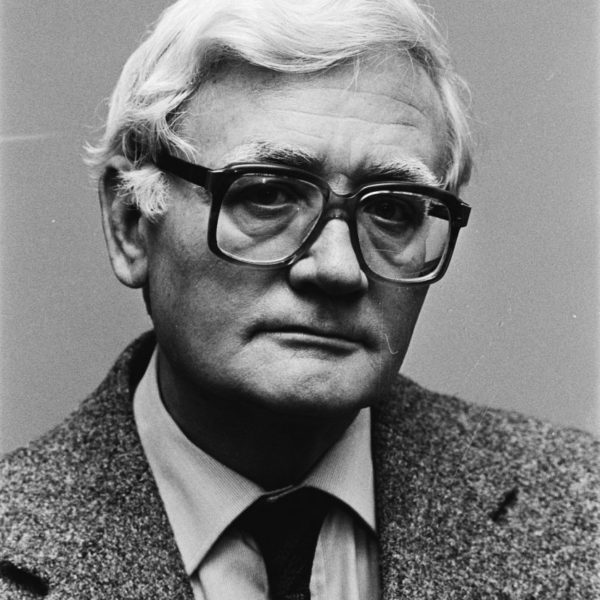
Peter Losonczi: In Memoriam (Aakash Singh Rathore)

Last week, we mourned the news that Peter Losonczi, a contributing editor to Political Theology Today and a member of the editorial board for the journal, Political Theology, had suddenly passed away. Contributions in his memory for Peter’s wife and children may be made at GoFundMe. Peter’s longtime friend and colleague, Aakash Singh Rathore, remembers Peter below.

Introducing Four New Members of Political Theology’s Expanded Editorial Team

The journal Political Theology is very pleased to announce new members of its editorial team who will further the journal’s geographical diversity and will strengthen the journal’s interdisciplinarity. New editorial team members include Ruth Marshall, a scholar with joint appointments in political science and religion at the University of Toronto; Elizabeth Phillips, a theologian at Cambridge University; and Timothy Stanley, a philosopher of religion at the University of Newcastle, Australia. Brad Littlejohn, the managing editor of the journal’s blog, will continue in that capacity and will now be recognized as Associate Editor for the Blog.

Evil and Political Theology: William Desmond Introduces PT 16.2 (Pt. II)

I would not shoe-horn the following contributions into the terms of the remarks posted yesterday, yet there is a familial space where kindred concerns find different expression with these authors. Christoph Schmidt focuses on Rene Girard’s defense of Christianity in encounter with Nietzsche in terms of Nietzsche’s antithesis between Christ and Dionysius. Girard identifies this as the antithesis of modernity as such.

How to Understand China: Study Marxism

This is the first of a series of five articles on understanding China today. The articles cover politics, economics, culture and religion, since all of these are important for making some sense of what is happening. Each topic is approached from the Marxist tradition, for this is a key that is too often ignored. The

The Politics of Vision—John 1:43-51 (Mark Davis)

Jesus’ calling of Nathanael in John 1 illustrates the way in which God’s vision of us precedes our own. The primacy of God’s vision has implications for our politics and economics, unsettling our assumption that the world is measured and determined by our sight and valuation.

Do Hipsters Make Good Disciples? Political Theology in the Coffee-House (Benjamin Wood)

…Instead of treating contemporary consumerism as a wholly negative phenomenon, Augustine suggests we look at the issue differently. The behaviour of the shopper or spiritual tourist is the way it is because of the deep structure of the human condition. The longing for fulfilment is at root an existential need: a secularized version of the call at the heart of Augustine’s Confessions: ‘You have made us for yourself, O Lord, and our hearts are restless until they rest in you.’

Call for Papers: Political Theology—The Liberation of the Postsecular?

The Association for Continental Philosophy of Religion is pleased to announce an upcoming conference at Liverpool Hope University, UK, on July 10-12, 2015 exploring the theme: “Political Theology: The Liberation of the Postsecular.”

Reasoning about Exceptions – Editorial for Political Theology 15.5

One of the most important tasks for political theologians today is the cultivation of capacities for democratic reasoning about exceptions to the rule of law. The task is important because liberal societies face – or at least believe they face – a number of threats that seem to require exceptional measures in response. The pressure to make exceptions grows stronger, even as we find ourselves with fewer and weaker resources for thinking about them.

The Politics of Sacrifice—Exodus 12:1-14 (Alastair Roberts)

In the Passover we find a myth of the foundation of a nation that differs markedly from the contractarian myths of the Western liberal tradition. It disclosure of the sacrificial basis of the political order offers us a hermeneutical key for understanding the roots of our own nations and helps us to understand how we might be established as communities of faithful witness to them.