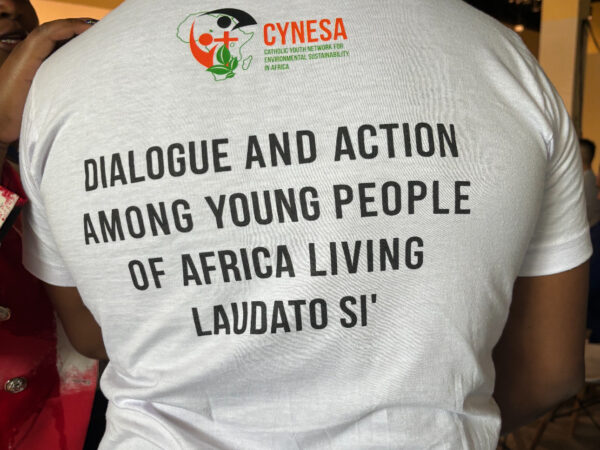
Youth were not very welcome at the table. It was quite common for them to be referred to and accept that they are leaders of tomorrow or the next generation… How can we be the next generation when we’re already here [right now]?

In an era of systemic collapse, we need radical ecowomanist theory for survival and liberation.

Like the humble talk in the psalm, this hand-wringing fear about a loss of Christian identity in the US masks the devastating power that white Christians wield against others in this country and elsewhere. It is a rhetorical humility in the service of actual power and dominance.

As we enter a new election season with our polarized political communities occupying different epistemologies and worlds, it remains an open question what it will look like for us to cultivate a better politics. We are caught in a riptide, being pulled further apart with few resources at our disposal for anything other than the zero-sum game we’ve inherited. The Jonah story, however, offers a different kind of political imagination, where God confronts and offers grace to enemies by putting them into contact with one another. This multi-layered grace introduces moral complexity and political uncertainty, but it also opens the door to a world not entirely determined by scarcity and competition.

“I am the sum total of a thousand years of misery and striving! You may have given us this broken immortality, but I will be the first to die without fear!”

Bread is given to satisfy not only material hunger, but also to respond to emotional, political, and spiritual hunger: it expresses a desire for fraternal and sororal relationships, a desire for the Other.

“We gestate each other, even daughters and mothers, around the spool of time not the lineal thread.”

Édouard Glissant’s political theology appears in Poetics of Relation. His idea of “a modern form of the sacred” shifts how we understand ethics and human rights.

Who produces American history textbooks? Beyond historians’ work, this question demands a reckoning with political partisanship that creeps into the publication process of history textbooks. A comparable phenomenon can be traceable in ancient textualization of sacred memory. Acknowledging political forces in knowledge production helps renegotiate one’s perspectives on sanctioned discourses of historical memory in modern and ancient worlds.
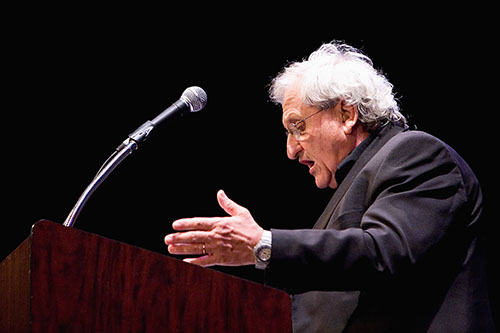
The Israeli writer A. B. Yehoshua died on June 14. We invited scholars of Jewish studies, literature, and politics to reflect on Yehoshua’s significance and legacy.
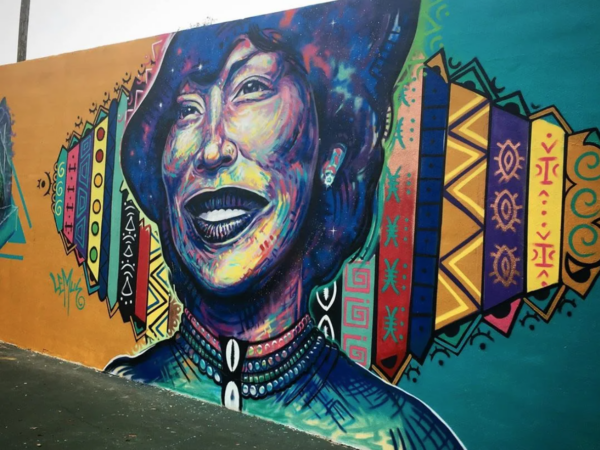
The best place to begin in bringing theology and anthropology closer together is with someone who did not write as if the two were separate, even opposed disciplines. Zora Neale Hurston carried out ethnographic fieldwork on behalf of Franz Boas, and yet, writing in multiple genres, articulated a theological vision that meshed the universal God with particular human experience: “Nothing that God ever made is the same thing to more than one person.”