By Hugh Goddard
It will be very interesting, in 100 years time, to see whether 2001 has entered the list of significant anniversaries in the long history of conflict between Christians and Muslims.
The wisdom of the world pretends completeness, offers an answer for every query, a reason for every action. Paradox is anathema: dark and demented. And so the interests of the wealthy and the powerful are secured, the false comfort of worldly wisdom prerequisite for accumulation and domination. That which threatens the supremacy of this wisdom – and so threatens the interests of the wealthy and the powerful – can only be “vile, cruel, and destructive.”
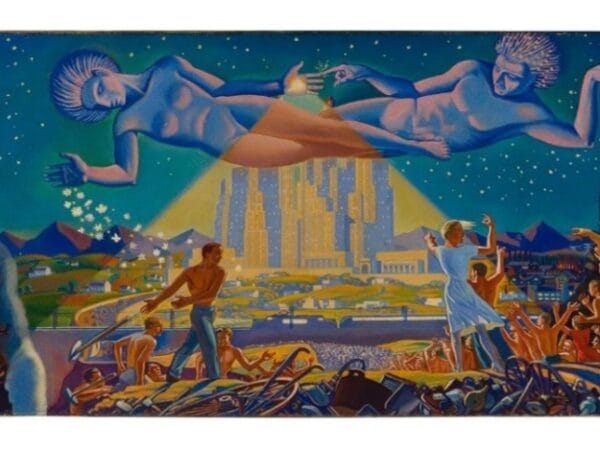
Günther Anders argues that where St. Ignatius of Loyola, the wounded ex-soldier who founded the Jesuits, thought it necessary to devise what he called “spiritual exercises” for his times, we need new spiritual exercises to train our souls to begin to comprehend what we now can do.

Insiders and those most similar are invited into the movement first, and then, if meaningful and urgent enough to others expands to those beyond the insiders. The expansion of God’s Realm in Matthew is built slow and steady, an example we have much to learn from.

We don’t need scholars to tell us that Jewish radicalism is something of the past, dead, buried, and long forgotten. The world already tells us that every day. We need articulations of Jewish radicalism for today that activate its legacy.

The world is impossibly complex now, and will only continue to be so. We must learn to adapt to this complexity, to dance with it and to allow it to be what it is.

Having demythologized and deconstructed our faith, liberals have rightly discarded conservatism’s cruel damnation while keeping our class status, letting our hearts bleed just enough in public so as to not jeopardize having ‘received our reward in full’ (Matthew 6).
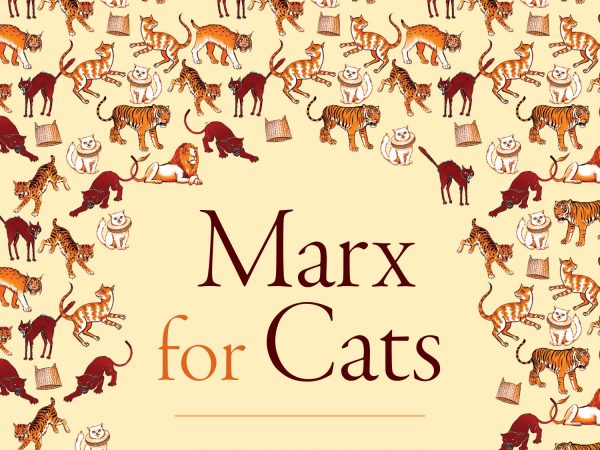
As pets, animals are care workers, giving solace to lonely humans. In none of these economic spheres are animals passive tools. Like human working classes, animal workers also constantly resist and rebel.

In a time of intense economic anxiety, both individuals and communities need to reflect on the call in John 12 to claim their responsibility to shun greed, resisting it with a seemingly foolish kind of generosity that parallels Jesus’s becoming poor for the sake of others.

One alternative to a disorienting retributive hierarchy … is repentance, offered to the living, not the dead. This is the honest acceptance of one’s own sin that leads to a turning from the destructive habits of assigning greater or lesser guilt to others. The activity of repentance, in turn, becomes the basis for the possibility of reconciliation between God and offender, between offender and the offended.

Has there been something fundamental to political theology that has made it a more convenient environment for men, and less so for women and non-binary people? What specific concepts, intellectual structures and paradigmatic convictions have made this specific field such a manly business?