xbn .

Search: the Politics of Scripture

Naboth’s Vineyard and the Politics of Highway Construction—1 Kings 21:1-21 (Robert Williamson Jr.)

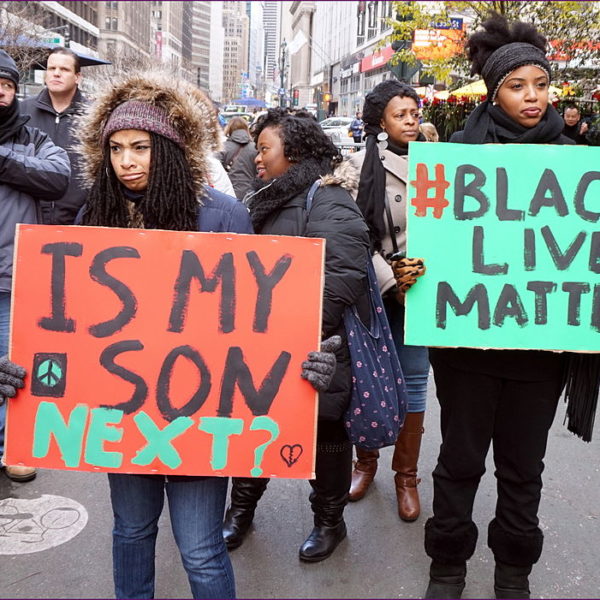
Ahab’s murderous appropriation of Naboth’s vineyard is an example of rulers’ assault upon and destruction of local wealth built up over generations. A contemporary analogy to Ahab’s sin can be found in government treatment of Black communities in highway construction.

The Politics of Noticing—Luke 7:11-17 (D. Mark Davis)

When a large crowd of admirers met a large crowd of mourners, Jesus noticed the widow, a political act of directing attention to one whose life was most imperiled. Followers of Christ would do well to do the same.

The Politics of Language—Acts 2:1-21 (Amy Allen)

Beyond mere understanding—which we can arrive at with languages not our own—God’s communication in people’s native tongues at Pentecost manifests a deeper commitment to the recipients of revelation. The Holy Spirit addresses us in the language of our hearts and our dreams.

The Politics of the Spirit’s Presence—John 14:23-29 (Mark Davis)

The question of the status and authority of the church after Jesus’ bodily departure looms large over the Farewell Discourse, manifesting both the concerns of the disciples and concerns of a later Johannine community. On account of the Spirit’s presence, the church is empowered to speak with a fresh yet authoritative voice to new challenges.

The Politics of Falling Back—John 21:1-19 (Robert Williamson)

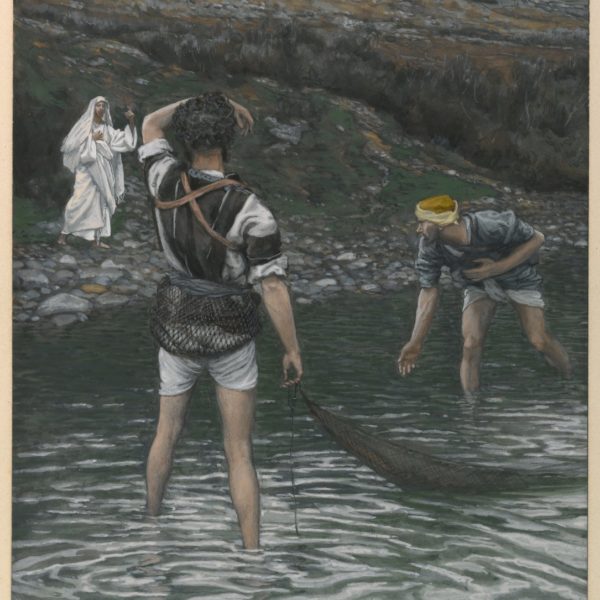
The disciples’ failure to find their desired results when they returned to fishing following the resurrection of Christ resonates with the experience of many who are drawn back to old patterns of life after a personal encounter with Christ. Their struggle to recognize the risen Jesus challenges us to form communities within which Christ’s presence will be apparent to people in a similar state of uncertainty.

The Politics of Reconciliation—John 20:19-31 (Mark Davis)

That Thomas’ absence when Jesus first appeared to the Twelve after his resurrection was due to his withdrawing from the other disciples following Christ’s crucifixion is an intriguing exegetical possibility. It also frames the events that follow in a manner that may be instructive for the Church in its witness to those who are doubting and agnostic.

The Politics of the Memorial—Exodus 12:1-14; 1 Corinthians 11:23-26 (Alastair Roberts)

In maintaining a faithful Christian presence in the political realities of this age, few things are more important than living and acting in God’s good time, being people who find their life in the living memory of a sustaining past, who patiently wait in hope for a promised future, and who are kept in the present through faith in the daily mercies of One who is the same yesterday, today, and forever. Christ’s institution of a memorial helps us to do just this.