I’m a liberal, but I don’t want to be in a liberal church, because liberals unchecked are prone to do stupid things. And I think the same holds true for conservatives that want to make a ghetto for themselves on the right. These would be terrible developments for the church to split ourselves the way some on the right are advocating. In the kingdom of God, the church will have every ideological stripe.
The conservatives did what they had to do to win. They ran out the clock, wore people down, kept their troops in line, and ultimately prevailed thereby. Not letting the Assembly debate the issue of the Authoritative Interpretation, however, is going to be a costly mistake. My sense is that commissioners thought that this is something like the ordination question that we debated for so many years. People could get only so far in one Assembly on that issue, but would reach an impasse, whereupon folks would realize that it would just have to wait until the next Assembly to get to the next step. But marriage is very different from ordination. Councils of the church perform ordinations, so you have to get a group of people to agree to move forward. Marriages, however, are performed by individual pastors. And the emotion surrounding a marriage is way higher than any ordination.
When the Committee on Middle East Peace finally made its motion to divest–you guessed it– a substitute motion was made, not divest but rather to invest in the Occupied West Bank. This was a masterstroke of polity, but a completely ridiculous proposal of policy. Presbyterians suffer from congenital niceness, which is the main reason that it had taken us eight years even to get to the point where we could make the least confrontational action possible on the issue, selling our own stocks and bonds.
This was my first experience of how the conservatives would use parliamentary maneuvers to block what was shaping up to be a progressive assembly by proposing study after study, utilizing minority reports and substitute motions designed to keep the Assembly from making decisions or even hearing about some important issues for as long as possible, if at all.
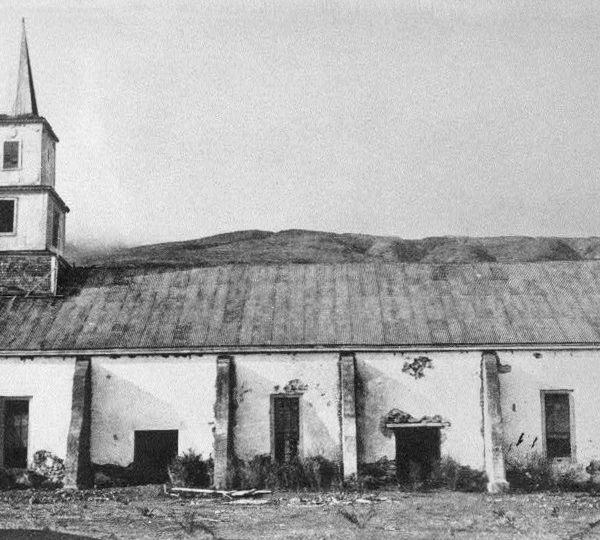
Serving as a commissioner is both an honor and a butt-numbing burden.

The field of political theology has not yet been rigorously defined. It is more a field of affinities than a clearly delineated disciplinary space—a kind of “zone of indistinction” between theology and political theory where the terms of debate are still very much up for grabs. Even as the range and shape of political theology as a field of inquiry remain somewhat inchoate, however, there are points of reference that already seem more or less obvious or obligatory. The work of Giorgio Agamben is surely one of them, a status that The Kingdom and the Glory will just as surely reinforce. […]
In the case of Iran, deterrence looks less like realism and more like nostalgia for another era. The limits of nuclear deterrence push us to reconsider how to limit war and act responsibly in a world given to episodes of madness….
The principle of subsidiarity is perhaps one of the most crucial and most misunderstood in Catholic social teaching. According to the principle, decisions should be made at the lowest level possible and the highest level necessary. Subsidiarity is crucial because it has applications in just about every aspect of moral life. In medical ethics, subsidiarity helps guide decision-making. In social ethics, subsidiarity helps us prudentially judge not only decision-making but allocation of resources. Subsidiarity is an effort at balancing the many necessary levels of society – and at its best, the principle of subsidiarity navigates the allocation of resources by higher levels of society to support engagement and decision making by the lower levels. Despite how often it is stated – subsidiarity does NOT mean smaller is better.
What brought Strauss into conversation with Schmitt was their mutual disillusionment not just with the political liberalism of the Weimar Republic but with post-Enlightenment liberalism in general. For theoretical solutions on how to ground political authority in something more substantial than Enlightenment rationalism, they both turned to aspects of pre-modern traditionalism – for Schmitt, an authoritarian Catholic political theology, for Strauss the recovery of ancient political philosophy and its medieval transmitters. On the practical plane, they both thought that parliamentary democracy was utterly unequipped to cope with the various crises afflicting postwar Europe. As a Jew, however, Strauss had no chance of signing on with the various authoritarian options on offer during the 1930s, since they invariably included anti-Semitism as part of their program and ideology. Both men shared ambivalent relations with their respective religious traditions and have even been suspected of covert atheism. In the end, Schmitt’s Catholicism, however episodic and selective, seems to have been more integral to his thinking than Strauss’ ancestral Judaism was to his.