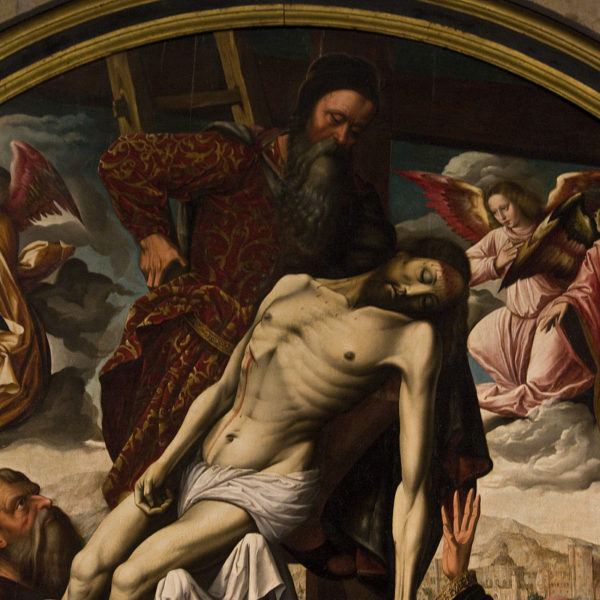
In most reflections about Good Friday and the events surrounding the Passion, the focus is squarely on Jesus, and to be sure, one can hardly deny that this is where it should be. However, it is interesting to note the extent to which the Gospel authors are quite interested in what these events reveal about the disciples that had followed Jesus up to this climactic point in his ministry—not just the Twelve, of course, but all those who had heard his word and believed in him.
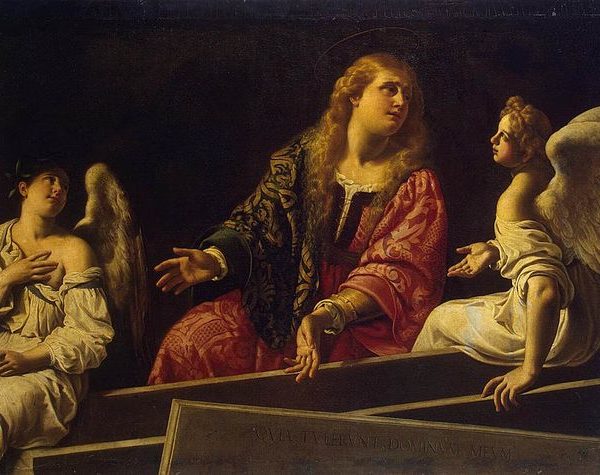
The encounter of Mary Magdalene with the risen Christ provides us with a model for understanding political theology. The elusive presence of the resurrected one and the emptiness of his tomb forbid all our attempts to secure his presence in our praxis and open up new ways of perceiving our social task.
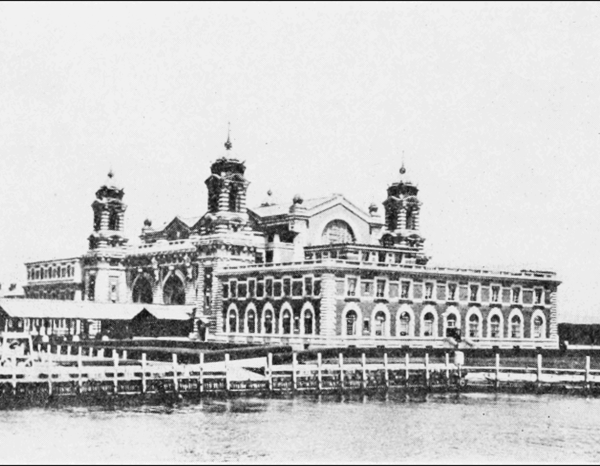
The first reaction of the reader to Abram’s calling, “That’s supposed to be me,” gives way to the second realization, which is “That COULD be me.” And it is in imagining the fear and anxiety normally attendant to leaving everyone and everything behind that the seed is planted in the reader’s heart for concern for real-life strangers.

Romans 13:1-7 has stood as one of the most important texts throughout the history of Christian political thought, but like so many biblical texts, has proven capable of being put to the service of several different—even contradictory—ends. The 16th century in particular stimulated several different readings of the passage, readings which have continued to remain popular down to the present day.
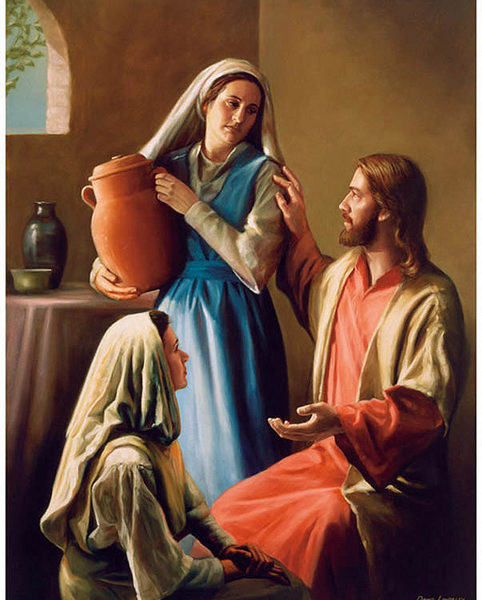
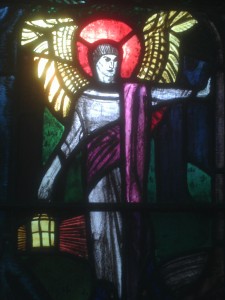
In a church in the suburbs of Belfast, there is a stained-glass window which takes its title and its subject matter from a line in one of this week’s lectionary readings (from chapter 22 of the Book of Revelation, or the Apocalypse of John): “The leaves of the tree were for the healing of the nations”. At the time of its installation (1920, one year before the partition of Ireland into North and South), this window – along with other works by the artist Wilhelmina Geddes – caused a stir by its Arts-and-Crafts Movement modernism. “Her glass is quite unlike that of most other stained glass workers”, according to the Irish Times; “the religion which it reflects is the religion of power and fighting, not the religion of peace and restfulness”.1 I saw this window on a brief trip to Belfast last October….
The disruptive presence of Nehemiah in spaces that are intended to erase his identity allows for a broader understanding of God’s word. While religious laws may sometimes be exclusionary in their nature, a higher law, one that is grounded in one’s fidelity to God through the way one lives one’s life, allows for radical inclusivity of all before God.

We present some AAR/SBL Annual Meeting 2021 sessions that might be of interest to members of the Political Theology Network.
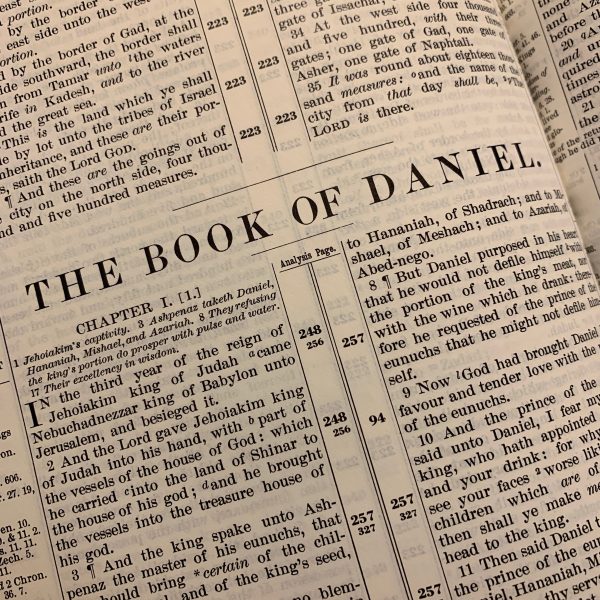
The narrow formulation of the concept of Political Theology as the tracing of Protestant theological categories in contemporary political thought presents some challenge for the historically oriented biblical scholar.
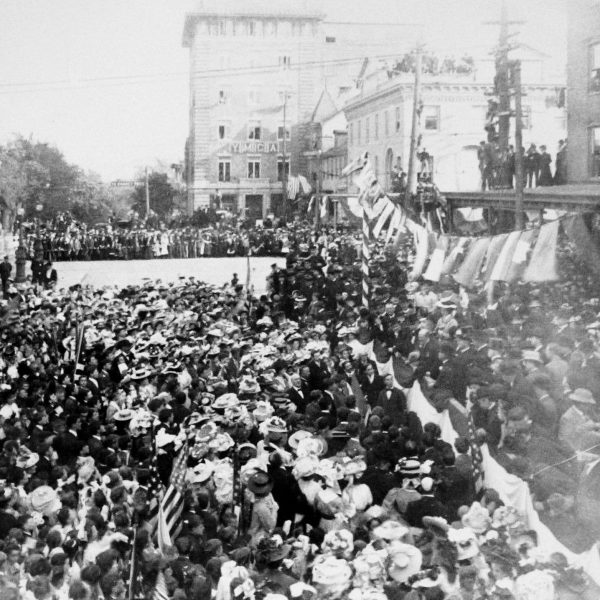
Populism seems to have at least these advantages: it privileges practical reasoning over theoretical; it binds us to place; it recognizes modernity’s political gains; it does not posit reactionary declension narratives; it affirms “common folk;” it avoids elitism…It also gave us President Trump.

For the twenty-fifth anniversary of the journal Political Theology, we are diving into the journal’s archives to share highlights of what we have published. In this installment, here are some of the articles we have published on questions of hope: