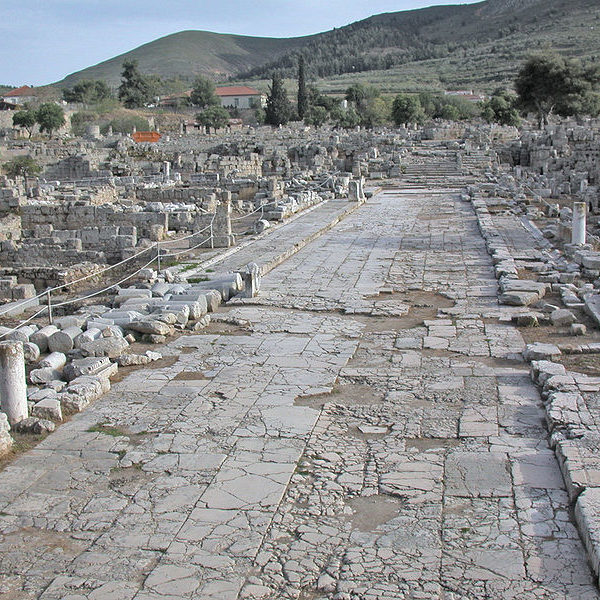
Paul’s argument that spiritual gifts are the manifestation of the one Gift of the Spirit, given for the service of the common good, provides a useful starting point for reflection upon the meaning of representation in society more generally. The ecclesiological vision of 1 Corinthians 12 resonates in challenging ways in our polarized political cultures, summoning us to new modes of engagement.

The term ‘cosmos’ is used in a number of different senses in Jesus’ prayer in John 17. Within the fluidity of Jesus’ employment of this term we find a multi-faceted characterization of the world that can inform our politics.
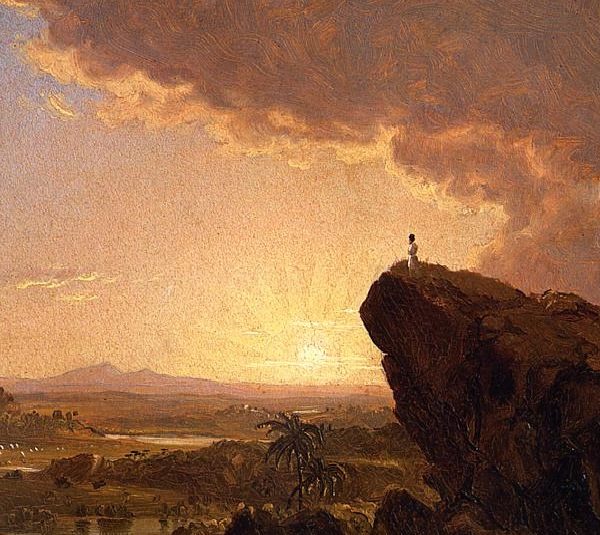
In Deuteronomy 34, Moses ceases to be the leader of Israel. He is brought to the top of Mount Nebo, to look over the Promised Land. Timothy Simpson highlights six relevant principles that we can learn from this account.
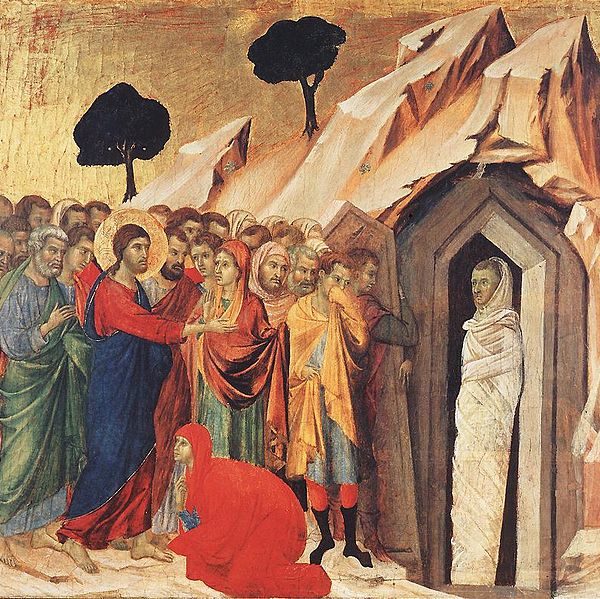
Although at first glance they may appear incidental, the frequency of border crossings in the story of the raising of Lazarus suggests the presence of a theme. Through a narrative of successive boundary crossings, the power and willingness of God to traverse any distance and border is made manifest.
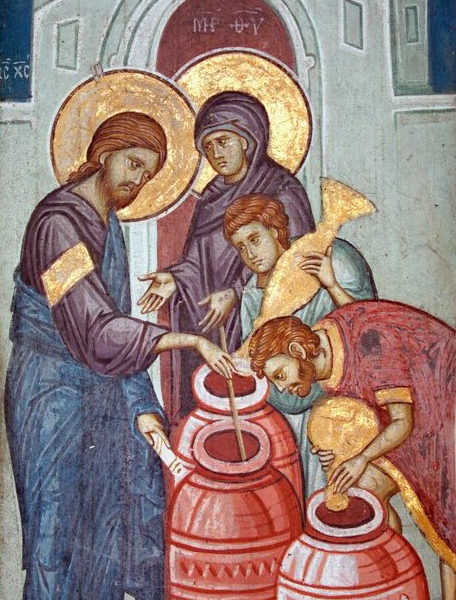
In John’s account of the Wedding of Cana, the part played by Mary merits our attention. On account of the honor due to her as a mother, she wields great authority. She provides us with occasion to reflect upon the esteem in which we hold mothers today and the authority that we accord them in our lives and society.
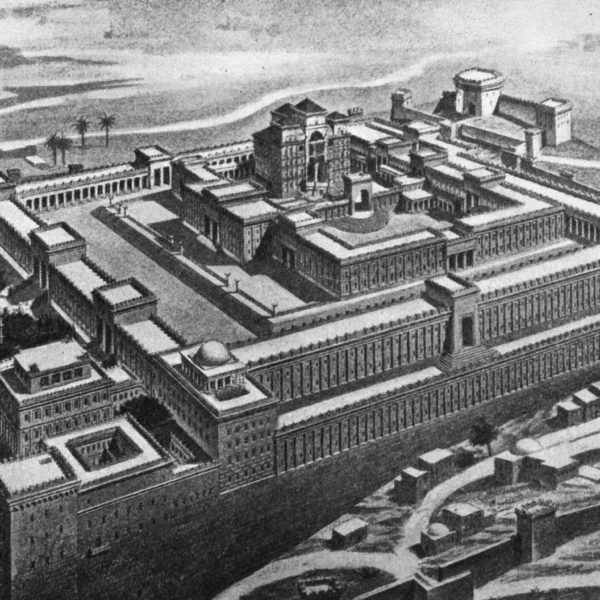
Defining one’s territory is in and of itself a highly contentious endeavor. Defining God’s territory brings this to a whole new level. In the building of Solomon’s Temple we see that God is to great to be contained by any single building or territory.
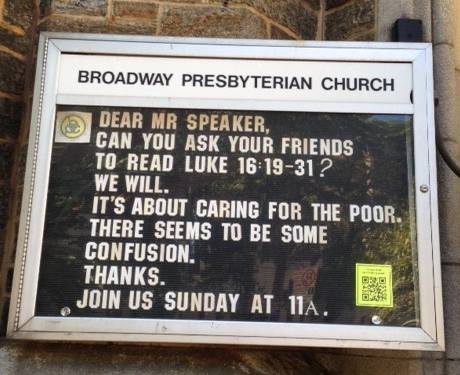
Luke’s parable of the Rich Man and Lazarus dramatically counters our prevailing trend of demonizing the poor. It brings us a message of particular relevance at the time that Congress votes to cut aid to the nation’s poor.
n the matter of U.S. support for Israel, religion and politics operate as Tweedle Dum and Tweedle Dee, reinforcing each other in a slapstick display of tomfoolery. Although presidents have for decades lodged verbal objections to settlement expansion in the Palestinian territories, the Congress continues to authorize 3.2 billion dollars per year for Israel while Christian Zionist organizations send tax-exempt millions directly to the settlements.