Beiner suggests that I want a politics, and by politics he seems to mean what the state does, that is at the service of Christianity. As someone deeply influenced by John Howard Yoder’s critique of Constantinianism, that is precisely what I do not want. Of course I should like Christians to be free to try and convince their non-Christian neighbors that war is a bad idea, but….
The business of religion, to use that unfortunate turn of phrase, is to change the world. The theo-political implication of radical democracy is that we cannot wait for a God to save us. If democracy indeed is the political instantiation of the death of God, then this is a task that is ours alone.
At this moment of extreme political intensity, Paul W. Kahn’s new book, Political Theology, appears as a timely meditation. By means of a sustained engagement with the controversial German legal theorist Carl Schmitt’s text of the same name, Kahn attempts to demonstrate that behind our seemingly liberal, constitutional order is a deep faith in the sacred character the state and of popular sovereignty. One is tempted to read Kahn’s juxtaposition of the discourses of (liberal) political theory and political theology as a commentary on struggle between the Obama Administration and the contemporary Republican (and Tea) Party—the one stressing reason, deliberation, pragmatism, compromise; the other embracing faith, will, power, sacrifice. Kahn, however, is more subtle than that. His slim volume is a provocative, sometimes frustrating, sometimes perplexing read, providing much food for thought, and also, I can imagine, for fights.
In “A Public Faith” I offer a sketch of an alternative to totalitarian saturation of public life with a single religion as well as to secular exclusion of all religions from public life. I write as a Christian theologian to followers of Christ. I am not writing as a generic religious person to adherents of all religions, a project that would fail from the start. To stay with the example of Qutb, it is a task of Muslim scholars to elaborate distinctly Islamic alternatives to Qutb. My task is to offer a vision of the role of the followers of Jesus Christ in public life, a role that stays clear of the dangers of both “exclusion” and “saturation.”
The attacks of September 11, 2001 on the World Trade Centers and Pentagon threw the debates over the definition of “religion” into a stir. Though religion was obviously a central factor in the events of 9/11, overly phenomenological and essentialist construals of religion were suddenly and starkly at a loss in making sense of how and why.
This speaks to a division in our politics, a separation of policy from the profound. President Obama sounded like a technocratic Ronald Reagan – optimistic that we can out-compete emerging nations.
Decolonising Christian proclamation, therefore, is measured not by the charisma of the preacher or the spectacle of performance, but by its fidelity to the incarnational logic of God’s self-giving and its capacity to engender liberative transformation in lived contexts.
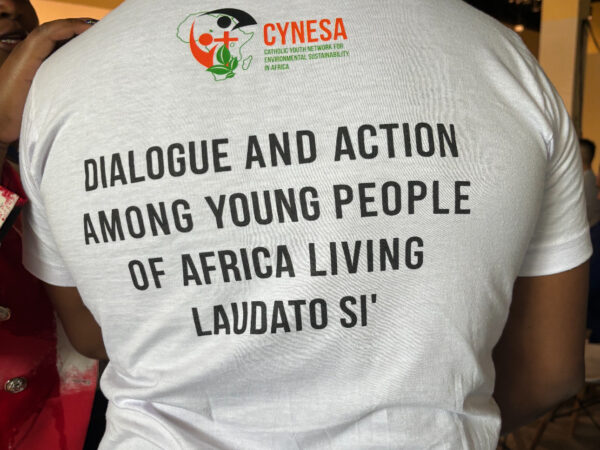
Youth were not very welcome at the table. It was quite common for them to be referred to and accept that they are leaders of tomorrow or the next generation… How can we be the next generation when we’re already here [right now]?