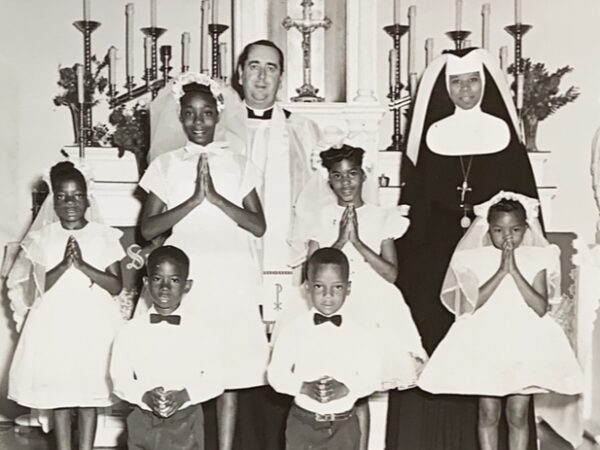
How have ideas about race, gender, and sexuality shaped the historical construction of U.S. American childhood? What can histories of African American childhood teach us about the intersection of religion and politics?

“Children give us immense joy, but they are also hard work. We have to do everything for them but sometimes we also have to resist the urge to help them, so that they can become independent. They grow up too fast, but also, often, way too slowly. When they rebel against us, it is a sign that we have raised them well. Could we treat our political theological categories similarly? Could we want for them this flexibility, or mutability, this growing independence from us who created them?”

Catholic Re-Visions welcomes proposals for its next slate of content. How might we talk of “Catholicism,” being attentive to the past, while engaging with the messy present, to encounter a future that is not yet known?

Following this path, I intended to do a non-punitive reading on Cain’s wandering by presenting it as God’s opportunity to cultivate the land while moving around the territory. This view of the nomad seeks to rehabilitate another type of relationality with the Earth by recovering its dignity in different horizons.
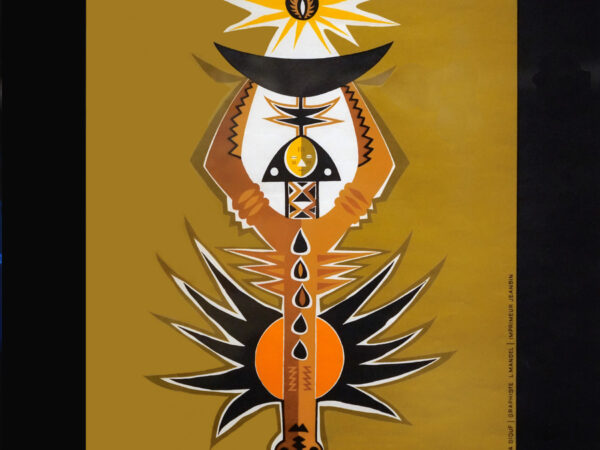
In his book Senghor’s Eucharist, introduced here, David Tonghou Ngong focuses on Senghor’s poetry collection called Black Hosts as a starting point for understanding his political theology. He argues that Black Hosts is a Eucharistic theology that calls for the reclamation of the Eucharist for the remaking of the world.

The decoloniality of ‘Jesus the gate’ exists in building communities of love and trust today, emphasising “I am because we are” and in celebrating our relatedness with one another, transcending all barriers of identity.
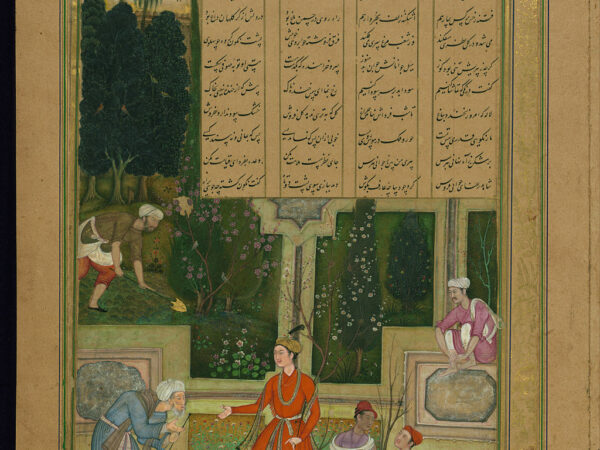
What catalyzed the supra-confessional move in the post-Mongol Persophone zone, and what did it leave in place for the ideologues of Iran’s 1979 revolution—another watershed regularly misattributed to confessional tenets—to cultivate and propagate?
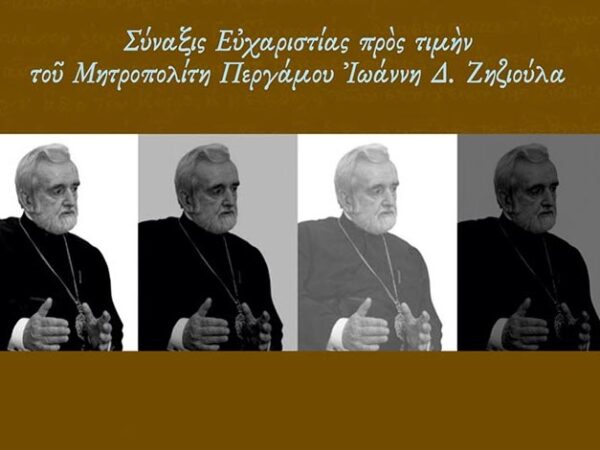
The prominent Eastern Orthodox theologian Metropolitan John D. Zizioulas of Pergamon (Ecumenical Patriarchate) passed in Athens, on February 2, 2023.
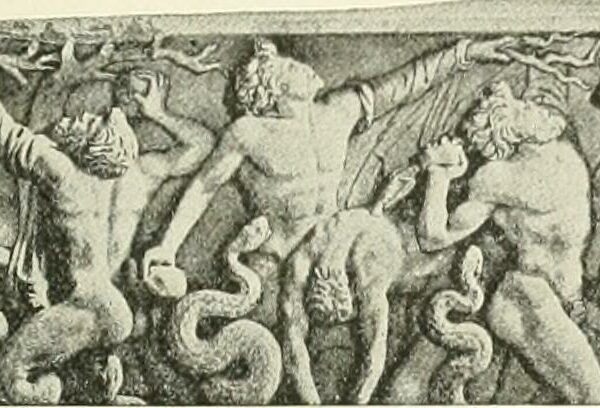
[S]ituating demonology more fully in its religious and theological contexts furnishes resources that not only nuance understandings of movements for whom demonization is central, but also recontextualize discussions of core political theological concepts, including sovereignty, power, economy, subjectivity, and freedom.

Refusal is a strong current resisting the structure of settler colonialism. It crashes, churns, and erodes the death-dealing dams of settler knowing. Its path turns away from the settler’s gaze.
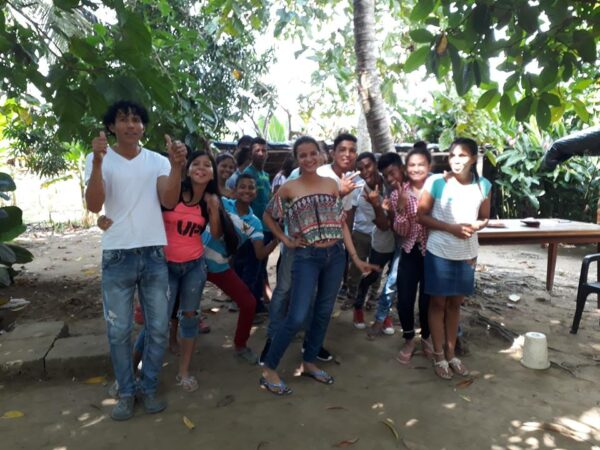
Beyond electoral victories for the nobodies, this is how the systems that produce “nobodies” might be transformed: through nobodies becoming political actors and what Pope Francis calls “social poets of transformation.”