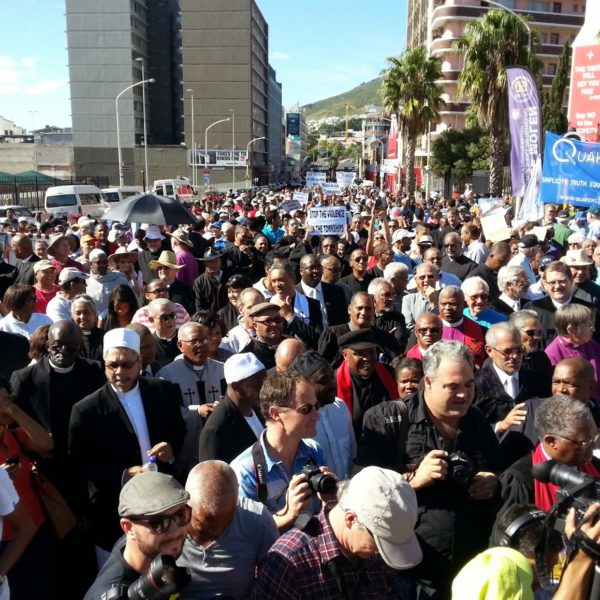
And so it was this past Easter Saturday that thousands of South Africans, supported by religious leaders, “evoke[d] the spirit of the 1980s, when the faith community intervened to promote and defend democracy.”[2] Leading the procession was the Anglican Archbishop of Cape Town, Thabo Makgoba.
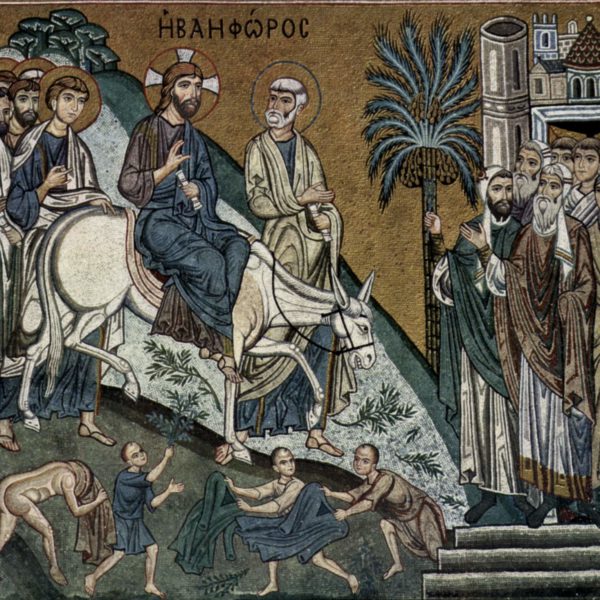
One plots and schemes in order to exert control. One embarks upon a pilgrimage in order to relinquish control. Entering Jerusalem as a lowly king, Jesus foils both the plots of those who would capture him and those who rally around him as a political revolutionary.
Let’s be clear. There is no academic field called “Islamic Political Theology”. So naturally there are hardly any books on Islamic Political Theology. Political Theology is largely a field of study within Christian Theology. This field, as I understand it, examines the relationship between the way we describe God and the way we describe the political. In the history of the Church there has been a strange correspondence between the two. A number of shared concepts, narratives, myths and symbols sustain each.

If an academic field is defined in part by its canon, wide divergence on canon would suggest that what appears to be a field might not really be one. In the case of political theology, there seems to be this sort of incoherence: an anthropologist writing an article about political theology may never have heard of Dorothee Sölle, while a seminary professor writing an article about political theology might never have heard of Claude Lefort.
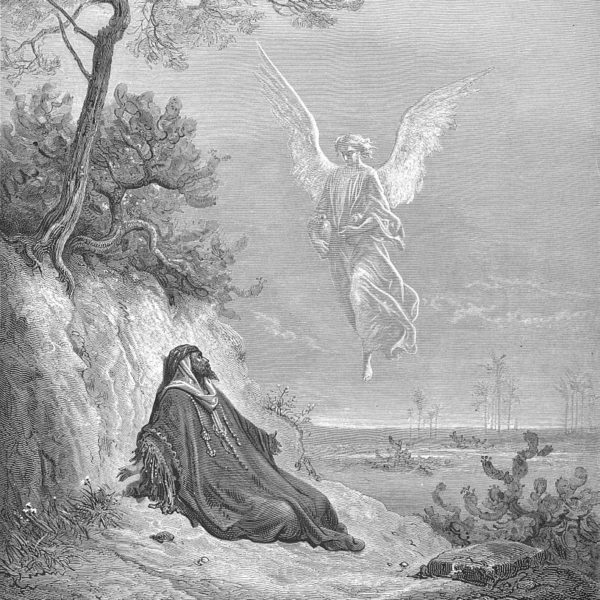
Elijah’s ministry takes place during the reign of king Ahab in the 9th century BC. The narrative about the prophet is expressly political. It depicts a political dissident who speaks against the powers of his day, with the main focus on promoting the worship of Yahweh and fighting against the worship of Baal. The prophet’s actions must be understood against a wider Near Eastern context where religion was completely intertwined with politics and where Yahweh was the national god of the Israelites.
Mikhail Rostovtzeff is barely remembered in our time. Yet the paradox he embodied – a staunch anti-communist who championed economic analysis of classical Greece and Rome – is worth reconsideration. To his great credit, Rostovtzeff set out to shift the focus of ancient historiography on politics and military matters to economic concerns. Classically trained, a man of prodigious learning and without fear of grand narratives, Rostovtzeff boldly reconstructed the economies of ancient Greece and Rome in terms familiar from capitalism, that is, in terms of neoclassical economic theory.
We are the heirs of Elijah’s legacy. His influence is evident within later writings of the Bible, the Bible’s earliest commentators, and within the Bible-shaped parts of our own culture. But how might we assess our inheritance? Elijah is a hero of the covenant. Moses redivivus. A witness to God’s justice and mercy for those without power. And yet. . . Elijah’s legacy is also that of a “troubler” (1Kings 18:17-18). Although the prophet denied the title, the Jewish rabbinic tradition has not been afraid to name troubling features of his ministry. He seems more pre-occupied with his own difficulties than those of the people. He does not advocate for the Israelites. He uses violence.

Perhaps you heard about the candidate in the North Miami mayoral race who claimed that Jesus endorsed her.