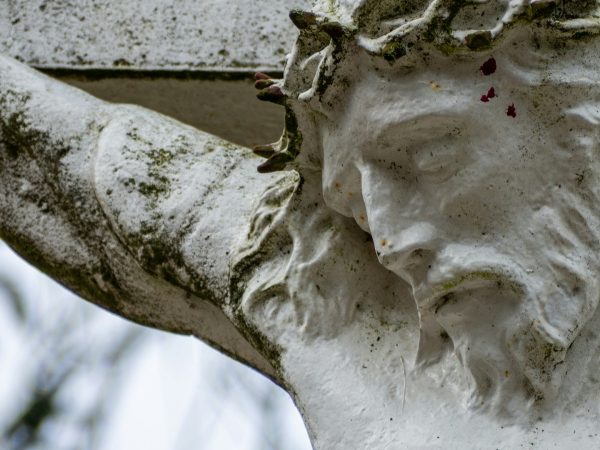
Jesus’s violent crucifixion exposes the inadequacy of Roman “justice” and raises important questions that are deeply relevant for today. For example, what aspects of our justice systems are designed—intentionally or unintentionally—to diminish human dignity and even dehumanize people?

We present some AAR/SBL Annual Meeting 2025 sessions sponsored by the PTN-afilliated Political Theology Program Unit.

Luke’s account thus presses towards a re-imagining of community. Belonging is not guaranteed by purity or boundary maintenance but by practices of compassionate recognition.

Macron’s speech in Notre Dame on the occasion of its reopening was a transgression of the principles of French laïcité, confirming the worldwide tendencies towards the increasing culturalization of Christianity and the constant relegation of Islam to the realm of religion.

Join recent Catholic Re-Visions contributors as they engage the relationship between nonviolence and Catholic social teaching in these times.

Consider submitting to one of six conference streams for PTN Conference 2025 from October 23-26, 2025 in Nashville, TN. Proposals are due June 3, 2025.

Love disrupts both the ruin and misery we inflict upon others as well as our preoccupation with ourselves, for these are interdependent, synergistically working together for the degradation of all.

Political theology enacts inclusion by intentionally ‘de-whitening’ the text and celebrating multi-colourism in the economy of the divine.
Consider submitting to one of six conference streams for PTN Conference 2025 from October 23-26, 2025 in Nashville, TN
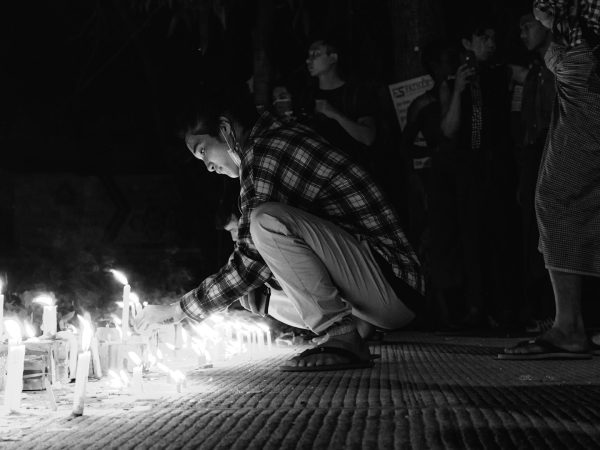
While deeply engaged with the concerns of everyday life such as healing, feeding, and engaging people in matters of justice and community, Jesus offers an alternative vision: one shaped by self-giving love and radical faithfulness to God’s kingdom, rather than by the structures and strategies of empire.

The virtues and practices include confronting the issue rather than the person, practicing forgiveness, tolerance, and reconciliation, embracing the enemy as a child of God, and protecting human dignity and the common good. It explores how the combination of CST and nonviolence can address human actions that sustain marginalization, racism, conflicts, oppression, domination, and diverse forms of social exclusion.
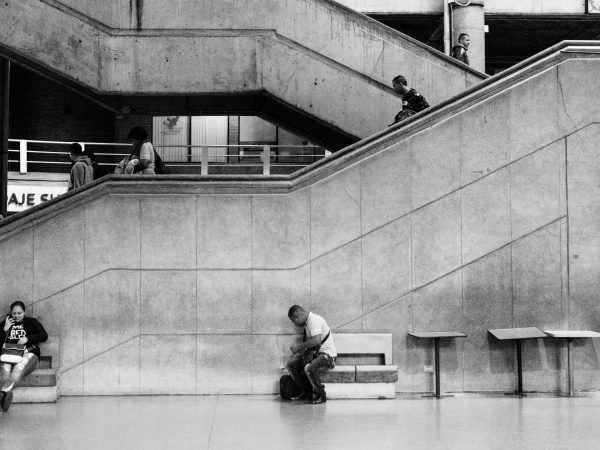
[P]romoting justice and defending human dignity need not only hinge on grand self-sacrificial gestures…. That social structures are sustained by social practices suggests that the everyday is consequential too and dispels the notion that smaller or more mundane acts are too paltry and thus powerless to effect the kind of structural change justice requires.