In the end, John 3 presents a very troubling political and theological landscape: there is us and there is them, and them are where they are because they hate what we stand for. The warm and fuzzy feeling that is generally associated with John 3:16 can only be maintained if one stops reading right there. It gets scary and divisive and not very loving thereafter.

What [Henry’s] oeuvre offers political theology is a reimagining of what constitutes life together—an attention to Life and thereby, spirituality.
I join this conversation as a political theorist having just published a book, Beyond Church and State: Democracy, Secularism, and Conversion (Cambridge 2013), in which I argue that the modern secular imaginary is premised upon an insufficient image of secularism as the separation of church and state, and that secularism should instead be understood as a process of conversion that reshapes key dimensions of both religious and political life

We don’t expect our politicians to say much about the poor, but what about the church? When was the last time you preached or heard a sermon on the poor? Not poverty, but the poor, and not as an illustration, but as a focal point. (We might ask the same thing about a college or seminary class that purports to be about the cultivation of wisdom or faith.) The readings from Proverbs and James (see below) refer to the poor directly. Both passages are striking because they go further than a soft paternalism that might urge us to care for the poor. James and Proverbs offer not an appeal to our altruism, the work of charity, or a political agenda or campaign. They are not looking for votes or a clear conscience. They see the poor as part of the community and concern for the poor as an integral part of the life of faith and wisdom….

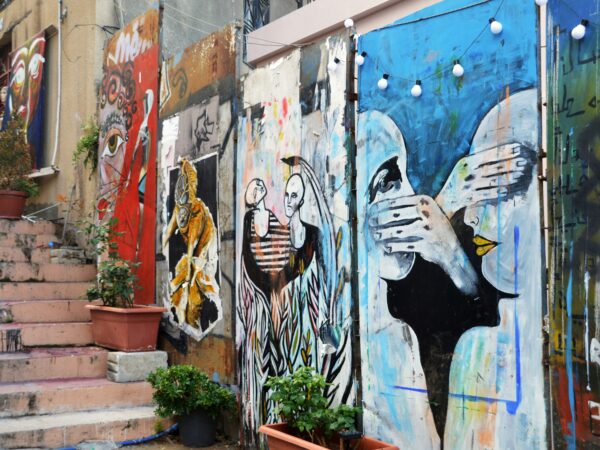
The ability or inability of insiders to hear the silences that arise on the other side of the borders drawn by colonizing societies around themselves, to perceive them as the echo of missing voices, may constitute, for the victims of colonialism, an indication of whether they can place their hopes for a more just world in something other than violence.
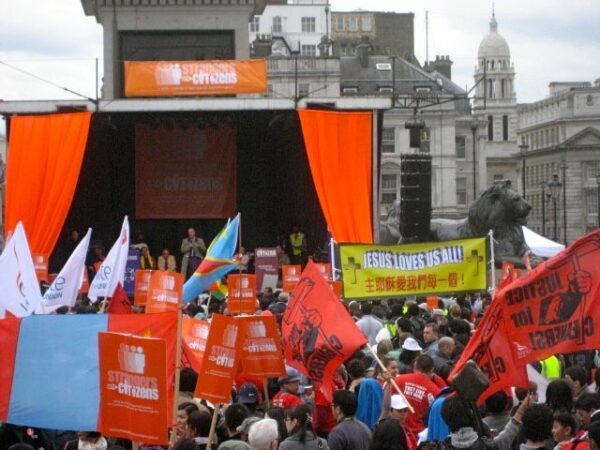
This post focuses on a no less important but less visible cluster of questions about the relationship between ethics and politics, what helps or hinders the formation of persons capable of undertaking liberative projects with and for others, and how the quality and character of relations between persons (for example, virtues such as hope, courage, or hospitality) directly shape the conditions for the possibility of democracy.

Kristeva’s psychoanalytic approach and practice shed light on the unconscious, affective, and bodily formation(s) of religious and political discourses and systems.
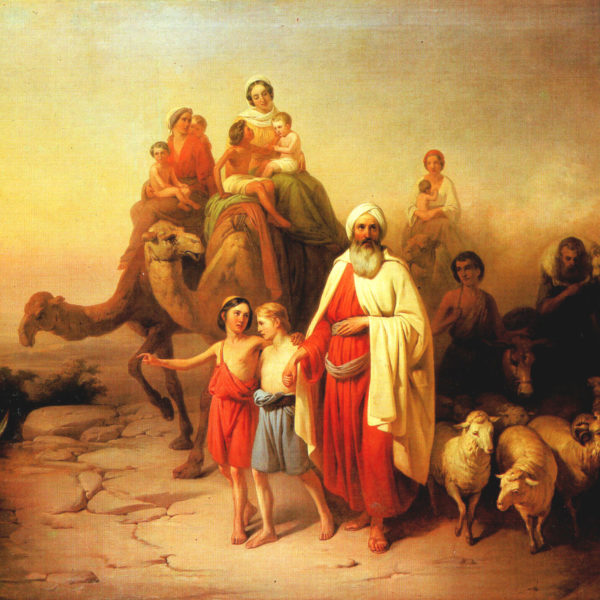
The call and blessing of Abram in Genesis 12 is the beginning of a thematic thread that is developed over the rest of the scriptural witness. As the heirs of Abram, we are both the recipients and the bearers of his promised blessing to the nations.