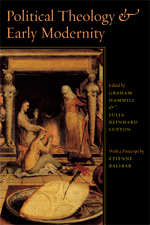

This is what is at the heart of the story. John comes preaching a message of the kingdom in the strongest possible terms—You brood of vipers! As part of his message, to which people seem to be responding, is that they need to “bear fruit worthy of repentance.” That is, don’t just sit there saying you did wrong. Get up and show that you understand by doing something different. And of all the people who might have grasped this message, low and behold, its those nasty tax collectors, the worst people imaginable, who come and ask what they should do to show they really mean what they say about having been transformed. Which is to say, that the narrative presents the very embodiment of a social outsider, confronting the epitome of the empire in the form of the tax collector, who is fundamentally transformed by the encounter.
This essay reclaims the value and role of faith in Shulman’s political theology and shows why it is important for wrestling with our contemporary political realities.

We have a call to responsibility regardless of whether you love or respect or agree with or feel in any way comfortable with your neighbor. It is the call to protect your neighbor even if you hate her.

“So, this is the crossroad. It seems that evangelicals increasingly are at the same time in a quest for power and a lack of thought”
There are few terms that evoke greater distrust among many wise and sceptical people on both sides of the Atlantic right now than ‘faith-based politics’. A large part of that distrust comes from an awareness of the potency and even toxicity that can arise from religious or ideological emotion and commitment – and not just among those whose beliefs (religious or otherwise) are other than, or opposite to, our own….

The politics of identity often has Indigenous persons grappling with the dichotomy of US empire’s labels of the Native American Indian as contaminating evil or contaminated victim. For Indigenous Christians Jesus calls on us to spurn these limiting designations, to embrace the spirit of interdependent creation, which brings us back to a family of justice and life.
PTN is moving from a grant-supported network to a membership-supported network. Become a member today and join the conversation.

PTN announces John Boopalan as its new Managing Editor.
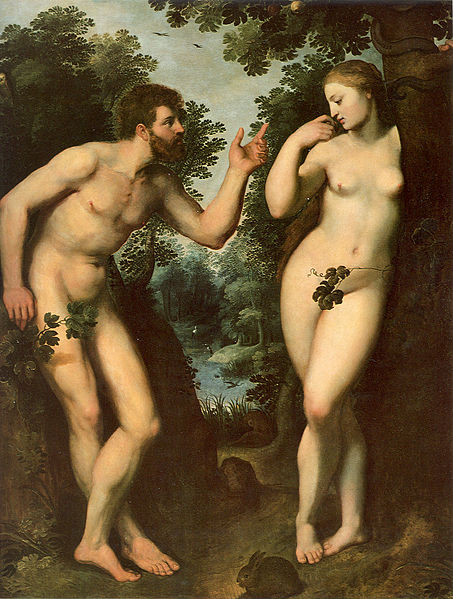
In taking of the forbidden fruit in the Garden of Eden, Adam and Eve attempt to gain rule before they are ready to exercise it. Their example may be a cautionary one for a church that too precipitously throws itself into the political arena.

Advent declares that the time has come upon us, that the King of Kings is about to arrive. The Advent claim that Jesus is Lord is a fundamental orienting claim for all of our politics.
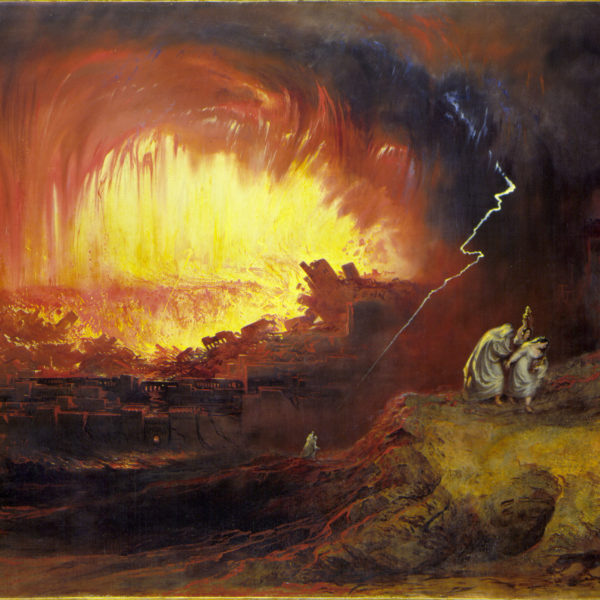
In the narrative of Abraham’s conversation with God concerning the destruction of Sodom we find an example of the faithful fulfilment of the calling of the people of God. We are to be those who seek to preserve the world from condemnation by our righteous and life-giving presence within it, tenaciously refusing to abandon it to its destruction.