
Sullivan’s scholarship reminds us that without the collective work of reimagining, to seek justice through law alone is to succumb to legal fiction.
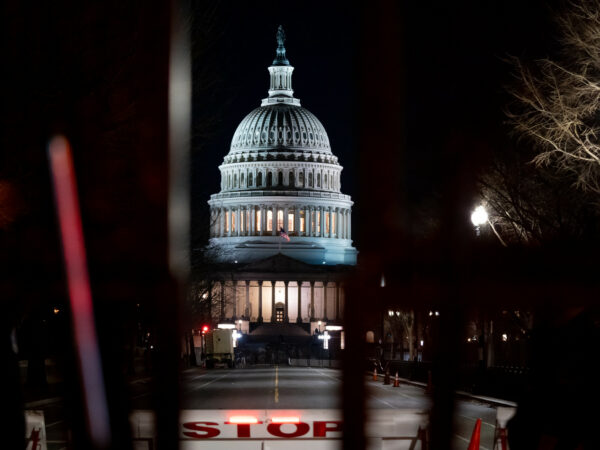
We are shocked. Morally outraged. How could a US president tout “law and order” to incite a blatant attack on “American democracy” and “the rule of law,” encouraging his supporters to storm the US capitol? Commentators decry such hypocrisy, stating the obvious contradiction between US constitutional law and violent coups. My contention in this essay is that no such contradiction exists.

Church-state relations have been examined as a catalyst of legal conflicts, particularly in the United States today. Yet what do we mean when we talk about the “church” in legal contexts?

The opposite of sovereignty is not anarchy but rather hope, and hope is accessed through the practice of attending to the complex space (or “broken middle”) of social life, the space that is exposed when purported sovereigns are demystified.

There are at least six identifiable and interrelated relationships in the three books under consideration in this forum. Investigations into the nature, expectations, and communicative barriers in any given relationship is of value to our broader scholarly field but so too is asking how the contours of one relationship may impact that of another

Regardless of our interrogation of it, the terminology of “religion” is operative in the world—not only among the scholars who frame it as a second-order category, but among our interlocutors and kinship networks. Given the baggage that often accompanies it, perhaps it is unsurprising that so many of us are hesitant to apply this label to the people, places, and practices to which we attach meaning.
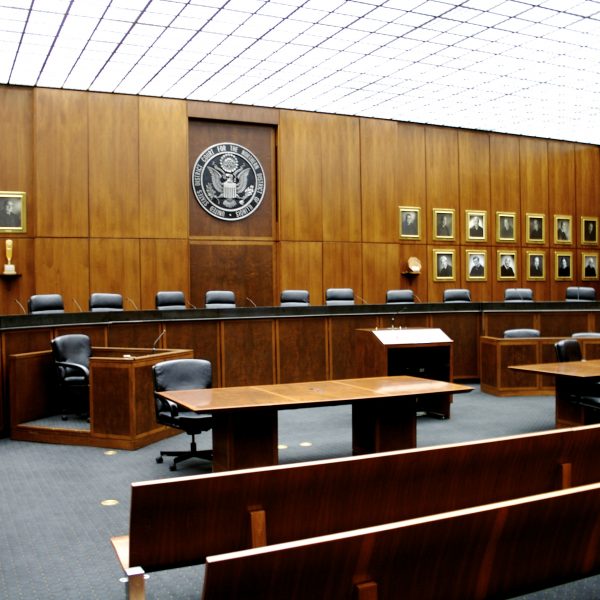
MOVE, while an illiberal religion characterized by abrasive rhetoric, is nonetheless an example of the religification of law and the legal system. MOVE activists refused to surrender the court to the state, seeing the legal system as a potential tool against the state, rightly beyond state control.
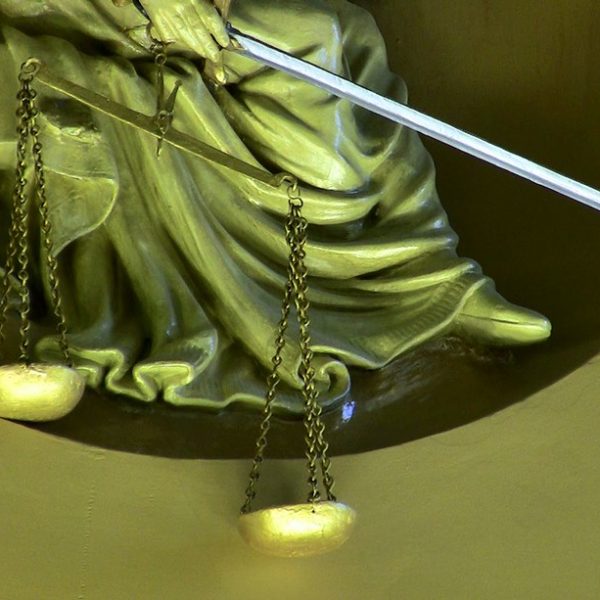
Non-vaccinating parents are asking, in the name of religion, to risk their own child and their child’s classmates with a preventable disease. This is not a theoretical risk: the last outbreak of polio in the United States, to give one example, was in a Christian Scientist school with low vaccine rates.
New issues from the twentieth year of our journal feature articles on Hobbes, poverty, Indonesia, and more, as well as a special issue on Christos Yannaras.
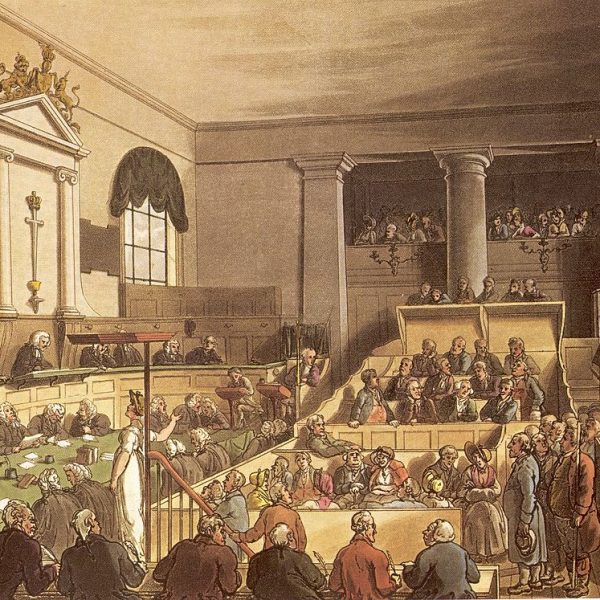
In evil days, justice can be stifled and the voice of the prudent can be silenced.
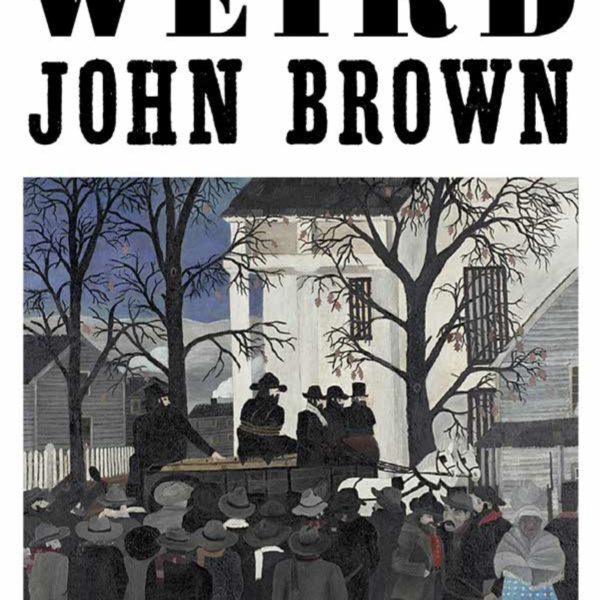
A bishop recently said that 90% of the homilies he has ever heard can be boiled down to two words: “Try harder.” Of all the things that Ted Smith’s book does well, the most compelling for me is his attempt to critique the ethical confines to which reflection on politics and violence — along with so much else — is often limited.
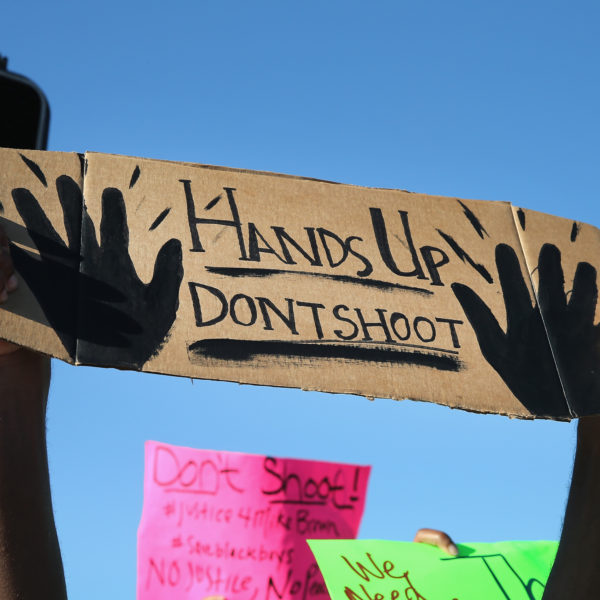
In the 17th of July, 2014, Eric Garner died after being placed in a chokehold by Staten Island police during his arrest for the suspicion of selling loose cigarettes. Less than a month later, on August 9th, Michael Brown was shot to death in an altercation with Darren Wilson, a police officer in Ferguson, Missouri. Both cases raised significant concerns about civil rights, about the possible militarization of policing in American cities, and about the treatment of minority communities by white police officers and white police forces. In response to the furor that arose, the two district attorneys, Robert McCulloch in Ferguson and Dan Donovan in Staten Island, sought to quell community distrust by going to extraordinary measures.