Language and meaning originate not from a fullness trying to communicate itself but from a lack that strives after enjoyment.
I am sympathetic to what I perceive as Wink’s larger goal in this interpretation. He wants to remove the option of reading Jesus’s words as endorsing toleration of abuse. He is rightly aware of and duly burdened by too many examples in the history of Christendom in which the powerful have used a command like “do not resist evildoers” as a rationale for submission to injustice.

As a PhD student just starting my dissertation research I happened to meet the department chair of the theology department at a major Catholic university (my interlocutor and his university will remain anonymous). When he asked about my dissertation, I told him that I was researching Henri de Lubac. In a condescending voice he replied, “I didn’t realize anyone was still studying him.” I sheepishly responded, “Well, yes. Yes they are.”
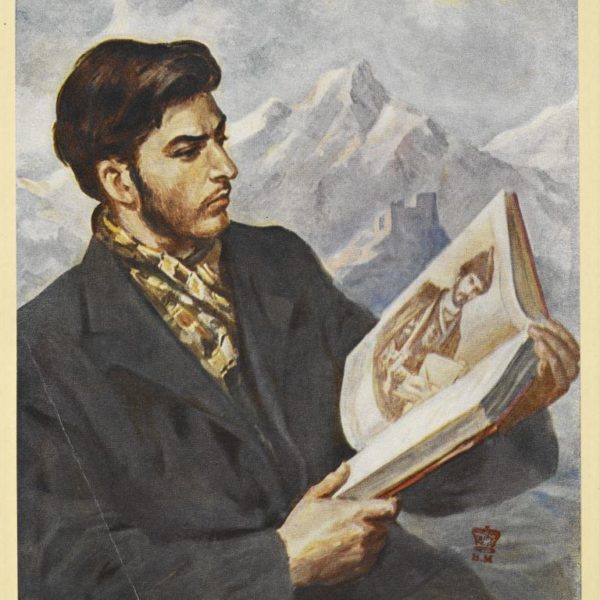
I am in the process of reading carefully through the works of the Joseph Stalin – or the ‘man of steel’, as he became known through his revolutionary code name. When I mention the fact that I am reading Stalin’s rather extensive works, people look surprised – surprised not because I am actually reading Stalin, but because they usually do not realise he wrote anything at all.

We don’t expect our politicians to say much about the poor, but what about the church? When was the last time you preached or heard a sermon on the poor? Not poverty, but the poor, and not as an illustration, but as a focal point. (We might ask the same thing about a college or seminary class that purports to be about the cultivation of wisdom or faith.) The readings from Proverbs and James (see below) refer to the poor directly. Both passages are striking because they go further than a soft paternalism that might urge us to care for the poor. James and Proverbs offer not an appeal to our altruism, the work of charity, or a political agenda or campaign. They are not looking for votes or a clear conscience. They see the poor as part of the community and concern for the poor as an integral part of the life of faith and wisdom….

For the twenty-fifth anniversary of the journal Political Theology, we are diving into the journal’s archives to share highlights of what we have published. In this installment, here are some of the articles we have published on questions of hope:

The word mystic-politics (misticopolitca) is meant to indicate a field of experience that can no longer be contained in rigid compartments. It indexes on one hand mysticism and its internalizations, while on the other politics and its activism.

What would it look like to consider identity-based oppressions—queer marriage blessings and women’s ordination—as interrelated symptoms of a need for structural, ecclesial changes?

…placing the feeling of exhaustion as the central organizing principle hails a subject as experienced and expressed through divisions and differences