Rather than falling prey to a stultifying pessimism regarding the continuous existence of evil, injustice, and oppression in our world, as Christians we should rejoice that God is in control of history, and that even evil will ultimately work to realize the glorious future of God.

Embodying the best of the prophetic tradition, the text encourages us to consider that religion, in fact, does have functions: liberation, feeding the hungry, inviting vulnerable strangers into our homes, and undoing injustice.

Embodying the best of the prophetic tradition, the text encourages us to consider that religion, in fact, does have functions: liberation, feeding the hungry, inviting vulnerable strangers into our homes, and undoing injustice.
A bishop recently said that 90% of the homilies he has ever heard can be boiled down to two words: “Try harder.” Of all the things that Ted Smith’s book does well, the most compelling for me is his attempt to critique the ethical confines to which reflection on politics and violence — along with so much else — is often limited.
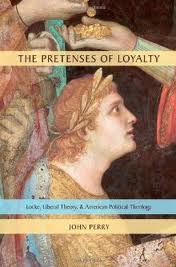
John Perry’s recent book “The Pretenses of Loyalty” offers a clear, penetrating, and persuasive diagnosis of the predicament of contemporary liberal political theory through consideration not only of its present tensions, but more importantly, of its amnesia regarding its historical foundations. I say clear because Perry’s exposition is tightly focused, lucidly written, and structured so as to ensure ease of understanding. By missing no opportunity to repeat his main thesis and the key issues at stake, he walks a fine line, to be sure, between assisting and insulting his readers, but ultimately avoids the latter in my judgment. The diagnosis is penetrating because it does not rest content with surveying the ongoing contemporary conflicts between politics and religion and the critiques marshaled by communitarian theorists such as Michael Sandel and Stanley Fish—though he does this admirably in the first two chapters—but digs right down to the historical roots of liberal theory, the amnesia of which, he argues, is largely responsible for its present predicament….
The author of Ephesians is addressing the conflict between Jew and Gentile Christians (“the cut/circumcised” and “the uncut/uncircumcised”). The politics of this text could be boiled down to the first century conflict between these two groups. It’s a definition so basic and so simple that it belongs in a Politics 101 course. Where it gets interesting, however, is not how one defines the conflict, but how the author of Ephesians deals with it…..

Reading Glissant is important because he not only asks us to think about political life in terms of public speech and activity, he also reminds us always to situate that politics within the landscape and the seascape.

In an era of shrinking democratic space, Bensaïd’s prophetic pathos cuts through both quietism and theatrical revolt, demanding a radicalism patient enough to build and urgent enough to act.
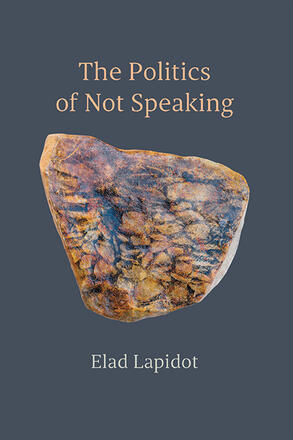
This forum reflects on Elad Lapidot’s The Politics of Not Speaking. In contrast to the common understanding of politics as a domain of speaking, this work reveals an alternative tradition where the spoken word fails, collapses, breaks (i.e., a politics of not speaking).

To think of this empire as anything other than wrapped up in mimesis is to think otherwise. This essay explores how mimesis has captured us all and conscripted us into its political ontology. This essay offers another way to consider being; another way to find ourselves with the introduction of Jesus as a Political Atheist.