Issue 16.1 of the journal Political Theology is devoted to theology, plurality and society. Below guest editor, Dr. Peter Scott, introduces the issue.
Must a religiously plural society fall apart? How does theology process plurality? This special issue of Political Theology addresses the issue of plurality from a variety of theological perspectives. It began life as an attempt to respond to an earlier special issue of the journal, which assessed critically the political and theological phenomenon of Red Toryism. In the earlier volume, there was persistent criticism of an appeal to a common tradition in the context of a religiously plural society.
August 28th 2013, reminded us of the power of the spoken word as the world commemorated the 50th anniversary of Rev. Martin Luther King Jr’s historic “I Have a Dream” speech. What was celebrated was the moral power of words to transform history – this despite the risk and tragedy of empty rhetoric which has inundated it.
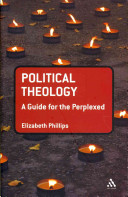
I am an American who lives and teaches political theology in the United Kingdom, and for the next few months I will be reflecting on the experiences, pitfalls, and opportunities in teaching political theology. This month I begin with a summary of the book which I recently published as an aide to teaching political theology, and this will be followed in the coming months with reflections on teaching political theology in the US and the UK, teaching political theology to conservative and liberal students, and teaching political theology ecumenically….
‘…as the food is set…a solid thumb and forefinger tears thunderous grey bread.’
For those of us who are inheritors of the Judeo-Christian tradition the word ‘bread’ crackles with connotation. Out of the simple truth that bread is one of the traditional staples of human living, endless symbolism flows: Bread can signify our basic human need for nourishment, it can act as a sign of the work of human hands and so on. Bread can be torn, scattered and gathered and, even in Rowan Williams’ poem Emmaus (quoted above), made to thunder. If some might treat ‘bread’ as a tired, overworked metaphor it also takes us to the heart of the Christian faith. The bread of the Eucharistic feast is no mere sign, it is sacrament….
Where are you from? It may seem polite conversation, or an extraneous identifier, but it matters. In politics, it matters a lot. In the ongoing Republican quest for a nomination in the presidential race, certain candidates have made it clear that what matters are the delegates—and winning the states that secure the most delegates. If you’re not from one of those states, at least in this matter, your vote carries less weight. Similarly, as a registered democrat in a strong Republican county, my vote in the presidential race if I vote party line, is unlikely to actually change the dispersion of my state’s votes in the electoral college. And even more locally, when I moved to a small town in Western Pennsylvania, a dear friend who had lived in that town for more than 30 years, worked there, retired there, and raised her family there, advised me, “Don’t worry about being new to town; everyone here is welcoming, but after thirty years, I’m still not ‘from here.’” She was right. Where you’re from matters…
Narendra Modi’s strongman persona rests on a paradox: he must be both an ordinary man of the people and an extraordinary figure above ordinary politics. Farmers and students have repeatedly exposed the fragility of that exceptional claim.

Reading Glissant is important because he not only asks us to think about political life in terms of public speech and activity, he also reminds us always to situate that politics within the landscape and the seascape.
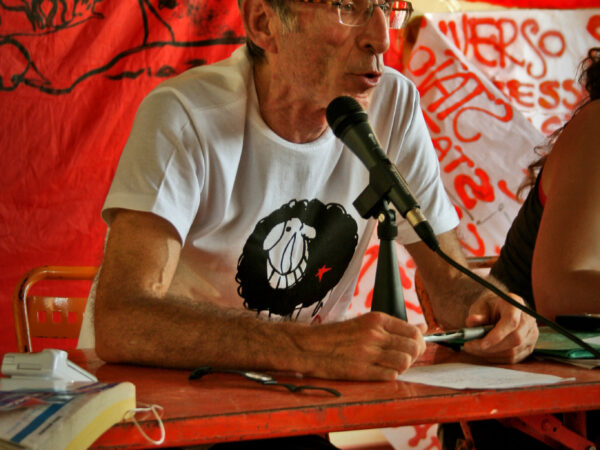
In an era of shrinking democratic space, Bensaïd’s prophetic pathos cuts through both quietism and theatrical revolt, demanding a radicalism patient enough to build and urgent enough to act.
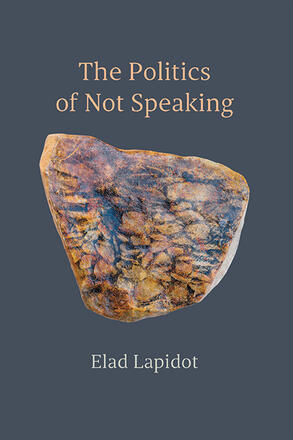
This forum reflects on Elad Lapidot’s The Politics of Not Speaking. In contrast to the common understanding of politics as a domain of speaking, this work reveals an alternative tradition where the spoken word fails, collapses, breaks (i.e., a politics of not speaking).